
1. Home
  2. /
  3. Wiki Pages
  4. /
  5. Lore
  6. /
  7. Page 3

Wargheart

This is a story of the Lost.
Of the first shape changer.
There have been five total shape changers in our history.
Fish-Bone-Tongue
Koragnak Bear-Breath
Chita the Witch.
Mo’ber the Warrior.
But first of them all was Wargheart.
Long ago, far to the north, where ice ruled and the sun was weak, my people lived.
We fled to the North to avoid the cursed Dead. It was a harsh existence, and many died, but enough survived. There we lived for many generations, isolated and far from the humans and the rest of the Syndar race.

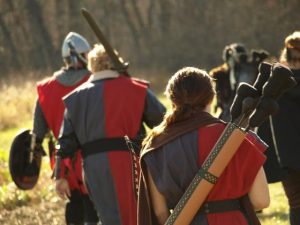
There we lived in relative peace, until one day a hunter saw the sun glinting off of shields in the distance. Humans had come to the north. They wore red and bore a white lion on the shields. We came to them, and spoke with them. What words they said has been lost, for the humans found us strange and alien, and we were insular and not used to others.
The meeting fell to bloodshed, and we were at war for the first time in many generations.

We kept them at bay, but we could not drive them off. We did not know what to do. My tribe is small, has always been small. To attack full force was to risk the annihilation of our tribe, but to do nothing was no option either. Finally, one young shaman, called Blackeyes, stood up and asked, “What about the Warg?”

You see, long ago, when my tribe first wandered to the northlands, we were allied with the great wolves, the Warg. They fought next to us, and the greatest of our warriors were even allowed to ride them into battle.

When we came to the north, our tribes fell away. We competed for the same food, and there were no great enemies to unite us. No one had spoken with the Warg in many years, and it had been far longer than that since we had fought side by side. Some of the old accords remained though, and we did not hunt each other as we might have.

The elders agreed that this idea might work, but none were brave enough to venture to the Warg dens. None but Blackeyes.
So Blackeyes slipped away to where the Warg denned.

When he came to their dens, the Warg surrounded him, snarling and growling. Then the biggest Warg Blackeyes had ever seen spoke.
“I am the Great Warg, leader of this pack. Why have you come before us?”
“I am Blackeyes the shaman. I have to tell you news. War has come to the North. Humans are here, and we would renew the bonds our peoples once had, and fight again.”
The Great Warg laughed.
“This we know. My people are not blind. Tell me, why should we give our lives for you?”
Blackeyes answered quickly.
‘Because when they are done with us, they will come for you.’
‘The humans are slow and stupid! They cannot catch us. We are faster and stronger. No! We will not die with you anymore.’
‘Then you are cowards, and it is you who are stupid!’ cried Blackeyes.
The Great Warg snarled and attacked BLackeyes, knocking him down.
‘Watch your tongue, little greenskin!” The Great Warg thundered. “For the sake of our people’s shared past, I will not kill you for your insults. Here! I will give you a warning though. Never show your face among us again. We will kill you and feed you to our pups if you do! ‘
And the Great Warg raked his claws over Backeyes’ face, laying his flesh open. Blackeyes stumbled away, half blinded by blood. Before he was out of sight though, he turned back.
‘I will eat your heart, old beast!’ he promised.
The Great Warg chuckled.
‘You may try.’

Blackeyes was enraged. He bandaged his wounds, and found a place, high above the warg dens. There he watched and studied the warg for three days. Finally, he came up with a plan. He knew how he would avenge himself on the Great Warg, and destroy the humans in the bargain.

He crept back to the human encampment, and captured a human guard. He bound the human, and dragged him back to the warg dens. Blackeyes waited until the warg went off on their nightly hunt, leaving the Great Warg, too old to hunt, and a female warg to guard the dens and the pups.

Blackeyes took the human, and after untieing him, flung the human onto the Great Warg. The Great Warg was surprised, and angry. A human! He attacked the human with a great howl. The female warg rushed past Blackeyes’ hiding place, not seeing him until too late. He cut her down with the human’s sword, and turned on the Great Warg. The Great Warg was still savaging the human, blinded by fury. Blackeyes struck, piercing the Great Warg in the eye. The Great Warg screamed in pain, towering over Blackeyes. Then the Great Warg collapsed at Blackeye’s feet, the warg’s ruined eye staring sightlessly at nothing, pouring blood onto the ground.
‘I promised I would eat your heart, beast!’
Laughing, Blackeyes carved out the Great Warg’s heart, and ate it whole.
But he was not finished yet. He had to move quickly, before the wargs came back. Blackeyes quickly skinned the Great Warg, carefully keeping the warg’s claws, teeth, and skull attached, and then buried the body under where the human lay dead.

Blackeyes then put the warg skin on, hooking his fingers into the claws, and looking out of the sockets of the skull, and dropped to all fours. He stalked around like he had seen the wargs doing, growled and snarled and barked they did. Then Blackeyes walked into the warg dens, calling out as he went.
‘Little ones! Little ones, where are you?’
The warg pups came out of the shadows to him, and sat at his feet.
‘Grandfather! What has happened? What were those noises?’
Blackeyes smiled with the Great Warg’s jaws. His plan was working.
‘Come here, little ones, all of you. Grandfather shall protect you.’
He killed them all.

When the warg returned, they found the female and all the pups dead, and the Great Warg covered in blood.
‘What has happened!’ They yowled.
‘Who has killed the pups! Who has dared hurt you?’
‘Look!’ howled the Great Warg. ‘It was humans! See his body? I killed him, but I was too late. They have come to destroy us! We must avenge the pups!’
He leapt up and danced and ran around the warg, working them into a frenzy.

‘See how his anger makes him strong again!’ they marveled.
‘We will fight! We will destroy these humans, and eat their corpses!’
And the warg pack ran off, following the Great Warg to battle. With fearsome howls, they fell upon the human encampment. the fighting was fierce. The humans were numerous and desperate and trained. The warg were frenzied and furious, but they had not been to war in many, many years.
In the end, the humans were routed, but at great cost the the warg. Most of them were dead or dieing. A few of them survived, and slunk off to lick their wounds, but they were never seen in those lands in number ever again

The Great Warg went to the Lost caves and waited outside. The Lost, who had watched the fight, came out to him.
‘Grandfather Warg!’ cried one of the elders. The Great Warg laughed.
‘Do you not recognize me?’ he asked, and suddenly Blackeyes was standing there, dressed in a warg fur.

From then on, he was known as Wargheart, and this is how he became the greatest of our shamans, and brought to us the art of skin changing.
  1. Home
  2. /
  3. Wiki Pages
  4. /
  5. Lore
  6. /
  7. Page 3

Koragnak Bear-Breath

Gather ’round younglings and hear the tale of how Koragnak Bear-Breath got his fur.

Not long after the shaman you know as Wargheart gained his fur, a large greenskin warrior sought him out for wisdom.

“Wargheart, you are wise and strong and know the secrets of skin-changing. I wish to know them as well,” stated Koragnak.

“Then you must earn the right to learn the lesson. Leave, now, and do not return until you have that which you seek,” replied Wargheart.

Koragnak was about to argue, and while he was not as clever as his brethren, he was aware of this and kept quiet when he would have roared. Patient, big and slow was Koragnak, though none ever doubted the strength of his limbs, the deadliness of his axe or the reserves of barbaric stamina he possessed.

Without another word, and with nothing but the furs on his back and an axe in his hand, he ran from the camp.

He ventured further north, a land of perpetual winter and this year the weather was worse than ever before. Blizzards and hailstorms blocked passage and forced even the mighty-thewed Koragnak into caves high in the mountains for shelter.

He had little to live off of as most of the hunting was in the valleys and unreachable due to the gathering snow and his kills from the last few months in the wild of the mountains was all but gone. Near starving, Koragnak set out in the blizzard to try and find something he could kill to eat.

He ventured to a nearby valley, wading through the stinging snow when he heard a distant growl of pain. Thinking this was his chance, he hefted his axe and plowed through the drifts and the stinging ice-rain.

He was nearly upon it when he could clearly see it, just below him on the incline as he approached was a bear cub with a broken leg. A loose rock had fallen and crushed the bones in its front leg as well as broken several ribs.

Wary, Koragnak searched for the mother and not eager to slay a helpless image of his totem, Koragnak looped his belt around the back legs of the bear cub and started dragging it up the incline. Knowing what he knew about bear, he was careful not to touch it with his hands so that the only scent on the cub was from the leather of the belt.

Koragnak heaved and pulled and even uphill through the storm, near-starving and all but spent from exhaustion, Koragnak found the cave and saw the mother bear sniffing near the entrance.

Once the cub caught scent of its mother, it started bleating out terribly and the mother instantly roared and came charging in Koragnak’s direction.

Quickly, Koragnak unlooped the belt and ran out and away, yet up towards the cave. The mother let him pass with nothing but a roar as she barreled towards her cub. Quick as he could he slipped into the cave, found a half-eaten rabbit and snatched it, sprinting out again as fast as he could.

He was not fast enough. The mother tackled him as he stepped outside the cave.

Not able to swing his axe effectively he was forced to drop it so that he could use both arms to wrestle with the bristled black bear. It was the biggest he’d ever seen and it felt as though she was about to crush him from the moment she hit him.

Rolling around underneath her forelegs, he worked to grapple her around the throat to cut off her wind. She resisted and the first attempt earned him a claw raked down his left arm.

Bleeding and winded, exhausted and starving, Koragnak called upon his reserve of strength and wheeled his legs around and under hers as she stood up to rake him. He tripped her and as she fell, he rolled and sprung back wrapping two thick arms around her throat, both legs around her midsection, though they couldn’t fit as this bear was much to big, and buried the right side of his face into the fur near her left ear so she couldn’t bite him.

He squeezed and held as she jostled him but good. Still he held. He felt her struggles weaken and still he held. Finally, as her breath came out it short, raspy clouds of steam it mingled with his.

There, in that moment of desperation he realized what it was he was searching for. He realized that it was not the “kill” but the spirit. He loosened his grip enough for her to breath, but not enough to let her go. He breathed deep as she exhaled and felt the warmth, smelled the fresh blood of the rabbit. He exhaled and she breathed deep. This continued, back and forth and it was as if all time stopped around them. In that moment, Bear shared her lesson and her soul with Koragnak and he accepted it.

When spring finally came, late as it was due to the harsh winter, Koragnak returned to Wargheart. Without a word, Wargheart knew he had found what it was he sought and in so naming him Koragnak Bear-Breath, so did he impart the knowledge of skin-changing.

  1. Home
  2. /
  3. Wiki Pages
  4. /
  5. Lore
  6. /
  7. Page 3

Syndar FAQ

What are the Syndar Bloodlines?

  • Io’Larian – The first born of the Syndar bloodlines and named for their Divine Grandfather Io’Laros. They are often treated as lesser by the other bloodlines and have been renamed by them as Feral Syndar. This name has been used so long that most believe it to be their proper name. Humans and Ulven all belive Feral to be the proper name for this bloodline.
  • Serous – The second born of the Syndar bloodlines. They make up the vast bulk of the Syndar population.
  • Celestine – The Gold or Silver skinned members of the third born Syndar bloodline. They are the rarest of Syndar and seen as the closest to the divine by their people.
    • Details of these bloodlines can be found throughout this document.


What are their organizations like? (Family, groups, communities, tribes, clans etc)

  • Kingdom – Much like the human nations and kingdoms, the Syndar are ruled by the same type of king and queen structure that most kingdoms utilize. Unlike other Monarchies, however, The King and Queen rule together, and are elected officials. The Queen is not second to the King, and there is no blood heir privilege to the throne. This system mimics the rule of their two gods, Solar and Lunara, who rule together. Syndar live a long time, so continuous democratic votes keep a King and Queen in check during their reign. Enclaves have gone to war to remove an unworthy King and Queen, and some kingdoms have even seen a King or Queen call upon the help of the Enclaves loyal to them to remove their counterpart should their duties prove to be failing.
  • Enclave – Similar to the human’s House or to the Ulven Clans, a Syndar Enclave is the leadership that combines numerous communes of Syndar. They hold considerable sway over political issues related to the kingdom they currently reside in. Kings and Queens work hard to gain and keep the favor of the Enclaves. An enclave is ruled by the High Magis Tribunal, which are Magis selected from the different communes of the enclave.
  • Commune – A Commune is a community of Syndar similar to a Human noble’s Estate or an Ulven Pack. They normally live in a single geographical area. They are not bound by blood and may come and go freely and join different communes with the blessing of the Magis. The spirit of “family” is almost non-existent and is replaced with the spirit of “community”. Syndar children roam freely between the habitants of the Commune and theoretically have numerous parents and countless brothers and sisters. Enclave’s will encourage the communes to grow and prosper so that they themselves grow and become stronger politically. Commune’s are ruled by a Magis, who can be male or female, the only requirement being that they must be a spellcaster.
  • Tribes – Many of the Io’Larian Syndar who have found themselves treated poorly in the cities and urban areas of their siblings have either returned to, or never left, their less centralized roots. These are usually smaller, closely knit communities and are often shunned or at best regarded very coldly by the other Syndar, especially those in the major urban areas. Every Tribe is incredibly unique with various structures, customs, and at times even languages. Some exist in a nomadic structure well beyond what city-Syndar see as civilization. Other have set down roots in various rural areas. Some exclude all non-Io’Larian Syndar from their villages, and others have robust trade with their non-Io’Larian neighbors.

How do they handle ceremonies? (Marriage, funerals, etc)

  • All ceremonies are conducted by the Magis or other important figures and usually involve meditation and the channeling of energy. This varies based on the occasion and also based on the lineage.  Some Syndar may take part drum circles and chants, where the other Syndar may focus more on solumn trances and meditation circles.

What kind of leaders do they have and what is their structure and importance?

  • Magis are local leaders of communes.
  • High Magis are part of a Tribunal that is selected from all the Magis’ of the communes of a particular Enclave.
  • A King & Queen oversee the rule of all the Enclave’s in their kingdom.

What gods do they believe in for religion and what is their spirituality like?

  • Syndar believe in the God Solar and the Goddess Lunara, the sun and the moon, and both have heavy symbolism within their culture.
  • Syndar as a whole are very spiritual and religious beings. They have a gift of magic given to them at birth and they believe it is granted by a higher power.
  • The Syndar religion and lore revolves around the God Solar and Goddess Lunara ruling over all existence in perfect harmony as equals. Long ago, the two gods created children to walk among the earth. The first children were born from the animals and were imperfect; their skin, horns and fangs displaying their Fae nature. The first children were named for their divine Grandfather as Io’Larian Syndar, but have since been named by their younger siblings as the Feral Syndar. The gods then created their second children, born from the elements of the world and were imperfect; their skin and ears being more of natural flesh. These second children named themselves the Serous Syndar. The gods then created their third children, born from the stars, and were perfect; their skin and features celestial gold and silver to match that of their own. The third children were named by the Gods as the Celestine Syndar. The god’s final gift to all of their children was that of their magic essence, and with it the means to express their spirituality.

How do they commonly view the other races? The Undead? The Mordok?

  • Syndar very openly believe that they are superior to all other races. This is not flaunted or used in disdain when dealing with Humans and Ulven, though some may misinterpret it that way. While considered a lesser race, humans are still regarded as both highly useful or pleasing company to the Syndar. The Syndar believe that their race has been touched by magic and is just that much closer to how all races are meant to be, not that it is any other races fault for not being “up to par” with the Syndar. To Syndar, it isn’t the fault of other races that they aren’t as superior as the Syndar, so it is rude to use it to mock other races. Though Io’Larian Syndar do tend to view themselves as more magically apt than the other races, they harbor significantly less of a superiority complex since they also have been derided by their sibling as lesser for all of their existence. Many Io’Larians find themselves more comfortable with Ulven and Humans than with Serous or Celestine Syndar.
  • Serous and Celestine Syndar will openly mock or be rude (but not unreasonably hostile) to Io’Larian Syndar. They believe they are part of the lesser children of Solar and Lunara and are to be treated as such.
  • The Syndar view the Undead as a plague began by humans for their wanton use and unguided expansion of magic. There is no real proof of this, but they find it coincidental that the Undead Plague began around the same generation as some large breakthroughs in magic for the humans.
  • The Syndar on the colony of Mardrun view the Mordok as an even lesser race than the Humans and Ulven. Where the Ulven denounce the Mordok as an intelligent race and Humans tend to view them as monsters, the Syndar regard all races as lesser, and the Mordok are just the lowest. Some Syndar are fascinated with the Mordok culture though and have a great interest in how they’ve managed to thrive in what are viewed as harsh conditions for so long.

How do they handle honor and integrity?

  • Syndar handle honor and integrity much like humans do. Some highly regard it, some do not. Almost all Syndar of importance, such as leaders and rulers, make integrity a top priority because winning over their followers to rule for a long time is very important to them.

How do they handle grudges and revenge?

  • Syndar are calculated and rarely commit crimes of passion. They realize that when they are emotional or worked up about something, that they can still retain control of their actions. They are less excitable than other races. Their overall manner is sometimes compared to a mix between a scholar and a martial artist, where responses and reactions are thought out ahead of time before they are acted upon.
  • They are very slow to gain or give trust to other people. It can take many years and many trials to gain the loyalty of other Syndar.
  • On the flip side, Syndar hold terrible grudges and never forget who has slighted, cheated, or disrespected them. There are stories of young humans being given the cold shoulder by Syndar for transgressions of their fathers before them.
  • Syndar wronged gravely can take the mark of the Rahd Noc, which is an oath of vengeance. Sanctified by a Magis or High Magis, the wearer of the Rahd Noc uses a mixture of their own blood and of red magical paint to mark themselves from the top of the brow to the tip of their chin. It is obvious if a mark is genuine or just merely paint. The bearer of the Rahd Noc then bears the burden of extracting revenge for whatever deed had wrong them. The Rahd Noc remains on them until they have completed this task. This is a way for some Syndar to cope through tragedy. After fighting for vengeance, they can return to a Magis or High Magis and get the Rahd Noc removed. By doing so, they wash their souls of the grievous emotions that weigh them down and it helps them move on. Some Io’Larian Tribes view the Rahd Noc as a symbol not of vengeance, but instead of dedication to a task. This view is not widely known and definitely not shared by their Serous and Celestine siblings.

How do they handle combat and war?

  • When Syndar go to war, it is a much slower and thought out process than humans. It is not uncommon for two Syndar kingdoms or factions to wage war on each other that involves very little death and destruction. Closely resembling a game of chess, the generals will position and reposition troops to gain the upper hand, with feints and troop movements meant to give the impression of victory instead of grinding it into their opponent. There once was a war between two smaller nations that lasted almost 50 years and involved very little bloodshed. They continued to outmaneuver each other, attack supply routes, displace smaller villages, etc. Finally, one nation surrendered after the other nation had the upper hand. Victory was imminent but there was no fiery and bloody battle to the end common with human war tactics.
  • The Syndar view surrendering differently than humans. To them, surrender is not a cowardly way out but a respectful way to admit that one has been outmatched or beaten. They also typically treat any prisoners very well and even return them to their home nations or factions; what they view as the barbaric treatment or slaughter of prisoners by humans is alien and it completely shocked the Syndar during the first wars that broke out between the two races. This actually led to the Undeads initial surge of troops on Faedrun during the war, as Syndar settlements and armies who surrendered were massacred and turned into undead ground troops.

How do they handle justice and punishment?

  • Justice is not swift with Syndar, who normally take a lengthy amount of time determining the guilt and punishment of offenders. Each commune will have a group of lawgivers that follow the directive of their Magis and will determine guilt or innocence through a series of trials and debates. For minor infractions, it is not uncommon for a Syndar trial to last longer than the actual sentence.
  • Syndar who have severely wronged others or have been repeated offenders may be judged to Reclamation. Clerics of the Reclament will be summoned to reclaim the guilty Syndar’s essence of mana. This is a painful process and removes the mana entirely, leaving the Syndar Hollowed. Some Syndar feel that to be Hollowed is worse than death.

How do they handle death?

  • When Syndar die, their Commune will hold a burial service that involves channeling mana out of the deceased and back to members of the Commune or into mana stones. It is believed that through this act, the magic inside the deceased is returned to the community. The body is sometimes embalmed and mummified and placed in earthen or stone built tombs if the deceased was an important or influential figure. Although rare, there are some Syndar that are so sensitive to the flow of mana, that they can detect if a Syndar corpse, long lost or buried, was properly laid to rest and the mana retrieved from the deceased. There is a sect of divine cleric’s known as the Reclament that have devoted their entire life to divining the location of Syndar that were killed and not laid to rest and giving them proper burials. It is very common that all burial’s will be supervised or visited by a Reclament cleric, but a Magis can fulfill this duty if one is not available.
  • Death itself can be both easily overcome or devastating to Syndar. If a Syndar did not know someone really well, their death is mourned and respected, but it is not a very big deal to most Syndar. If a close family member or the significant other of a long term relationship dies, it can be extremely difficult for them to cope with. When Syndar grow accustomed to people for many years, their death hits them that much harder and can be plagued by immense depression that requires time and meditation to overcome.
  • Many Io’Larian Tribes have their own ceremonies and rituals surrounding death. Due to their often insular nature and their incredible range of cultures it is not easy to pin down any single rites or rituals that are common.

How do they handle economy and wealth?

  • Very much like humans, they have a currency system in their home kingdoms and different classes of wealthy Syndar. This “chit” system is variable based on what it is paired with, and the pairings can change. Economy for Syndar is more complicated than humans and can fluctuate rapidly, so they tend to stick to the Vandregonian Silver coin out of respect and ease of trade. So far, the currency of the Syndar has not made it into the human nation’s economy much and it has not come over to Mardrun at all.

How do they handle politics (voting, representation, race-scale changes, etc)?

  • The entirety of Syndar culture revolves around democracy. Everyone has a say, or picks representatives that voice their opinions and votes. This goes all the way up to the Kings and Queens of each kingdom. The people give their voice to the Magis, who then gives their voice to the Enclave, and each Enclave’s Tribunal will make decisions.
  • Each nation or kingdom will hold a number of “Gatherings” where important political matters are discussed. This is normally done in a massive auditorium where the commoner Syndar can come and be a part of the process too. Each Enclave is given a certain number of seats to fill in this auditorium and a common vote is cast that is decided upon by all attending Syndar. More than once has a large decision by a High Magis been trumped or shot down by the collective voice of all present at the Gathering. Io’Larian Syndar are largely excluded from these gatherings.
  • Io’Larian Tribes are known to have envoys of diplomats that are sent to negotiate with their neighbors, be the Io’Larian or not. In some areas they have their own councils that meet to discuss wide-scale politics completely separate from their non-Io’Larian siblings.

What are some common mannerisms for their race?

  • Numerous communes and enclaves have developed their own customs of body art or symbols depicted on their flesh which normally are mystical or magical looking clean lines and swirls. The quick and large smudge lines of traditional human or ulven face paint are uncommon. There is, however, one mark that is universally recognized by all the Syndar and that is the Rahd Noc.
  • Although the standard greeting for humans is to shake hands and for Ulven is to shake forearms, the Syndar see such a greeting as odd. They do not and have never shook hands as a greeting. This has sometimes come off as arrogance when a Syndar does not shake hands/forearms, but was probably the result of innocent ignorance as most Syndar do not realize the importance of the gesture the other races.
  • The formal greeting to another Syndar is a slight bow of the head, a closing of the eyes, and the stating of the phrase “Siala Kay Nu”.
  • Proper or older Syndar in polite or formal occasions find it rude to be direct in their conversations. Asking “How is your sister?” is considered rude. Making a round-about statement of “Your sister and I were always such friends, it is a shame she became ill recently” opens up the possibility of the other speaker to say how their sister is doing. This practice has continued to decline as humans don’t practice it and even more so on Mardrun as Ulven have no patience for such round-about speech.

Are there any symbols or animals important to this race?

  • Symbols for the Sun and Moon are commonly used on their equipment, decoration, and art.
  • The elements are also important for most Syndar, so sometimes markings or runes related to the elements are worked into their designs and art.
  • Some Io’Larian Syndar find different animals important given how closely related they are in their creation story. Some Io’Larian Syndar belong to clans that stretch far back to the first animals whose essence was used to birth them into existence.

Is there anything considered taboo or forbidden to this race?

  • Any Syndar who has had (willingly or not) their fae qualities (horns, pointed ears, etc) removed or altered to look like a humans is considered completely revolting to other Syndar. It would be the equivalent of a human cutting off their ears or noses to look like another race. The act of removing horns is more revolting than a Syndar with them.
  • Same-sex monogamous relationships have traditionally been seen as a taboo by some Syndar who believe it is the duty of all who can to aid in the creation of more offspring. Same-sex couplings and encounters themselves are not seen as problematic by most Syndar.

Are there any common sayings that are used by this race?

  • “Siala Kay Nu” (See-alla Kai-Noo) which is a saying that roughly translates to “With the sun and the moon”. It is a generalized blessing used for many occasions and a greeting.

What is a common appearance (eyes, skin, ears, fangs, etc) for them? Is there an uncommon or taboo appearance for them?

  • All Syndar have pointed ears of some kind. These can range in size and shape. Syndar very commonly have strikingly colored eyes of various colors and are usually not a measure of importance for any of the lineages.
  • Io’Larian Syndar bloodlines often to have brightly or oddly colored skin and more predominant horns and features like enlarged canines or fangs. To the Serous and Celestine Syndar, the Io’Larian Syndar are looked down upon and treated poorly.
  • Serous Syndar commonly have skin that runs the range of natural human skin tones (though they occasionally have more fae-like colours kissing the tips of their ears), a lack of horns, and pointed ears of some kind. Most of the Syndar population is made up of Serous Syndar.
  • Celestine Syndar do not have horns or fangs of any kind. They commonly have strikingly colored eyes and a skin colored tinted gold or silver. Most Serous and some Io’Larian Syndar revere the Celestine as prestigious members of Syndar society.

What overall theme/style do they tend to have? (Clothing, look, etc)

  • Syndar clothing tends to edge closer to fantasy or regal looks, sometimes with a bit more color. They also have basic clothing, but often with a penchant for deep colours. Io’Larian Syndar maintain a love of colour as an expression of their spirit, but tend toward more hearty and utilitarian materials. The most common look or appearance of most Syndar is that of a more organic and fantasy theme. It is also very common for their clothing to be flowing, larger, and/or layered.

How do they regard magic? What kind of magical people or classes do they have and what do they do?

  • All Syndar are in tune with magic more so than other races. They are usually more receptive to certain changes in magic and mana and are able to sense things that other races cannot. This has given the Syndar the ability to become very powerful arcane and divine spell casters and the use of magic is much more dominant in their society than in others.
  • They completely recognize the two schools of magic, arcane and divine, and try to further their knowledge in both. Although Syndar are born with magical aptitude, they do not possess the ability to channel both divine and arcane magic in the way that the Ulven do. This has made way for a number of scholars to hunt down answers but so far no real progress has been made.
  • Almost all Syndar worship both gods, but they feel that Arcane magic is a gift from Solar and Divine magic is a gift from Lunara.

Is there a rite of passage or coming of age for them to become adult?

  • Due to the longevity of a Syndar’s life, they do not have an official coming of age rite or time. It is mainly just recognized when they are ready for reproduction and developed physically. This usually occurs between 16 and 20 years of age.
  • Due to the varied and insular nature of the Io’Larian Tribes not a great deal is widely known about their rites of passage. Many Tribes do have very specialized rites, but they are often a well guarded secret.

What is their courting & relationship process like?

  • Syndar do not believe in marriage. They go through a courtship like the Humans where the male and female try to impress each other. If they find the other Syndar to their liking, they enter a relationship but there is no further step that solidifies that relationship. This does not mean that the Syndar are promiscuous and they do not cast relationships aside lightly, but the Syndar live a long time, and the concept of being forced or feeling forced to be with someone when they do not want to be is alien to them. It is not uncommon for Syndar that have been in love for decades to drift apart because of their separate lives or changes in their behavior. This parting is usually a mutual agreement that is less confrontational than with other races.

How long do they live and what is their birth/child process like?

  • Syndar live a long time, averaging 150-200 years, but they grow from infants to children and then to adult Syndar at about the same speed as humans do. The main difference is that large families are very rare, most parents only having 1-3 children.
  • Syndar birth rate has been on the decline for the last 500 years. It is not enough to cause major alarm for their race, but it can become an issue if a large war or disease kills a lot of their kind. They will not reproduce as quickly as the other races.
  • Syndar children almost always take on the lineage and traits of the mother, not the father. It is very rare for the traits of the father to be dominant for the child and even more rare for a Celestine child to be born.
  • All communes and enclaves are expected to turn over any Celestine children to the Enlightened. It is a great honor for a member of a commune or enclave to produce a Celestine offspring. Their birth is random and the parents willingly hand over the child to the mages of the Enlightened so they can begin their studies immediately. It is very rare for Celestine Syndar to be born to any Io’Larian Syndar, but when it does happen they are still almost always turned over to the Enlightened for training.

How do they handle their own names? Is there meaning to how they are structured?

  • Syndar names tend to be more rolling, smooth, or flowing. For example, Syndar names could be Sialyth, Sintare, Tilinian, Silorian, Nuvalish, etc. Abrupt, short, or mundane names are uncommon to the Syndar. There is no real meaning for their structure and they do not exhibit commune or enclave identification of their names. Last names are used but not common.
  • Io’Larian Syndar often have names outside of what would be considered the norm by their urban siblings, often taking names from their own language as opposed to the common Syndar tongue.

Are there any special groups or factions within this race?

  • The Reclament is a holy order of Syndar clerics devoted to finding and laying to rest lost Syndar. They believe that the mana gifted to all Syndar at birth is a resource that if abused and neglected will wither and die. The act of finding and returning the magical essence of all Syndar helps keep this energy in the community and in the Syndar race. This group can also carry out punishment by reclaiming the mana essence of a Syndar criminal, forcing them to become Hollowed.
  • The Enlightened is a scholarly order that researches arcane magic at its highest levels and overlooks the education of the Celestine Syndar. They are powerful mages who also keep track of the massive libraries created in reference to magic and the lore of the world.
  • Any Syndar who have lost their magical essence due to foul magic, a defect at birth, been sentenced to Reclamation, or some form of experiment or experience is called a Hollow. They are typically shunned by the Syndar communities, and more often than not become wanderers. These Syndar tend to act differently than other Syndar, and are generally easy to spot. The appearance of a Hollowed Syndar can be described as somber, depressed, or even haunted. It is not known if this is an actual side effect of losing their essence or a burdening sense of shame, or a demeanor that has grown from being viewed as broken or less than whole by other Syndar.

Were there any large/significant events that happened for this race?

  • The Battle of Grayfield was the turning point in easing human and Syndar tension. When the Vandregonions proved that they would take up arms to stop their own kind from attacking the Syndar, it changed the way the Syndar viewed the Humans.
  • The Undead on Faedrun hit the Syndar border nations hard. The speed of the plague, and the penitent cause taking hold were so alien to most Syndar, that they did not know how to respond. Their previous tactics made combating the undead plague difficult. It is suspected that most of the Syndar race was eradicated on Faedrun during the war, but it is impossible to accurately estimate numbers.
  • Starting over on Mardrun was extremely difficult to the surviving Syndar. Cut off from their homeland, their history, and their teachings the thought of beginning anew is terrifying to them. Most Syndar have joined together into new communes and live in Newhope or have created their own settlement close to Newhope.
  • Many Io’Larian tribes were broken apart during The Fall of Faedrun and though a few of the larger communities were able to establish themselves on Mardrun, the majority of Io’Larian Syndar found themselves severed from their culture. A group of disparate Io’Larians has come together under the name of The Shattered Tribes to share and maintain their individual cultures under a single loose banner.

What was this race like on Faedrun? On Mardrun?

  • On Faedrun, the Syndar have been around for a very long time. They kept to themselves and did not expand their territories much. Their kingdoms and nations were doing very well and they flourished in their pursuit of the magic and spirituality. It wasn’t until recently (for the Syndar at least) when the Human kingdoms matured enough to expand their borders and fighting broke out between the two races, that the Syndar experienced any major changes. Even following some bloody battles between the humans and Syndar, the Syndar race as a whole remained steady, but they expanded or opened their borders as more and more Syndar began to travel and trade with the humans. When the great war began on Faedrun with the undead, the Syndar nations held their own ground but also committed to helping Vandregon, even if from different angles or sending support in the form of smaller units. After a while, the Syndar nations collapsed at the borders and their entire race was split up or fell back to the farthest reaches of their lands. What was once a proud and great series of kingdoms was decimated.
  • The refugees fleeing Faedrun that arrived on Mardrun are nothing more than just that. They are refugees in a foreign land with no governing group or political structure. Syndar have banded together and kept to the colony of Newhope or have tried to create their own communes near colonized locations. These groups are scraping by, but the complete collapse of their government and political structure is hard on the Syndar on Mardrun.

Is this race a unified group or are there obvious differences between its members? What common ground does this race share?

  • A majority of the Syndar work together as a whole and generally do everything according to the overall direction of their entire race. Religion and Lore keep most of the Syndar race unified and differences are normally worked out diplomatically. The Kingdom of Teillorien is the flagship nation of the Syndar and most of the smaller nations follow their lead.
  • The only main differences are the Io’Larian Tribes and the Hollowed, who are regarded coldly and almost as bad as outsiders. Hollowed are ignored and Io’Larian Tribes are largely not included in any politics.

How do they handle teaching & knowledge?

  • The Syndar normally handle teaching much like humans with the use of classes and teachers. This is normally done within the commune and each Enclave can have institutes that can specialize in different areas. The main difference is that all teaching, training, and schooling done is always free and each and every Syndar has the opportunity to learn more at any given time. Popular courses will either get more teachers or have a waiting list to get in.
  • Because of a Syndar’s long life, they tend to have a curiosity or thirst for knowledge more so than other races. They know that they, on average, will be around for a long time and the more well rounded they are, the better.
  • The Enlightened maintain a prestigious school that is designed to take in, teach, and raise the Celestine Syndar. Although the teachers may be non-Celestine, all of the students are. They are taught higher level education related to leadership, core principles of the entire Syndar race, and of spirituality and magic. They are groomed to be powerful spell casters and leaders of the Syndar.

What kind of superstitions does this race have? (sayings, totems, rituals, beliefs)?

  • A Solar or Lunar eclipse is a big deal to the Syndar. It is believed that the gods of Solar and Lunara touch and are completely in tune with the flow of magic and that is a time for meditation and spiritual enlightenment. Communes will sometimes fast and meditate in large groups on these days. It is not uncommon for entire communes or even enclaves to completely shut down for the day of a Solar or Lunar eclipse to allow its people to meditate.
  • A New Moon is a time when most communes will make small offers or sacrifices, usually in the form of art, incense, or food. A small moon shrine may be visited by members and small contributions donated at the base of the shrine. This is an ancient custom that is still around that is meant to ask Lunara to return to the world, it is meant to bring on good luck.

What kind of structures do they build and to what style?

  • There are a wide variety of Syndar dwellings, ranging from natural vegetation and simple earthen and brush buildings, to smooth and sturdy rock buildings. Aesthetics are always a priority and even earthen buildings will look more like fantasy dwellings or groves. With the help of magic, they reinforce and sturdy these rocks and walls. A supposedly weak building can withstand immense punishment. The architecture is smooth, flowing, and organic when compared to the more rudimentary human styles.
  • Syndar buildings are usually complexes involving small living spaces for each member, with much larger gathering or common rooms.
  • Some Syndar live a nomadic life style and follow either trade or the change of seasons. They have very mobile villages and may return to certain locations year after year.

What kind of weapons and armor are common to the race? Is there something that has special meaning?

  • Medium and lighter armors are common; heavily armored soldiers are fairly rare to the Syndar. There are no iconic weapons or armor that the Syndar use, but the use of staff or double bladed weapons are more common than other races due to the higher percentage of arcane spellcasters.

What kind of fighters does this race have? Are they known for anything in particular?

  • The Syndar field all manner of soldiers when it comes to battle and war, though they tend to put a higher focus on the mobility of their troops over heavy armaments. Their use of arcane warriors is common as well, providing magical support to break enemy shields and push their lines apart. They field excellent scouts, rangers, skirmishers, and spellcasters.

Is there a particular talent, trade skill, or resource that this race has or focuses on?

  • Mana Stones were first discovered by the Syndar and to this day, only the Syndar possess the knowledge of how to create them. They are special gems or items that can store mana and their construction is a closely guarded secret.
  • The recovering, transferring, harnessing, or storing of mana is a skill that the Syndar have learned and mastered over time to the point that it has become a natural trait.

What is the population of this race (if known)?

  • The collective number of all the Syndar nations and kingdoms put their numbers at about 10 million on Faedrun, but the entire Syndar race was decimated by the war. It is suspected that over half of their entire race was killed in the war, and the remaining majority of their race retreated back to the northern edge of the continent of Faedrun. As far as we know, a small percentage of Syndar are still with human forces scattered around Faedrun fighting the undead.
  • Another small percentage has fled the continent and started a new life on Mardrun. It is expected that at only a couple hundred Syndar made it to Mardrun.
  1. Home
  2. /
  3. Wiki Pages
  4. /
  5. Lore
  6. /
  7. Page 3

Mahsai

The Mahsai is a philosophical and spiritual framework used by many of the people across the May’Kar Dominion. It is a sort of shared language that people of many different faiths can use to connect with one another and to guide their conduct and their lives. It creates a set of shared cultural values and generally promotes tolerance and harmony between disparate groups. Even beyond the borders of the Dominion itself, followers of the Mahsai have a general reputation for being diplomatic and sensitive when dealing with people of foreign beliefs.

The Mahsai originated as a legal court, one of the oldest institutions in May’Kar, which was originally established to counteract the overreach of the Habbatt church. At the time, the church had a stranglehold on the way of life within May’Kar, using water as a tool to reward loyalty and punish disobedience. The court was used to gradually erode their influence, and eventually eased the tensions the church was causing.

The Mahsai’s fundamental purpose is to resolve interfaith matters. Any legal issue in which members of more than one faith are involved fall under the jurisdiction of the Mahsai. This allowed the court to act as an intermediary between the Habbatt and the many other peoples of the Ukor that they were imposing themselves upon. However, in the centuries since, it’s given them a great amount of leeway to involve themselves in a majority of legal matters within May’Kar.

In contrast with the Habbatt church, a religious institution that became a political one, the Mahsai is a political institution that became a religious one. The Mahsai itself has no gods, no dogma, and no creed, but it’s come to be considered the final authority on matters of faith, and it has the full authority to pass and enforce laws in respect to matters of religion. In order to ensure that these laws were just and equitable, it was filled with pious members of various Dominion faiths, and that has eventually led to its position, in which faith and piety is essential, but no particular faith is favored.

In theory, the Mahsai protects peoples of varying faiths, not only from within May’Kar but also for those visiting it from beyond, by ensuring that no ‘legitimate’ belief system is impinged upon by another. In practice, it is the authority that decides what does and does not count as ‘legitimate’. The politics surrounding this judgement has been the source of a great deal of tension in the Dominion’s history.

Being a member of a legitimized faith, typically referred to simply as a ‘Mahsai faith’, is a requirement for a number of powers and privileges across life in Ma’Kar, not least of which is the ability to find membership within the Mahsai itself. Legitimacy is assessed based on a variety of factors, but the main ones include the number of worshipers of a particular faith, the history of the faith both within and outside of May’Kar, and other subjective factors like the ‘compatibility’ of the faith with the rest of the Mahsai.

While the Mahsai has no proper dogma, it still has three tenets which have emerged from it, which are considered to be essential cultural values central to it and to the Dominion:

  1. All life is sacred. This does not position the Mahsai as an institution of peace, but it does mean that blood must only be spilled when necessary, and that the act of killing is a fundamentally transformative and weighty one.
  2. Corruption fouls the waters. Everyone has a role to play in society, and it is only when everyone cooperates, that May’Kar can survive and thrive. Through this, the Mahsai justifies its own existence.
  3. The Priest-King is the one that lives closest to the gods. They do not have the final say on the divine, nor are they unquestionable, but their bloodline endows them with the wisdom to rule well and justly.

The Mahsai ultimately does categorize itself as a faith, and positions the Priest-King of May’Kar as its head. Its judges and advocates are considered clergy, and entitled to the privileges and protections that that affords. It mandates that heads of provinces construct and maintain temples to the Priest-King in their capitals. This provides a local base of operations for judges and advocates to operate out of far from Saresh, where they must be able to act somewhat autonomously to conduct the law in a timely manner, often coordinating with local paladins.

As an additional consequence of this philosophy, any grievances towards the crown, the Mahsai, or the rest of the state are considered to be interfaith matters that fall under the Mahsai. This has ultimately served to create two tiers of justice, in which May’Kar’s government is largely unaccountable to individuals. Ultimately, the system and the judgements of the Mahsai do generally work to the benefit of the average citizen, but when there is chafing with it, it becomes nearly impossible to resolve. The main force which holds the court in place is the collective will of the people. There have been cycles in which the Mahsai has been more obviously unfair in their rulings, resulting in populist uprisings which effectively pushed back against them.

The Mahsai’s existence as both a legal institution and as a philosophy can often create tensions between the spirit and the letter of what it embodies. The court’s position is that faiths are illegitimate until being decreed otherwise, and that only legitimate faiths are worthy of inclusion and consideration. For those lay people truly ‘devoted’ to the Mahsai, the opposite is true, and open-mindedness and acceptance is the default attitude. At times, the court has been much slower to accept a faith than Mahsai followers. At other times, the court has had to intervene to protect people who have too readily placed their trust in others. The political machinations of the court has also led to it making rulings that are at odds with what it seems like they ought to do according to their own stated values. Some people claim a great deal of devotion to the Mahsai as an idea, while rejecting the court itself, despite their intrinsically linked nature.

  1. Home
  2. /
  3. Wiki Pages
  4. /
  5. Lore
  6. /
  7. Page 3

The new army of Vandregon

Vandregon army was not a war machine. It did not use its power to conquer or threaten. It was a peoples army and it used its strength to protect its people and its allies from all threats. When the undead armies began to rise Vandregon wasted no time mobilizing against this new threat. Brave men and women fought valiantly to protect their homes from the undead scourge. As the war dragged on and city after city fell it seemed that not even the might of Vandregon could hold back the enemy. During the Fall, many Vandregon soldiers gave their lives to give the citizens time to board the boats and escape. Though its army was decimated and its cities and capital lay in ruin the people of Vandregon would live on in the continent of Mardrun.
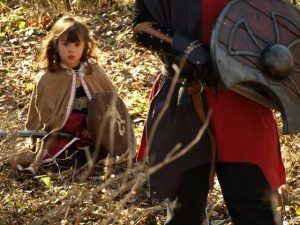
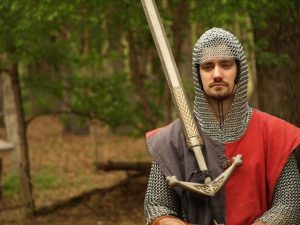
As the refugees of Faedurn found their way to the colonies of Mardrun they had little to no belongings or wealth and many were wounded or sick. They found their new home was less than friendly, and violent clashes between the native races of Mardrun broke out. Some soldiers did survive the Fall and the trek across the great sea and were involved in those conflicts. After the treaty with the Ulven and the colony of Newhope was established, many of those soldiers were recruited as guards to the nobles, while others struck out on their own or settled down to make lives for them selves. There were little resources and bodies left to rebuild The great Vandregon army. The old red and gray started to fade from memory.

There were a few that tried to bring back the glory of Vandregon. One such man was an old Vandregon officer by the name of Alexander Aurgrim. Alexander saw a need for the peoples army again. Though the colonist of Newhope found safety and settled into their homes and new life on Mardrun, those living outside the safety of those walls found life much harder. Desperate men turned to thievery and preyed on the weak on the unprotected roads. Threat of the savage Mordok always loomed in the shadows. Alexander knew that if true prosperity was to come to his people, security and protection had to be established. The roads and vital trade routes had to be protected the smaller villages and farms had to be safe. Vandregon could be that shield.

Alexander toiled for years trying to acquire man power, resources. and allies; anyone or anything that would lend to his cause. A few did pledge support but none had the resources available to fund the construction of a large scale army. Many did not see a need for a grand people’s army. The glory of Vandregon was a memory and most citizens were concerned with their own day to day lives. Though his actions would sow the seeds of Vandregon’s rebirth, Alexander would not live to see the Vandregon colors rise again.

When Alexander died, his grandson William took up his cause. William grew up hearing stories of Vandregon from his grandfather. He believed in the ideals of Vandregon and shared in his Grandfather’s dream of a unified and protected nation. William knew that if Vandregon were to rise again people needed to remember what Vandregon stud for.
So William took up his grandfather’s colors and for two years lived the life of an adventurer. William fought along side many brave warriors in that time. He formed strong bonds and allies and started making a name for himself. Over time he was able to recruit others to his cause.

Vandregon now is a true power in Mardrun. William and other members of the Vandregon army have been at the forefront of many great battles. The roads are now safer. The smaller towns now have trained militias to guard them. The glory of Vandregon has been restored and people again remember what the colors stand for. Vandregon has always been a peoples army and now this new Vandregon army stand strong as a shield to protect the people of Mardrun from all threats.

  1. Home
  2. /
  3. Wiki Pages
  4. /
  5. Lore
  6. /
  7. Page 3

The Battle of Grayfield

The Battle of Grayfield

This excerpt is part of the overall Kingdom of Aldoria page.

The Battle of Grayfield

About a century before the Undead Plague, tension existed between the Syndar and Human nations. Border skirmishes and disagreements popped up throughout the continent of Faedrun and at any moment a full scale war could erupt between the two races. Although the Kingdom of Vandregon had the largest standing army at the time, the King of Vandregon pushed for reason and peace. The King of Aldoria, seeing an opportunity to seize more land and strike first, made a bold move and marched an army into the lands of the Syndar. As the soldiers fought, killed or displaced the smaller Syndar settlements, the King of Vandregon dispatched an army to follow the Aldorians. What the Aldorian generals thought were reinforcements were actually other humans sent to stop the Aldorian advance. The King of Vandregon was willing to gamble and confront their neighboring kingdom in an attempt to solve the situation quickly before all out war broke out with the Syndar.

The Aldorians refused to retreat. They lobbied that to do so would show the Syndar that the human nations were unorganized and fractured. As the Aldorians stalled, the Syndar army gathered and began to move to resist the humans. Political council rooms exploded in heated comments and oaths of revenge if either side came to blows. The human nations bickered, torn between uniting for Man or in giving in to the Syndar. The tension continued to grow as neither kingdom backed down.

To this day, nobody knows for sure what finally sparked what was to be known as the Battle of Grayfield. Generals from both sides were in a heated discussion, waiting for word sent to reach the political councils of each nation and then the replies back to the army. As tension mounted, fighting broke out, centered around the general’s tent. The armies clashed, desperately trying to gain ground to see their leaders to safety. Soldiers fought violently, each side convinced that the other side had sprung a sneak attack on their respective generals. After a short but incredibly bloody battle, most of the leadership of each side and over half of both armies’ soldiers were dead. The incident was named the Battle of Grayfield to represent the deaths of humans that died over a misunderstanding, of the lack of unified colors of their respective nations.

As the Syndar army marched forth onto the encampment, they were stalled by the destruction the humans had unleashed on each other. The Syndar, now having the upper hand, could have easily advanced through the ruined camp and destroyed the remaining survivors of each army and continue their march into the human kingdoms. The Syndar General instead stopped his army, showing respect to the remaining Vandregonian soldiers, and healed the wounded of both sides. There could not have existed any proof more profound than the soldiers of Vandregon willing to battle their neighbors in order to stop them from attacking the Syndar. The Syndar halted their forces, agreed to terms with Vandregon, and ended hostilities with the humans. This single battle would usher in the golden age of peace between the humans and the Syndar.

However, the Battle of Grayfield did end the relations between Vandregon and Aldoria for years to come. The Aldorians felt betrayed and abandoned by their fellow humans. The armies were rebuilt and stationed at the borders of each kingdom, staring each other down in a waiting game to see if further conflict would erupt. Aldoria, far smaller than the kingdom of Vandregon, began to increase its political and religious influences with the nobles and houses of all the human kingdoms, to rally their favor if ever the nations again came to blows. Both nations settled in for a long and tense cold war.

Many years and countless political debates later, the Kingdoms of Vandregon and Aldoria have eased back into an apprehensive nature. No further battles erupted and no other armies were rallied between the two kingdoms. As the survivors of those times had children and those children had their own children, the bitterness between the nations cooled. However, to this day it is a common start to a large tavern brawl if someone claims that “the other side started it at Grayfield”.

Last Hope Larp