1. Home
  2. /
  3. Wiki Pages
  4. /
  5. Nations & Kingdoms
  6. /
  7. Page 5

The May’Kar Dominion

Origins

The area known today as May’Kar was once inhabited by a variety of peoples, who first traveled to it in search of untouched land, and established city-states among the Ukor River  which flowed from the north. As industry and urbanization progressed, the pollution of river waters became a major concern. Tensions grew between these city-states, eventually erupting into outright war. The situation was finally brought to a head when a coalition of forces, led by a woman named Tsimfa, seized the city of Saresh, and stymied the pollution. Tsimfa’s successor, Kosami, would go on to be crowned the first Priest-King of Saresh, and by the end of his life, established Saresh as a proper kingdom. Within Saresh, a church called the Habbatt began to exert control over the other city-states of the river through irrigation and engineering, driving people out into the desert, until eventually brought under control by the institution of a legal court called the Mahsai. Eventually, Saresh was renamed the May’Kar Dominion, in recognition of how its people had tamed the desert.
Click here for more information!

Geography

The May’Kar Dominion is home to the largest desert in Faedrun, with much of its territory lying within the rain shadow of the mountains that define its western border, but despite this it’s home to a large variety of environments. While it does contain sandy dunes, dry, rocky shrubland, salt flats and oases, it’s also home to the Ukor River, which runs from the north of the Dominion through the south and fertilizes everything it touches. Up in the mountains to its west, large coniferous forests dominate the area. And to the eastern borders are flat rolling grasslands. In the northwest, it even touches the sea and extends into a small archipelago. All of these places are vastly different from one another, not only in terms of their climates, but also in terms of their ecosystems.
Click here for more information! (Will be added/expanded at a later date)

Political Structure

The May’Kar Dominion is headed by its Priest-King/Priest-Queen, held by the Mahsai to be the closest living person to divinity. Beneath them is the yazi, a court of appointed and elected officials who convene in the capital of Saresh to handle matters of law and policy. Beyond the capital, territories are organized into Ukorates and algar.

Ukorates are city-states along the river, led by either Princes (a noted title regardless of gender) or appointed governors, and have varying degrees of autonomy. They’re managed by a magistrate who controls their access to the river’s waters.

Algar are peripheral territories designated by the Dominion, and have an algarad assigned to extract resources from them. The people living in the algari don’t all recognize the May’Kar Dominion as sovereign over them, and each algarad must figure out how to establish and capitalize on relations with them.

Notable Groups

The environment of the May’Kar desert has permanently shaped the peoples that live within it, with different extremes in conditions giving rise to different cultural practices and values. These differences are felt very strongly between the peoples of the Ukor and the peoples beyond it, but there is as much variation within these groups as there is between them.

Saresh, the capital of the Dominion, sits on the northern end of the river. It’s a great sprawling city, which has been divided up into six main districts so that the people within it may better specialize and organize themselves. It is a place where the faithful find work and housing through patronage and military service, and the seat of May’Kar’s power and authority.

Meanwhile, on the opposite end, lies Tsamir, a hotbed of education, science, and engineering. It’s surrounded by lush wetlands that have been a source of endless discoveries in medicine and alchemy, and its remote location makes it relatively independent of Saresh and the bureaucracy of May’Kar.

Beyond the river are the many algari, which are too numerous and distinct to capture in full. The peoples who live beyond the Ukor River in Dominion-drawn algar are incredibly varied. They exist along a continuum, with culture and faith having intermingled with one another over centuries. One of the great follies of the May’Kar Dominion is the belief that these people could be separated into categories that are useful to their needs. The following entries are mere examples of some of the people found in the desert, but this is by no means exhaustive:

  • The Mushalee, who have built a city around one of the largest oases in the western desert, and who have a complex history of raiding and trading.
  • The Kae’rim, a collective of different groups of nomads who navigate across May’Kar in a great, meticulously planned route which takes multiple years to complete.
  • The Yewuan, herders who travel from east to west with the seasons and follow a set of sacred religious law that informs their day-to-day lives.
  • The Gölkiyde, who dwell in the Dominion’s western mountains, many of its people moving upwards and downwards to follow the region’s fertility, who recognize no god but their own.
  • The Themakeis, who live in coastal and island communities, produce some of the finest luxuries found throughout May’Kar, and are home to star-mages who use the movements of the heavens to dictate fate.

Military

The Dominion’s military is divided up into two branches: The Army, and the Auxiliaries. These branches are independent of each other, with the head of each branch accountable only to the Priest-King. Forces from these two branches are brought together as needed, supplementing the discipline, organization, and superior numbers of the Army with the specialized arms and tactics of one or more Auxiliary regiments.
Click here for more information!

Economics

May’Kar’s economy is made up of a complex trade network connecting its central territories to its peripheral ones. Rather than trying to overextend into the deeper reaches of the desert, the Dominion relies on the algari, the people already living there, who are already well-adapted to these areas. Taxes are imposed on trade, not only to further fund the Dominion, but also as a form of incentive, with higher taxes often imposed on non-Mahsai faiths, as well as on groups that are less cooperative towards the crown and the yazi. Beyond the Dominion, its main trade partners are Vandregon and Aldoria.

The Register of May’Kar is an institution made up of politicians, merchants, scholars, priests, and more, and is essential for holding up this trade network. Register officials are tasked with the identification, operation, and maintenance of trade routes; assessing the value of an algar, determining the quota of its algarad whether or not that quota has been met; the acquisition and delivery of materials necessary for state-direct projects; the cataloguing and census of the various peoples of the Dominion and their faiths; and much more.
Click here for more information!

Religion

The Mahsai is a legal court which exists to resolve legal interfaith matters, which has in time itself become a religious institution. The Mahsai itself has no gods, no dogma, and no creed. It is not itself a faith that any individual ascribes to, but instead represents a great collection of faiths found from across the Dominion. It’s come to be considered the final authority on matters of faith, and it has the full authority to pass and enforce laws in respect to matters of religion. It recognizes only some faiths as ‘legitimate’, and many powers and privileges are granted only to members of legitimized faiths. Though it has no dogma, it has three central tenets which it uses to determine legitimacy: All life is sacred; corruption fouls the waters; and the Priest-King is the one that lives closest to the gods. The Mahsai has evolved over time, becoming a personal belief held among many, and is also referred to as a philosophy; one of open tolerance to all varied spiritual and religious beliefs. One could hold to the philosophy of the Mahsai, but not be part of the institution of the Mahsai.

The Paladin Corps was established originally as a way of enforcing the will of the Mahsai. They were elite soldiers of faith, who were granted near-immunity to these laws when in the course to carry out their duties. After a period in which rogue paladins enforced the law in their own way, the loyal ones that remained were given holdings, but were barred from membership within the Mahsai and the yazi. Now they take apprentices, and teach them their various sacred rituals and duties, such as the method of cultivating their divine blades, before picking one to inherit their station.

Diplomatic Interactions

Vandregon

The first meaningful interaction between Vandregon and the May’Kar Dominion as proper states was during a series of military campaigns in the formative years of the Kingdom of Saresh, in which Sareshian forces drove south along the Ukor River, eventually reaching Vandregonian lands. They were largely unobstructed for days, before Vandregon’s true military appeared. The retaliation was swift and brutal, with massive casualties on the Sareshian side, who were forced to retreat upwards along the river. The edge of the desert formed a soft border between the two. The Dominion doesn’t have the might to seize Vandregonian lands, but Vandregon can’t bring their advantage to bear in the harsh territory. Even during war time, and especially outside of it, Vandregon has been one of the greatest trade partners of the Dominion, and it isn’t hard to find a wealthy lord still looking to partake in its luxuries and amenities.

The Syndar

According to the Dominion, the first encounter on Faedrun between humans and Syndar was between Yewuan herders and a group of Lairthuduillan explorers from the north. Shortly after these Syndar met with the Priest-King, May’Kar rushed to appease them with favorable privileges such as legitimization within the Mahsai, and preserved a positive relationship with them even leading up to and after the bloody Battle of Grayfield. Now, May’Kar enjoys trade with the various Syndar kingdoms, and some Syndar themselves live in small communities along and away from the Ukor and have contributed to May’Kar’s great diversity.

The Great War

The May’Kar Dominion had a great deal of experience fighting the undead even before the Great War, and so were able to stand as a powerful ally against them. At first they profited from Vandregon’s fighting, leasing companies of clerics and holy warriors out, but as the war approached their doorstep, they formally joined the Grand Alliance. This Alliance was made up of many different states from Faedrun, and they collectively held the Dominion, only ceding ground gradually over the next few decades.

As the May’Kar Dominion fought against the undead, its institutions at home gradually became infiltrated by the Penitent and their sympathizers, who wielded the bureaucratic weight of the yazi and the Mahsai in order to protect themselves from harm. The current Priest-King, Akun, left these troubles at home, opting instead to fight on the battlefield, commanding from the front, eventually becoming a paladin in his own right.

In the year 232, Akun suddenly died, but returned as one of the dead, proclaiming that the undead army would spare the people of May’Kar, should they stop warring against them. The people of the Dominion were deeply divided, with loyalties to the crown clashing heavily with loyalties to the Grand Alliance and to the living. Its diversity of culture and faith, once a strength, only served to complicate the situation to the point of an administrative standstill. As the local Vandregonian forces continued to fight the undead and keep the defensive line held, the Risen-King and his followers turned on them. Detractors of the crown fled the violence south into Vandregonian lands. Crown loyalists pressed on, cutting the Vandregonian Army in half and pursuing those fleeing south, joining up with the undead and eventually overrunning Aldoria.

Meanwhile, part of Vandregon’s forces, which had been stranded in the desert, regrouped and reorganized. The Grand Alliance command was dealt a crucial blow, forcing Vandregon to split it’s army. It took over a decade for this military campaign to reach a conclusion, where Vandregon’s northern army finally marched on Saresh, causing an utter bloodbath as they wiped out any that were loyal to the Risen-King, though the king himself was never found. The Grand Alliance would never recover from the outcome of these events.

Surviving May’Kar & Mardrun Colony

The May’Kar citizens that fled traveled southwards, into Vandregonian lands. They convinced the Vandregonian leadership that they meant no harm, and opposed the Risen-King, and ended up being labeled ‘True’ May’Kar for remaining loyal to the Grand Alliance. Their military was absorbed into other Grand Alliance units, and their civilians were allowed to retreat further south, some eventually ending up on the evacuation fleet. On Mardrun, they struggle to carry on their traditions, separated from the land they had a relationship with, and can mostly be found in a number of small, close-knit communities resembling the algari.
Click here for more information!

Inspiration and Garb

The May’Kar Dominion contains a great variety of peoples in it, and no single description could possibly represent everyone. Inspiration for the region pulls from as far west as Greece, and as far east as Tibet, and features a variety of West Asian and North African influences. These inspirations are used in a variety of different specific combinations and contexts, and aren’t meant to come together in a homogeneous mix. Players are expected to be respectful of real-world cultures and be aware of proper representation and avoid tropes, appropriation, and racist stereotypes, and should also understand that the May’Kar Dominion is not an attempt to recreate any one group exactly.

The specific peoples and subcultures described for the May’Kar Dominion are meant to be illustrative examples, and not an exhaustive list. Please email Staff with any questions or for assistance in expanding on these groups.

Historically, clothing is both functional and fashionable, and the needs of a group are going to be informed by their material circumstances. The people living in the southern region of May’Kar, where the desert begins to give way to fields, are going to have different needs than the people living in the western mountains, who face cold winters and live among evergreen forests.

That being said, here are some general guidelines for finding garb that’s appropriate for a May’Kar character:

  • Clothing should be light and breathable for most people living in the heat of the desert. This means linen and cotton garb. Tunics tend to be long, almost skirt-like. Pants tend to be loose and baggy. Men and women alike might wear dresses. These base layers tend to be white or in natural, undyed colors. Characters from the cooler regions might wear felted wool or furs from herd animals like sheep or goats.
  • Characters with any amount of wealth are likely to layer robes, vests, or coats over their base layer. These might be dyed in vibrant colors, or might be made of a patterned weave, or might feature embroidery or brocade.
  • Nobles might instead layer with garments made from imported silk or velvet.
  • Belts tend to be wide, and might feature decorative elements like medallions or other belts hung from them, but sashes and rope belts are also commonly used decoratively.
  • Cloaks tend to be made of light, thin material.
  • Armor is typically quilted, scale, or lamellar, but broader influence over time allows for many different options or materials.
  • For headwear, scarves and sashes can be worn around the neck and shoulders. Decorative circlets, bands, and hair ornaments are also appropriate.
  1. Home
  2. /
  3. Wiki Pages
  4. /
  5. Nations & Kingdoms
  6. /
  7. Page 5

The Kingdom of Vandregon

The Kingdom of Vandregon- Old World

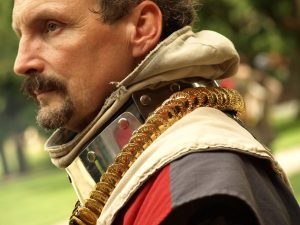
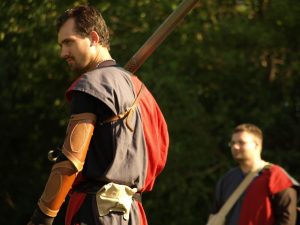
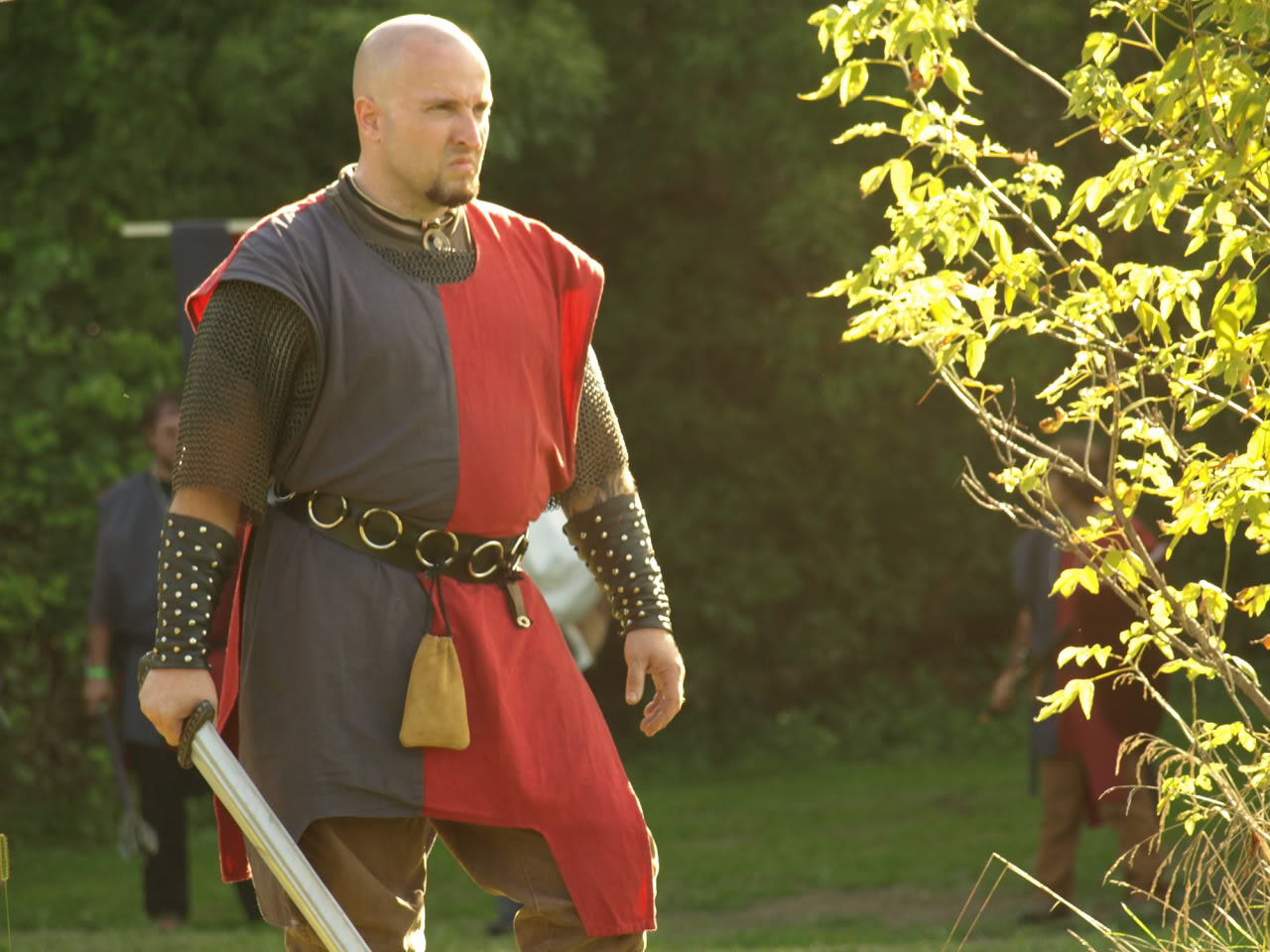
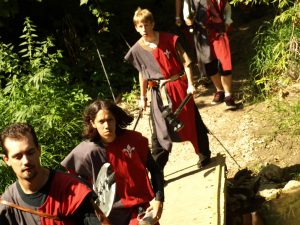
The Kingdom of Vandregon lies on the south western portion of the continent of Faedrun. Its massive territory curls around into a crescent shape. Aldoria lies to the east, Maykar to the north east inside the curve, and the Syndar nations to the far north. Their colors are Gray and Red, representing steel and life. The Vandregon army flies the Gray and Red colors but the Rangers of Vandregon, a large and organized scouting and recon force, are represented by Gray and Green, representing steel and nature.

The knights of Vandregon are the most skilled heavy cavalry in the world, and they ride sturdy and loyal warhorses with a reputation for being absolutely unflappable even in the most dire of situations. Even the peasant militias are better trained and better equipped than most other foot soldiers in the old world. The men of Vandregon are a courageous and proud people, with a long succession of wise and noble Kings.

Home to the largest human population, Vandregon maintains good relations with almost all the human and Syndar kingdoms. They aid other kingdoms when needed, are fair in their dealings, but firm in their ideals and negotiations. The men of Vandregon adhere to a strict code of chivalry, and the people highly value honor and brotherhood as their primary ideals. The territory of Vandregon is large and divided into sections that are ruled by a House; fourteen Houses total made up of a number of nobles, barons, sheriffs, and mayors from their respective territories. Each House has a territory they govern and provide Senators to the governing body of Vandregon. The Senators have a fair amount of power and represent the people of the territory they govern, but the military and kingdom treasury is run directly by the King and his council. The King oversees the Senate and the government is a mix of monarchy and democracy. The King has the most power but if enough Senators disagree with the King they can vote him down but it is a higher than majority ruling; 10 houses must oppose the King’s ruling for it to be overruled. This system is fair and favors change and rapid decision making and has been critical in Vandregon’s growth over time.

Vandregon has grown into the greatest human civilization the world has known. The Kings and Senators, all of whom have achieved knighthood at some point in their lives, have all worked together to build it into what it has become. The enormous military keeps its people safe and the Houses make sure to tend to the needs of the territory. Vandregon has been blessed with a continued line of great rulers and its people are genuinely happy and hard working which makes them productive and prosperous. Every peasant in every country dreams of a good government and kingdom; of a place where people are ruled with firm but benevolent leaders. Vandregon has become just that. People do not fear the military, the politicians, or the King but instead look to them for guidance and leadership. The other human kingdoms have never fully committed to war with Vandregon but border skirmishes and battles over the kingdom’s long history have happened. The closest that Vandregon ever got to full scale war were the initial battles and skirmishes with the Syndar kingdoms to the North and with the Kingdom of Aldoria during the Battle of Grayfield. If fully committing to war, there is not a single human kingdom that could defend against Vandregon’s military for long.


The Undead Plague on Faedrun, and the Fall of Vandregon

The King of Vandregon wasted no time fully committing the army to combating the undead. He knew the threat that this organized force would face, and realized that the longer they waited, the more powerful the Undead would become. Instead of simply mobilizing and reinforcing the borders, the army needed to comb through the land and flush out the undead. Not only that, but the source of the Undead plague needed to be discovered and destroyed. The bulk of his Infantry was dispatched to cleanse the countryside and purge the Undead from within the borders, while Cavalry, Rangers, Knights Errant, and brave volunteer Adventurers formed expeditionary forces to locate the heart of the Undead menace. This is when it was discovered just how widespread and embedded this threat had become. Villages all over Vandregon’s borders were taxed to their limit as town guards could barely keep people safe. When the peasants began to rebel and take up arms against the Vandregon army, the true magnitude of the threat was realized.

What was initially thought of as isolated outbreaks of undead and of crazed or fever-maddened townsfolk was actually the beginning of an organized effort that began to call themselves the Penitent. Almost overnight, this rebel army sprang up and began to overwhelm or destroy the smaller Vandregon army units that were combing the land and fighting the undead. The King mobilized a much larger army to counter attack the Penitent, but realized that the undead curse and the Penitent had spread to other kingdoms and the opposing army was much larger than anticipated. As the fighting continued, the dead on both sides did nothing but bolster the numbers of the massive undead horde beginning to form. The very soldiers sent to fight and stop the Penitent army were rising again to fight for the undead. All out war erupted both at the borders of Vandregon and inside the kingdom’s lands. Panic gripped the entire continent.

The army of Vandregon managed to hold it’s own against the undead and penitent for a number of years. It was a long and grueling war and the casualties suffered on both sides were staggering. People were born and grew up in a world where war was all they had ever known. The King and the Senate used all the resources and strategic planning they had at their disposal to keep Vandregon alive. Vandregon was supported by and became a haven for refugees when the smaller kingdoms fell and were displaced. Soldiers trained constantly and held the lines against an unimaginable foe. Mages and clerics from numerous orders searched the continent and tried to discover secrets or new weapons to use against the undead. Rangers and scouts moved in and out of dangerous territories looking for weaknesses to exploit. Through years of war, the Vandregon army forged some of the most skilled and veteran warriors, heroes of legend who forged a name in history and spurred on the soldiers around them. The cost of constant fear of the undead also became a huge problem, as a large numbers of soldiers broke down due to psychological trauma or defected to the ranks of the penitent. Every day was a battle and every new dawn a miracle.

While the expeditionary forces never confirmed the location or the source of the Undead, they did discover that the enemy was using the former May’Kar dominion as a headquarters, and that there was reportedly an Undead leader there called “The Risen King”. The Maykar Dominion had betrayed the other kingdoms, and joined the penitent cause. It was the only lead they had, and they were running out of time. The army of Vandregon was split to deal with this new threat so entrenched near the heart of Vandregon territory, and a grand crusade was launched. The King of Vandregon asked the other Kingdoms for aid, but only the Syndar of Tielorrien joined them in any real numbers. The Aldorians not only refused to send any troops, but actually asked for more aid from Vandregon. The situation was grim, and this was a desperate gamble. If the undead and penitent used the trade routes through the desert to get into Vandregon, they could cut the entire kingdom in half. The Northern half of the army continued to root out the undead inside the Vandregon borders and began an offensive campaign against the MayKar Dominion. It took years to fight and begin to defeat the traitor kingdom, and the diversion was costly. During the tail end of the battle with MayKar, Vandregon tried to divert some resources to Aldoria so they could search for and fund a colony. At first it was just to find another land, and then when it was found it was to pledge support and supplies to ship building. Several cities shifted gears and tried to build ships to assist in the effort in building the colony.

The Southern half of the army focused on the enormous line between the heart of the Vandregon and the enemy. They could barely stand against the undead, but were trying to hold out long enough for the Northern army to join them when they conquered MayKar. When the undead decimated Aldoria, their numbers exploded because of new penitent joining their cause or the dead coming back to fill in the ranks. The undead army renewed its attack on Vandregon with tens of thousands of fresh undead troops, and it overwhelmed the Southern army. This event, from the start of the split to the decimation of half of the Vandregonian army, was called “The Fall”.

The Northern half of the army retreated to the far western and northern reaches of Vandregon. The southern half was decimated. The army broke into smaller groups and tried to retreat. Some units were able to fall back, some were slaughtered to a man, some are rumored still lost deep inside undead territory. Few made it across the ocean in boats to Mardrun. Half of the largest and most disciplined army in human history was utterly destroyed. With the Southern army gone, the massive horde of Undead and penitent poured into the lands of Vandregon unchecked. The nation of Vandregon was ravaged as the people fled towards the Northern army or tried to squeeze into dangerously overloaded ships sailing East. The capitol city of Vandregon was razed to the ground.

Vandregon, the largest human society and the strongest military army on Faedrun, was destroyed.


Vandregon Refugees – Mardrun Colony
Much of the government was still on Faedrun and most of the Southern Vandregon army gave their lives defending against or slowing down the undead. Most of the soldiers that made it across were wounded or escorts. More than one story has been told of survivors being loaded onto boats so filled with people they are barely sea worthy and ranks of Vandregon soldiers defending to the last man, taken down one by one by penitent and undead just to give the civilians a chance to get away and out to sea. The ferocity and skill of these doomed soldiers fighting in their last moments has become a legend in itself.

To this day, nobody knows the true fate of the Northern army and the north western half of Vandregon.

Vandregon hasn’t recovered in any sort of organized way since The Fall. The soldiers and civilians who made it across on the boats were more refugees and survivors than organized groups starting a new life. A fair number of colonists are from Vandregon, but the lack of organization has them scattered all over the colony territories and carrying on with their new lives. Some of the nobility that formed the colony of Newhope originated from Vandregon, but they are more concerned with the colony than they are with breathing new life into the old colors. Being a nation founded upon chivalry and Knighthood, the sad fact of the matter is that most of the leadership of Vandregon rode out to protect the retreat of their people from Faedrun, and died doing their duty as Knights.

Recently, however, a young and ambitious Knight from Vandregon has been organizing and training an infantry unit that wears the colors of his native land. The new army of Vandregon grows in strength everyday under the charismatic leadership of Sir William, Grandson of Sir Alexander. The New Army of Vandregon has made its presence known in the colonies, and their patrols of outlying villages have made the region safer from Mordok attacks. To the local civilian populace, the colors of Vandregon are a welcome sight, and the Soldiers of the new army of Vandregon have developed a reputation as honorable and brave fighters, true to the ideals of chivalry and the proud traditions of their homeland. The New Army of Vandregon helps to protect the farmers and colonists who live too far away from the main colonies to be under anyone else’s protection. They train and equip small local militias, and are constantly recruiting from the local populace as they make their patrols. The New Army of Vandregon made up an important part of the Ulven/Human/Phoenix Syndar alliance that stood against the Lich on Mardrun, and they have even sent troops to help aid the Watchwolves and Nightrivers in the Ulven Civil War.

The standard currency from Faedrun, the Vandregon Silver, survived the trip to Mardrun. Enough coins are in circulation that it is still considered the standard form of currency for the colonists.

  1. Home
  2. /
  3. Wiki Pages
  4. /
  5. Nations & Kingdoms
  6. /
  7. Page 5

The Kingdom of Aldoria

The Kingdom of Aldoria

The Kingdom of Aldoria – Faedrun – OLD WORLD
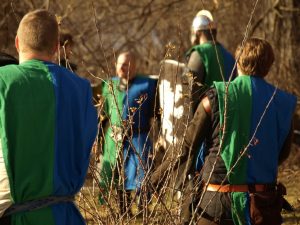
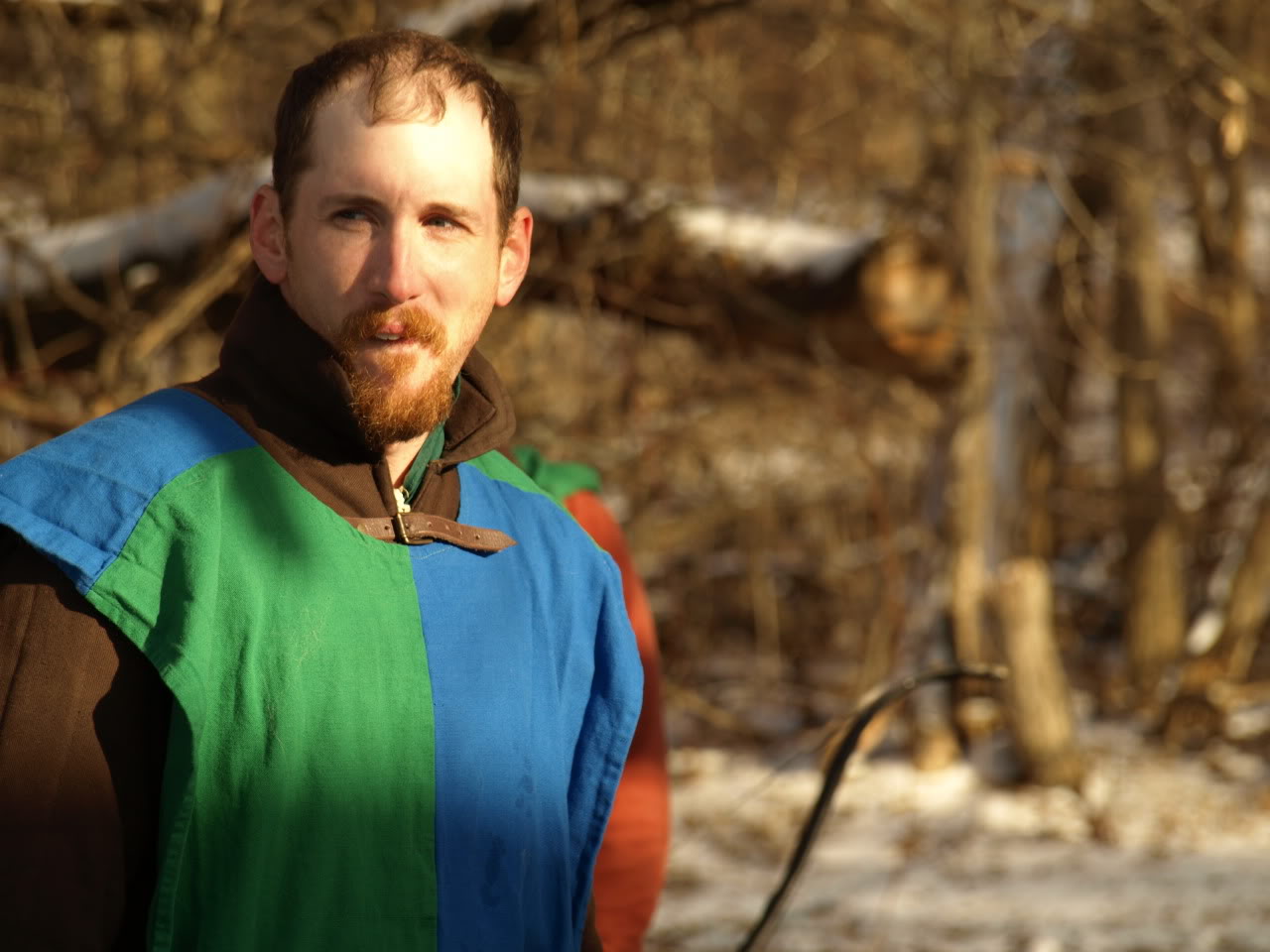
The Kingdom of Aldoria sits neighboring Vandregon on the continent of Faedrun. A smaller kingdom, Aldoria is home to a very wealthy merchant system and specializes in economy, trade, and politics. Aldoria also became the first nation to truly master the oceans and its trade routes along waterways exist because of Aldorian explorers and sea merchants. Their banner colors are green and blue, representing water and growth, and their crest is a compass with cardinal direction points.

In addition to their prowess as sailors, the Aldorians developed some of the finest breeds of horses that the world has ever seen, from the smooth-gaited walking horses prized by the nobility for their comfort and grace, to the strong and hardy draft horses that work the fields and haul cargo overland. Even the powerful warhorses so beloved by the knights of Vandregon are descended from Aldorian bloodlines. Other nations may be famous for their specialty exports, but the Aldorians are the ones who move those commodities. The Aldorians were the first to map Faedrun, and nearly all of the major trade routes were blazed by the explorers and merchants of this Kingdom. By creating a network of tollways and bridges within their Kingdom and extending out to every entry point along their borders, the Aldorians have been able to fund and support the smoothest and best maintained roads in Faedrun.

Because of the high volume of trade traffic and valuable goods passing through this Kingdom at any given time, there is a long running problem with piracy and highway robbery. The merchant guilds have taken matters into their own hands by creating Road Warden garrisons and Merchant Marine Corps, but sadly these mercenary organizations are often corrupt and can actually be just as dangerous as the pirates and bandits themselves. Behind the extortion and protection rackets are the competitive individuals of the merchant guilds themselves, of course, back-stabbing each other whenever possible.

Aldoria has had good relations with the other nations except for a misunderstanding with Vandregon that led to a bloody encounter called the Battle of Grayfield. Many years ago, when the Aldorians were just beginning to get their momentum as a major economic power, the country expressed interest in opening up more trade with the Syndar. At the time, the Syndar kingdoms were still quite isolationist in regards to the humans, and rarely traded with them. There was a definite demand for Syndar goods, however. Everything they produced from spices to artwork was highly prized by the wealthiest humans, and brought excellent prices. The Syndar, however, really had no interest in trading with the Humans, especially since as far as they were concerned, there was not a thing that the humans could produce that they couldn’t do better themselves. The only place where Humans and Syndar even had frequent contact was in the May’Kar dominion, center of learning and religion in the Old World. Time and again, the Aldorian merchants and ambassadors were politely turned away from the various Syndar kingdoms without gaining any ground on opening up trade. This created much contempt among the people of New Aldoria, and the merchants of other lands as well. Eventually, the attitude spiraled into outright resentment, and racism began to run rampant in the kingdom of New Aldoria.

The Battle of Grayfield
About a century before the Undead Plague, the tension that existed between the Syndar Kingdoms and Human nations of Aldoria and Vandregon was boiling into hostility. Border skirmishes and disagreements popped up throughout the continent of Faedrun and the land was on the verge of an all out genocidal race war. Although the Kingdom of Vandregon had the largest standing army at the time, the King of Vandregon pushed for reason and peace, sending diplomats and ambassadors to the City of Seven Gates in Tielorrien. The King of Aldoria, already frustrated and angry with the Syndar, saw an opportunity to seize more land and strike first. He made a bold move and marched an army into the lands of the Syndar. As the soldiers fought, killed, or displaced the smaller Syndar settlements, the King of Vandregon dispatched an army to follow the Aldorians. What the Aldorian generals thought were reinforcements were actually other Humans sent to stop the Aldorian advance. The Men of Vandregon confronted their neighboring kingdom in an attempt to solve the situation quickly before all out war broke out with the Syndar.

The Aldorians refused to retreat. They lobbied that to do so would show the Syndar that the human nations were disorganized and fractured. As the Vandregonians stalled the Aldorian advance, the Syndar army gathered and began to move to resist the Humans. Back in Aldoria, political council rooms exploded in heated arguments and oaths of revenge were sworn in the event that either side came to blows. The tension continued to grow as neither kingdom backed down.

To this day, nobody knows for sure what finally sparked what was to be known as the Battle of Grayfield. Generals from both sides were in a heated discussion, waiting for word from their politicians. Somehow, fighting broke out, centered around the Vandregonian general’s tent. The armies clashed, desperately trying to gain ground to see their leaders to safety. Soldiers fought violently, each side convinced that the other side had sprung a sneak attack on their respective generals. After a short but incredibly bloody battle, most of the leadership of each side and over half of both armies’ soldiers were dead. The incident was named the Battle of Grayfield; The color gray representative of the lack of unified colors of the respective nations.

As the Syndar army marched forth onto the encampment, they were stalled by the destruction the humans had unleashed on each other. The Syndar, now having the upper hand, could have easily advanced through the ruined camp, destroyed the remaining survivors of each army, and continued their march into the human kingdoms. The Syndar General instead stopped his army, showing respect to the remaining Vandregonian soldiers, and healed the wounded of both sides. There could not have existed any proof more profound than the soldiers of Vandregon willing to battle their neighbors in order to stop them from attacking the Syndar. The Syndar halted their forces, agreed to terms with Vandregon, and ended hostilities with the humans. This single battle would usher in the golden age of peace between the humans and the Syndar.

The Battle of Grayfield did, however, end the relations between Vandregon and Aldoria for years to come. The Aldorians felt betrayed and abandoned by their fellow humans. The armies were rebuilt and stationed at the borders of each kingdom, staring each other down in a waiting game to see if further conflict would erupt. Aldoria, far smaller than the kingdom of Vandregon, began to increase its political and religious influences with the nobles and houses of all the human kingdoms, to rally their favor if ever the nations again came to blows. Both nations settled in for a long and tense cold war.

Many years later, the Kingdoms of Vandregon and Aldoria have eased back into an apprehensive nature. No further battles have ever erupted. As the survivors of those times had children and those children had their own children, the bitterness between the nations cooled.

To this day, however, it is a common start to a large tavern brawl if someone claims that “the <other side> started it at Grayfield!”.

The Undead Plague – Faedrun
When the great undead scourge began to devour the land, Aldoria was ill prepared to handle this threat head on. The focus of Aldoria had shifted to supplies, trade routes, and managing merchant guilds. When the undead began to consume its borders, Aldorian soldiers could barely handle keeping them at bay. The neighboring kingdom of Vandregon did well mobilizing an army to meet the threat, but the shift of focus off of its military had made Aldoria weaker over the years, and many of their troops were unreliable mercenaries. Aldoria did not fully commit to the fight. Even as the King of Vandregon pledged to personally face the undead in battle and launched a grand crusade into the May’Kar dominion, the King of Aldoria held back. This move very well could have sown the seeds of destruction on Faedrun.

Meanwhile, Aldorian seafarers had discovered the new continent of Mardrun. As the Undead continued to attack the borders of his kingdom, the King of Aldoria immediately put his money into a secret project to build a colony in the New World.

While the colonists became established on Mardrun, the Aldorian people back in the Old World began to question their King. More and more farmland fell to the advance of the undead, yet the King would not send soldiers out to reclaim it. Instead, more effort was put into building more ships and working on the colony. Peasants and farmers began to flee, most of them into the neighboring lands of Vandregon, as the King and the army continued to fund and work towards the expansion of the colony. The King of Vandregon pleaded with the King of Aldoria to join forces in face of a common enemy, but the offer was refused. The King of Aldoria said that the people of his kingdom still remember the scars of how Vandregon “united” together as brothers in arms against the Syndar so long ago.

As the King and his political entourage of nobles, knights, and politicians prepared to leave the continent of Faedrun, the army collapsed entirely and the undead besieged their lands. Countless thousands were slaughtered as the King attempted to flee. Soldiers were ordered to stand and fight to keep the undead from destroying the ships. The entire port city was a bloody massacre as the ships set sail for Mardrun. Ironically, by holding back and isolating themselves, the Aldorian army could not withstand the tide of Undead and their deaths added thousands upon thousands of fresh troops raised again for the armies that just slaughtered them. This bolster in numbers was the major turning point when the Undead began to overwhelm the other human nations.

The Settlement of New Aldoria – Mardrun Colony
After the massacre, not very many ships reached Mardrun. Between the diseases of the wounded, the lack of ample food and water, and the haste in which they left the continent of Faedrun, the kingdom of Aldoria was doomed. The King never survived the trip to the colony he worked so hard to fund and his son would bury him at its shores. The houses and nobles were scattered, in poverty, or left with nothing upon their arrival to the new colony. What was once a proud nation of Faedrun was nothing more than a handful of bloody survivors, refugees, and battered soldiers.

Not all hope was lost, however, as the remaining nobles and military leaders tried to put the pieces back together and lead the colony. They proclaimed the King’s son the new leader and began a plan to rebuild. This course of action was not favored by many of the original colonists, who had grown hearty and cold with having to carve out a living on the new continent, and the colonists of Newhope declared their independence from Aldoria. The newly arrived refugees did not have the funding or men to rule what they had created, and the nobility could not resist the secession. Instead, the survivors of Aldoria banded together and carved out their own piece of the new continent and created the settlement of New Aldoria. This settlement grew strong by learning from the Ulven, yet keeping them at a distance, and battling the Mordok. The King’s son grew up in this environment, working his way around the people and vying for political power. Everyone knows him to be an ambitious leader, savvy in both politics and combat, if not bitter from the history of his kingdom. It is rumored that he is planning on gaining a following and campaigning for rule of Newhope on Mardrun, rumored to be finally fulfilling his father’s wishes of controlling the colony his shattered nation helped build. More settlers and refugees continue to band together under the banner and colors of the dead King’s son and his Aldorian Guard, and more nobles have pledged support as his power expands.

New Aldoria narrowly averted a full scale war with the Watchwolf Clan after an ill disciplined and rowdy group of their Soldiers, secretly in the employ of an ambitious noble, tried to murder a young lady of the royal family and frame an Ulven Ambassador and the Captain of the Crow’s Guard for the attempt. Their plot was discovered, however, and foiled by a party of brave adventurers at the Wayward Inn.

Raskolf Vakr, the Voice of the Watchwolves, responded with a diplomatic mission to New Aldoria, where he met with the Prince personally. The Watchwolf Ulven and the New Aldorians averted war and actually managed to improve relations between the two nations. When Mordok attacked children playing on royal hunting grounds, the Ulven Ambassador’s seven-year-old daughter saved the life of the Prince’s own young son, and the two became fast friends.

New Aldoria has stayed out of the Ulven Civil war thus far.

Aldorian Culture and Folklore

The Aldorians are a proud people from a very wealthy and prosperous country. Their current state as refugees has done little to humble them, and it certainly has not broken their spirit. They maintain good political relations with the nobility in Newhope, though their is a certain amount of tension between the New Aldorian colonists and the people of Crow’s Landing, whom the Aldorians consider deserters. The New Aldorians have been criticized by others as coming off as racist towards the Syndar and the Ulven, but in reality the perceived arrogance is just the way that most Aldorians talk to everyone that they aren’t trying to sell something to. In fact, the current ruler of New Aldoria is half Syndar, himself. The Prince is a good man, and for the most part, so are his people. There is just the matter of the old King’s skeletons in the closet, and the troubling little detail that many of the Aldorian survivors are sailors who have previously dabbled in piracy. The Prince has his work cut out for him.

The Aldorians are the finest ship-builders in the world, and the best sailors. They take great pride in that. Since the fall of the May’kar, the Aldorians also have the finest stock of horses, with bloodlines traceable directly to the first domesticated stallions of the May’kar nomads. They were some of the only people to successfully bring horses to the new world, though they only have a single small herd, almost all of whom dwell in the royal stables in the capitol of New Aldoria.

Aldorian Folklore

Aldorian folklore tends to focus on clever heroes and gods of fortune and wealth.

Sir Flaccus and the Magic Goat

Once upon a time, long ago, back in the old country of Aldoria, there lived a fat and greedy lord by the name of Sir Flaccus. Sir Flaccus was the heir to a great fortune left to him by his father, who had been a fine and savvy merchant in his day. Sir Flaccus was lazy and foolish, though, and lived in decadence while his peasants wallowed in poverty. Indeed, Sir Flaccus taxed nineteen out of twenty of their coppers, and took nine of ten bushels of their produce.

One particularly harsh winter, the poor starving peasants pleaded with their lord to spare them some food, for while the people starved, Sir Flaccus had so much food that his larder was overflowing and much of his overstock was mouldering. Much to their dismay, the greedy Lord refused even a pittance of grain.
Now, in the village lived a humble farmer with a trickster for a son, and a kind and virtuous daughter. The virtuous daughter had raised a beautiful goat with a coat like spun gold from the time it had been a tiny kid. The girl loved her pet, but as the winter wore on and the people were starving, the farmers neighbors tried to steal it to eat it! Eventually, even the farmer himself was considering slaughtering the animal, but the trickster son stopped him. The boy said that he knew a way to get the miserly lord to feed the people, but first he would need to collect all the coins that he could. The people were hesitant at first, but eventually they relented and gave their pitiable savings to the boy.
The trickster boy fed the coins to the goat, and left to see Sir Flaccus. He told the lord that his goat was a magical and fey creature from the land of dreams, blessed by the god of good fortune. He said that everyday, the goat would make coins for its owner. Sir Flaccus didn’t believe him, but then the goat lifted its little tail and coins fell out along with its stool. Sir Flaccus was amazed. He had lived a very sheltered and pampered life, and knew nothing of the dietary nor the digestive abilities of common goats. The greedy lord asked the trickster boy if he would sell the goat, and the boy said that he was very rich from owning the amazing goat, and that he no longer was interested in money, but only wanted to do good in the world so that he might someday get into heaven. The boy said that Sir Flaccus could have the goat if only he promised to feed his people better, and to cut their taxes. The Greedy lord agreed, and asked the boy how much the goat produced every day. The boy told him that it depended on how happy the goat was and how wise the owner was, for fortune was no friend of fools. Sir Flaccus purchased the goat and opened his larder to the starving people.

He put the goat in his stables under heavy guard. The next morning, the greedy Sir Flaccus searched all through the dirty stall with his bare hands looking for gold. When he didn’t find anything, he ordered a nicer stable be built to house the goat and make it happy, and he had his cooks feed the goat the finest and richest food they could make. The next morning, Sir Flaccus found that the rich food had given the goat some terrible diarrhea, but nonetheless, he searched it for any sign of coin. Still he found nothing. He ordered that the goat be moved into his own manor, and summoned the wisest and eldest farmer in his land to prepare the best food a goat could eat. The next morning, he awoke and searched his foyer for coins. The goat had ruined his carpeting, but there were no coins to be found. He decided to take the goat into his room and let it sleep in his bed. It still did not produce any coins, but it stunk up his room, and ate all the important documents out of his desk drawers, including his patent of nobility and the deed to his manor. Once Sir Flaccus started sleeping with the goat, his wife took her cats and started sleeping elsewhere in the manor, but the greedy lord didn’t care. When his servants and family asked about the goat, however, he was too ashamed to admit that the goat wouldn’t produce any coins. He didn’t want anyone to think that the god of luck and good fortune thought him a fool! Sir Flaccus lied to his family and his servants, and scattered coins around his house every night so that it looked like the goat was making him money.
Sir Flaccus never learned his lesson, but the peasants of his domain lived happily ever after, and so did his beloved goat, who became even more spoiled than Sir Flaccus himself had been as a kid.

Last Hope Larp