Stormfang

Pack Stormfang bio

Chief: Jorvik Axehound

Priestess: Sigrid Axehound

Champion: Vilkas Stormfang

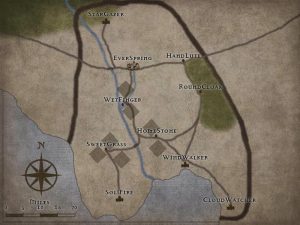
Pack: Belongs to Clan Axehound Located west of the main Axehound settlement. The settlement is closer to where The Great Forest lies. Taking much of the attitude from the main clan, Pack Stormfang is more brutish in nature. If you could not fight, you were forced to farm or do other tasks that seemed demeaning to your Ulven name. If you could not fight or could not work, you need to fend for yourself and try your best to survive. Stormfangs believed in strength more so than any other aspect. They often had contests to prove strength, battle prowess and battle capabilities. Most were not to the death but if one was caught committing a crime heinous enough to be put to trial they would be given a “Last Stand” trial. Meaning they would be given a dull blade, no armor and would be forced to fight against 2 other pack members in full battle armor. If the accused managed to land 3 cuts on each of the 2 members he was able to go free but was branded as a criminal. Pack Stormfang mainly kept to themselves and only hunted in The Great Forest while still holding on to their tradition, and hunting only what they needed to survive. It is always in respect to Gaia.

Coywolf FAQ

History & Geography

The Coywolves were formed in the summer of 181, as an independent group whose main purpose was to build and guard a road over Mardrun’s central mountain range, known as the Great Wolf’s Hackles (see: The Coywolves).

The road built by the Coywolves in the mountains is 45 miles long as the crow flies, or roughly 60 miles on foot, and stretches from the northwestern border of Clan Nightriver territory to just north of the Clan Grimward border. A lightly encumbered War Pack could travel it in less than three days, while a trade caravan would take about a week.

What kind of structures do they build and to what style?

Eleven small outposts, varying from unoccupied single-building waystations to three- or four-building groups of dwellings, are located approximately every 5 miles along the road. These buildings are cabin- or lodge-style buildings, often made out of stone, and sometimes dug into the side of the mountain.

Two larger villages, one on either side of the range, lie near the beginning of the road. The northwestern village, consisting primarily of the Bloodskin and Hindsblood family holdings and a shared longhouse is called Edana’s Pass; the southeastern village is Griogair’s Pass, consisting primarily of the Stormherald family holdings and a central longhouse. They are named in honor of Grimward guard Edana Redscythe and Nightriver merchant Griogair* Marshwinder, who died while stranded in the mountains during the winter of 180 – the original Coywolves dedicated their mission them.

*pronounced “GRI-kuhr”

What is the population of the Coywolves?

The population varies from year to year, or even from season to season, generally belonging to one of two groups: those who are born, mated, or otherwise permanently living with the pack, and those who live with lowland packs over the winter. Around members in early summer is a reasonable population estimate, dropping to perhaps in midwinter.

Some Coywolves, after a time in the mountains, choose to later join lowland packs, but once there often continue their work by extending the road to the major trade towns of Mardrun.

How do the Coywolves relate to other Ulven?

Officially, Pack Coywolf are part of the Watchwolf Clan, and have regular contact with most other Ulven clans. Although the bulk of their members were originally from the Watchwolves and Clan Nightriver, they have had members from almost every clan on Mardrun at one point or another. While most Ulven feel the Coywolves fulfill a necessary task, and are grateful, many see the task as lacking the glory needed to face the Great Wolf. It is for this reason, especially in the early days of the pack, that more than a few members were disowned by their families when they left to join the Coywolves – a certain animosity can remain between the disowned and their former families.

Organization

Is there a particular talent, trade skill, or resource that this pack has or focuses on?

All Coywolves are expected to know some sort of trade or craft related to road-building or living in extreme terrain. Stonemasonry, carpentry, trapping/hunting, and foraging are by far the most common; blacksmithing, alchemy, and healing are highly valued, but far less frequent; storytelling and music are prized, but mostly exist as secondary skills.

What kind of leaders do they have and what is their structure and importance?

The Coywolves do not have a formal Chieftain or Priestess. Individuals will step forward into a leadership position for a specific task by merit of knowledge or skill, and there are some whose voices carry a little more weight than others, but any decision that has an effect on the entire pack is made by rough consensus of members (usually through gathering of senior family members). In the event that no consensus can be reached, but a decision must be made, then the matter is usually brought before the leader of a closely allied group (e.g., Watchwolf High Priestess, Nightriver Clanleader, etc.).

True Daughters of Gaia are quite rare among the Coywolves. Most who wish to follow that path need to leave the Pack in order to be formally trained, and very few return. Slightly more common are witches who have been informally trained, for whom magic is generally a minor secondary skill. The Coywolves have developed a strong storytelling tradition outside of traditional Lore circles (usually in the form of songs sung while working) to compensate for this shortage, as well as a tendency towards written recordkeeping.

How do they handle economy and wealth?

When the colonists introduced their coin-based trade system, the Coywolves were very quick to adopt it. Because of the narrow scope of their mission and skills, barter goods were often a burden they were not equipped to bear, so lightweight tokens of wealth allowed them to accept gifts and procure items they need without risk of accidentally becoming goatherds.

Mores & Folkways

What belief structures do the Coywolves have? (sayings, totems, rituals, superstitions)?

Most of the tradition and symbolism used by the Coywolves is descended from Watchwolf lore, with some variation according to which Clan an individual’s family came from, as well as a few additions that are semi-unique to the Coywolves.

Hospitality is the most highly prized trait among the Coywolves. If a traveler comes to the door of a Coywolf house, they are obligated to offer food, water, and a place to sleep if needed. Allowing an invited guest to come to harm in your home is one of the greatest transgressions you can commit among the Coywolves.

Are there any symbols or animals important to this pack?

Coyotes are seen as representing the cleverness and pragmatism that define the Coywolves, and are treated with respect similar to wolves. Other symbolically important animals include ravens, squirrels, and rabbits.

Is there anything considered taboo or forbidden to the Coywolves?

Some common Ulven taboos have a much lighter hold on the Coywolves, mostly for pragmatic reasons. Limited resources in the mountains has resulted in a more relaxed attitude towards taking items from the dead (particularly clothing and equipment), and risk of wildfire in summer has caused the acceptance of sky burials (leaving bodies for scavengers to eat) as a respectful funeral.

Although the Coywolves still generally observe the Ulven taboo against intentionally speaking to the dead, that belief has also decayed somewhat. Many of the founding members of the Coywolves maintained that they were haunted by the ghosts of Edana Redscythe and Griogair Marshwinder, to the point that they would describe strong intuitions as advice from their fallen companions. Whether this is a literal haunting, or an artifact of guilt is uncertain, but many Coywolves will still attribute strange noises or impulses in the pass to the ghosts.

Fighting

What kind of fighters does this pack have? Are they known for anything in particular?

The Coywolves, like all Ulven, are competent and fierce fighters, but very few are true warriors. They defend the pass from Mordok primarily by laying an extensive network of traps on either side of the road, enough to keep travelers relatively safe (from Mordok – there are stories of unfortunate folk who left the road to relieve themselves, only to end up with a bear trap clamped someplace very unpleasant).

When it comes to direct conflict, many prefer ranged weapons such as bows or slings; their melee fighters tend towards smaller swords or light fighting axes, and dual wielding is quite common. Their tactics assume being outnumbered by their foes, and as such strongly favor using speed to gain favorable terrain rather than brute force, often choosing to retreat to a point where they can gain reinforcements.

What is their stance in the Ulven Civil War?

The Coywolves are officially neutral in the Ulven Civil War. Although they are allied very closely with the Watchwolves, and generally view the colonists as guests on Mardrun (thereby deserving of protection), they do not have the military strength to fight against either side for very long and several members of the Pack have relatives within Grimward (or enemies within Nightriver). As such, their primary concern is finding a peaceful resolution, with minimal loss of life for both Ulven and Colonists. Political neutrality notwithstanding, after briefly being held by Grimward forces, the Coywolves’ road over the mountain is currently controlled by Longfang and Watchwolf warriors. The Coywolves themselves are going about their business, shoring up the road against spring floods.

Important Figures

Ylsa Stormherald (235 – present) PC
Prominent heir of one of the largest Coywolf families, she is currently living outside of the Pack, and is mated to the brother of the Watchwolf ambassador.

Ioan Hindsblood (?? – present) NPC
Leader of a Coywolf hunting party, he is currently a prisoner of war somewhere in Grimward territory.

DECEASED: Branwen Stormherald (159 – 241)
One of the original founders and de facto leaders of the Coywolves, she was the first to assume a new family name upon joining the Pack. She is also mother of the largest family within the Pack.

DECEASED: Amynedd Bloodskin (161 – 230)
One of the first Ulven to join the Coywolves after they were originally formed, father of the third largest family in the Pack.

Pack Coywolf

The Coywolves (Pronounced Kai-wolves)

The Coywolves are not a Pack in the traditional sense. Three generations ago, they were only travelers, traders, and bodyguards – unfortunate ones at that. They began as a trade caravan traveling between the Watchwolf settlements of Luna and of Sol, whose number also included traders from almost every Clan whose territory lies between the two Watchwolf Packs. Their allegiance was through trade, not family, as this band of many Packs crossed the Great Wolf’s Hackles, the central mountain range of Mardrun, bringing salted fish and fine jewelry from the Northwestern coast, and fruits and furs from the Central woodland, to barter for grain from the steppes of Nightriver’s holdings.

The mountain pass was dangerous and unmaintained, little more than a goat path. Still, it was safer from Mordok raids than the Northern route that threads between mountain and lake, and faster by a week or more than the Southern route around the range, at least for those with skill and strong backs. But sometimes skill is not enough. Winter comes early and storms strike suddenly in the high mountains. While leaves had only begun to fall in the lowlands, the travelers were stopped by the first blizzard of the season as they began their descent, high on the Eastern side of the range, where even the strongest trees crept across the ground like moss.

When the skies finally cleared, they found the trail both before and behind them collapsed and buried beneath knee-deep snow. Three scouts died discovering this. They hid everything they could not carry on their backs in a small cave and pressed onward, roped together and clinging precariously to the side of the mountain while they searched for a stable path. They soon rejoined the trail, and descended to where the trees grew tall once more. Still high above their destination, they stopped to rest in a large hollow. There is where they were when winter closed its fist on the mountains, and there they stayed until the spring thaw released them.
Some of the surviving travelers returned to their Packs and families once the ordeal was done, but many took it upon themselves to see that such a thing would not happen to any other traveler. They returned to the mountains, some taking their families with them, some leaving mate and children in the lowlands… and a few were stripped of their family name and warned never to return to those they left behind, their determination to aid strangers seen as a betrayal to their own blood.

A handful of young Ulven from other Packs on both sides of the mountain saw this as an honorable mission, and joined them. Allegiances blurred among the ever-shifting bands working to build and maintain paths and outposts through the mountains. The small groups began to feel kinship not just with the noble wolf, but with the artful coyote as well. This was a kinship also observed by their many detractors, who saw this new Pack’s near-anonymous labor as shameful and unworthy of the Great Wolf’s attention when compared to the deeds of Ulven warriors, and who called them Coyote the Disloyal, Coyote the Scavenger, Coyote the Coward.

And so the Coywolves were born. Claimed by the two primary Watchwolf Packs, but with little voice in the business of either, their numbers spread out over many leagues, they have paved a road over the Great Wolf’s Hackles, which their strongest constantly work to maintain throughout the year. Some of their older members, and those with very young children, work to extend that road to either coast. But though they are often far from home as a matter of course, they are not nomads – they are guardians. Their hearths are always warm, and their larders always stocked for company. Wayward travelers are always welcome at their doors, and one of the greatest taboos among the Coywolves is allowing a guest to come to harm under your roof.

The survivors of the original caravan all died upon the mountains, eventually, but life among the Coywolves is not for everyone, nor for every time in an Ulven’s life. Members of the Pack come and go. A born Coywolf joining a lowland Pack is not considered to have left, but to have become of two packs, and an outsider joining the Coywolves is accepted without ceremony.

Coywolf FAQ

Known Members
Ylsa Stormherald (235 – present)
Ioan Hindsblood (?? – present)

Branwen Stormherald (159 – 241) + mate & descendants
Amynedd Bloodskin (161 – 230) + mate & descendants

Watchwolves of Sol

The Watchwolves of Sol are a tribe of Ulven from the Northeastern coasts of Mardrun. All Ulven believe themselves to be descended from the union of a primordial dire-wolf (Fenrisulfr/Hroovitnisir) and a humanoid nature spirit (Gaia), but the Watchwolves of Sol claim to trace their lineage specifically to the first son of the Great Fenrisulfr (Hroovitnisir), Skoll Hroovitnisson. According to the Watchwolves of Luna, the eldest two sons of the Fenrisulf, Skoll Hroovitnisson and Hati Hroovitnisson, are responsible for chasing the sun horse and moon horse across the sky, respectively, in order to bring about the dawn and dusk. When the two demi-gods are not chasing the horses, they guard the horizons to the East and to the West, in order to keep the horses from running early or from going the wrong way. Obviously, The Watchwolves of Sol are closely related to their counterparts, The Watchwolves of Luna, who believe themselves to be descended from Fenrisulfr’s second son, Hati. The two tribes have always been close allies, and Ulven from either tribe refer to a member of the other as “Cousin”.

Watchwolves of Luna

The Watchwolves of Luna are a tribe of Ulven from the Northwestern coasts of Mardrun. All Ulven believe themselves to be descended from the union of a primordial dire-wolf (Fenrisulfr/Hroovitnisir) and a humanoid nature spirit (Gaia), but the Watchwolves of Luna claim to trace their lineage specifically to the second son of the Great Fenrisulfr (Hroovitnisir), Hati Hroovitnisson. According to the Watchwolves of Luna, the eldest two sons of the Fenrisulf, Skoll Hroovitnisson and Hati Hroovitnisson, are responsible for chasing the sun horse and moon horse across the sky, respectively, in order to bring about the dawn and dusk. When the two demi-gods are not chasing the horses, they guard the horizons to the East and to the West, in order to keep the horses from running early or from going the wrong way. Obviously, The Watchwolves of Luna are closely related to their counterparts, The Watchwolves of Sol, who believe themselves to be descended from Fenrisulfr’s first son, Skoll. The two tribes have always been close allies, and Ulven from either tribe refer to a member of the other as “Cousin”.

The Fangs of Kyrkogrim

The Fangs of Kyrkogrim pride themselves as being the best warriors in the Ulven Nation. They believe that if they earn enough renown, the Great Wolf will not only know their names, but ask them to serve him in guarding the Wolf Road and Ulven holy grounds as members of his own pack of unearthly black wolves. Members of this Clan always have the word “fang” as part of their name. They are fearless in battle, and never retreat, no matter the odds. The Fangs of Kyrkogrim value martial prowess and honor above all else. They never resort to trickery or deception. The most skilled warriors of this Clan will sometimes leave their pack in search of an opponent who can best them in a duel and become their mentor. When colonists first began arriving from the Old World, many Fangs of Kyrkogrim left their packs to challenge the newcomers. The Fangs of Kyrkogrim hoped that they could learn new weapon-fighting styles and disciplines from the foreigners. The Fangs returned home disappointed. They have had little contact with the Colonists since.

Known Packs:

Pack Dreadfang

Order of Arnath


Home page for Order of Arnath

The Order of Arnath is a martial order, founded in the Northern reaches of Faedrun several hundred years ago. They were very heavily involved in the war against the Undead, helping to hold the North far after it should have fallen, but at great cost to themselves. Battered and broken, the Order sent many refugees to Mardrun, where they immediately began building a fortress. Starkhaven, as it is now called, is the second-largest colony on Mardrun.

Arnath – Religion and Beliefs

Order of Arnath’s Light Library – The Order has always been keepers of knowledge as well as warriors. Their Library is open for all to peruse, though some items may be restricted.

Order of Arnath on Faedrun

Order of Arnath on Mardrun

Starkhaven

Ranks

Playing an Order Character

Media

Pack Sjóúlfur

Belongs to: Clan Nightriver

Pack Leader: Asgerd Thormundottir
Priestess: Disa Sjóúlfur

Pronunciation (s-yo-ul-ver)

Pack Sjóúlfur is a secluded pack that dwells on the Eastern shores of Mardrun, with their fishing village built into the cliffs that overhang the sea. They are a very close knit community and are well renowned for their fierce loyalty to each other and their allies in times of need.

With their remote location on the Eastern side of the continent they have established a robust fishing trade and while their sailing may not be as renowned as Stormjarl or Squalborn, they certainly are proficient in the trade. What they are renowned for are their great organized hunts for whales. A unique custom that has come from this pack is an honored hunt for a shark that is treated much the same as the right to hunt wolves by other Ulven.

The pack is named for their worship of the wolf Sjóúlfur, one of the first children of the Great Wolf. That story is often called Sjóúlfursaga, the Story of the Sea Wolf. This story tells of how their first chieftain gained the favor of this deity who blessed the pack with the Fylgjur, a protective spirit that takes the form of an animal. It is said that a Fylgja will appear in one’s dreams before a great moment of fate is to take place.

Sjóúlfursaga

Long ago there were several families that began to call the eastern cliffs their home. They were descended from great warriors and kinsmen of Nightriver. They started the trade of fishing off the coast of their settlement but none dared to go deep into the waters for fear of drowning and attack from the great monsters that lived in the dark green waters.

Amongst them was a man named Ólafur Skagisson. He was a great man who was proficient in hunting and fishing and he owned the largest boat in the area. Many of the people who lived in the settlement followed him due to his kind nature.

One year the fishing was not going well. The people could barely catch anything. What they drug out of nets was either so small that it should be used for bait or half eaten already. Rumors began to fill the settlement, sightings of a great monster in the deep waters. One day Ólafur found the carcass of a large fish washed up, as he was harvesting what he could he found an impressively sized tooth stuck in the skull. It seemed to only confirm the rumors. But Ólafur knew something must be done. Winter was quickly approaching and if something was not done, they would not survive the season.

Ólafur, who was filled with courage and duty to his people, set out to kill the monster. He sailed his boat into the deep waters South of the settlement. It was not long before he found signs of the beast. The dead bodies of sharks and other large fish floated about the water. Then Ólafur spotted a strange sight. On a sharp series of rocks sticking out of the water sat a wolf with white and gray fur. As he moved the boat closer to the rock he could see crimson on the wolf’s leg, clearly a fresh wound.

Ólafur was a smart man and clearly knew the signs of kunning, so he called out to the wolf.

“Hail wolf friend! I am Ólafur son of Skagi. I greet you with kindness and friendship.”

The wolf looked the man up and down, clearly sizing him up before speaking to him. “Greetings Ólafur Skagi’s Son. I am the wolf Sjóúlfur Gaiasdottir. What brings you to these deep waters, friend?”

“I am hunting a great monster that is causing the suffering of my people. Have you seen what I seek?”

“I have seen this monster you talk about, a great whale bewitched by foul magics. It came from the northern seas, killing anything it can find with no care for food. I have a mind to help you in your task as I too suffer from this foe. Give me your spear, friend.”

Ólafur looked over his spears, handing the wolf his best one. The wolf then took blood from its own wound, painting a series of runes upon the shaft of the spear.

“Use this spear to strike your monster. Recite this verse nine times ‘Gal anda viðr, gangla viðr’ and then thrust your spear deeply. You will find your foe nearby to the west.”

Ólafur took up the gift from the wolf, thanking her and set about his task with renewed courage. The sun had begun to set when Ólafur caught sight of the monster. He quickly drove his boat on course and set upon it. The fight was great and lasted many hours as the whale thrashed around trying to devour him. Finally the time had come and Ólafur recited the verses, thrusting the spear deep into the whale’s flesh. The thing cried out in pain, nearly turning Ólafur’s boat over and dove deep into the waters to die. A calm set about the sea as the sun began to rise once again. Ólafur, set out back to the rocky outcropping to inform the wolf of his deed.

As he retold the battle the wolf jumped up with glee.

“For this great deed I name you Ólafur Sea Wolf and I give you and your people the gift of the Fylgjur, protective spirits. I know my father, the Great Wolf shall hear your name for I shall tell him myself!”

The wolf lept from the rocks, turning its skin into that of a large shark and disappearing into the deep water.

Ólafur returned home to the settlement boasting the accomplishment and not long after the carcass of the whale washed up on the shore, his spear still impaling the thing. With the meat and fat from that whale the settlement thrived through the winter and Ólafur was praised as a hero by his people, becoming the first Chieftain of the newly formed Pack Sjóúlfur named after the wolf Sjóúlfur, the Sea Wolf.

To this day Pack Sjóúlfur still hunts whales on expeditions into deep waters, spearing them so that they die and wash up upon the shore.

Clan Spiritclaw

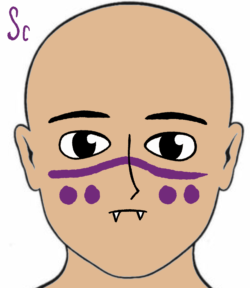
Clan Spiritclaw warpaint is a purple horizantal line over the nose and across the cheeks with two purple dots on each cheek below the line

Clanleader: Cahal Spiritclaw
High Priestess: Morrigan Solfire
Warleader: Tristan Windwalker

Ulven dedicated to knowledge and learning who are home to more Truth Seekers than any other Clan.

Recent/Current Events:
264:
Standing vehemently behind their decision to remain neutral in the ever-growing conflict threatening to envelop all of Mardrun, Clan Spiritclaw has nonetheless been very active this past year. As war ravaged the landscape, Spiritclaw began the year by hoping to establish a neutral alliance, originally composed of themselves and Clan Riverhead, with hopes to bring Ironmound into the fold as well. In the coming months, Spiritclaw villages were opened to refugees on both sides of the war, cementing the clan’s position as a mediator and haven for those unwilling or unable to continue fighting.

The revelation of the Lorespeaker Conspiracy likely hit Clan Spiritclaw harder than any other clan, at least as far as the effects were visible. Fiercely proud of their Truthseeker organization, the knowledge that such a culturally significant lie had been perpetuated for generations was a source of great shame, and led to many Truthseekers calling vocally for the capture and questioning of any Lorespeakers. Some on Mardrun, however, will forever see the reputation of the Truthseekers tarnished by this oversight, and others wonder if perhaps some of the Truthseekers were involved with the plot, as well.

Last Hope Larp