
The Watchwolves of Luna are a tribe of Ulven from the Northwestern coasts of Mardrun. All Ulven believe themselves to be descended from the union of a primordial dire-wolf (Fenrisulfr/Hroovitnisir) and a humanoid nature spirit (Gaia), but the Watchwolves of Luna claim to trace their lineage specifically to the second son of the Great Fenrisulfr (Hroovitnisir), Hati Hroovitnisson. According to the Watchwolves of Luna, the eldest two sons of the Fenrisulf, Skoll Hroovitnisson and Hati Hroovitnisson, are responsible for chasing the sun horse and moon horse across the sky, respectively, in order to bring about the dawn and dusk. When the two demi-gods are not chasing the horses, they guard the horizons to the East and to the West, in order to keep the horses from running early or from going the wrong way. Obviously, The Watchwolves of Luna are closely related to their counterparts, The Watchwolves of Sol, who believe themselves to be descended from Fenrisulfr’s first son, Skoll. The two tribes have always been close allies, and Ulven from either tribe refer to a member of the other as “Cousin”.
Wiki Category: Ulven Clans
The Fangs of Kyrkogrim
The Fangs of Kyrkogrim pride themselves as being the best warriors in the Ulven Nation. They believe that if they earn enough renown, the Great Wolf will not only know their names, but ask them to serve him in guarding the Wolf Road and Ulven holy grounds as members of his own pack of unearthly black wolves. Members of this Clan always have the word “fang” as part of their name. They are fearless in battle, and never retreat, no matter the odds. The Fangs of Kyrkogrim value martial prowess and honor above all else. They never resort to trickery or deception. The most skilled warriors of this Clan will sometimes leave their pack in search of an opponent who can best them in a duel and become their mentor. When colonists first began arriving from the Old World, many Fangs of Kyrkogrim left their packs to challenge the newcomers. The Fangs of Kyrkogrim hoped that they could learn new weapon-fighting styles and disciplines from the foreigners. The Fangs returned home disappointed. They have had little contact with the Colonists since.
Known Packs:
Pack Dreadfang
Pack Sjóúlfur
Belongs to: Clan Nightriver
Pack Leader: Asgerd Thormundottir
Priestess: Disa Sjóúlfur
Pronunciation (s-yo-ul-ver)
Pack Sjóúlfur is a secluded pack that dwells on the Eastern shores of Mardrun, with their fishing village built into the cliffs that overhang the sea. They are a very close knit community and are well renowned for their fierce loyalty to each other and their allies in times of need.
With their remote location on the Eastern side of the continent they have established a robust fishing trade and while their sailing may not be as renowned as Stormjarl or Squalborn, they certainly are proficient in the trade. What they are renowned for are their great organized hunts for whales. A unique custom that has come from this pack is an honored hunt for a shark that is treated much the same as the right to hunt wolves by other Ulven.
The pack is named for their worship of the wolf Sjóúlfur, one of the first children of the Great Wolf. That story is often called Sjóúlfursaga, the Story of the Sea Wolf. This story tells of how their first chieftain gained the favor of this deity who blessed the pack with the Fylgjur, a protective spirit that takes the form of an animal. It is said that a Fylgja will appear in one’s dreams before a great moment of fate is to take place.
Sjóúlfursaga
Long ago there were several families that began to call the eastern cliffs their home. They were descended from great warriors and kinsmen of Nightriver. They started the trade of fishing off the coast of their settlement but none dared to go deep into the waters for fear of drowning and attack from the great monsters that lived in the dark green waters.
Amongst them was a man named Ólafur Skagisson. He was a great man who was proficient in hunting and fishing and he owned the largest boat in the area. Many of the people who lived in the settlement followed him due to his kind nature.
One year the fishing was not going well. The people could barely catch anything. What they drug out of nets was either so small that it should be used for bait or half eaten already. Rumors began to fill the settlement, sightings of a great monster in the deep waters. One day Ólafur found the carcass of a large fish washed up, as he was harvesting what he could he found an impressively sized tooth stuck in the skull. It seemed to only confirm the rumors. But Ólafur knew something must be done. Winter was quickly approaching and if something was not done, they would not survive the season.
Ólafur, who was filled with courage and duty to his people, set out to kill the monster. He sailed his boat into the deep waters South of the settlement. It was not long before he found signs of the beast. The dead bodies of sharks and other large fish floated about the water. Then Ólafur spotted a strange sight. On a sharp series of rocks sticking out of the water sat a wolf with white and gray fur. As he moved the boat closer to the rock he could see crimson on the wolf’s leg, clearly a fresh wound.
Ólafur was a smart man and clearly knew the signs of kunning, so he called out to the wolf.
“Hail wolf friend! I am Ólafur son of Skagi. I greet you with kindness and friendship.”
The wolf looked the man up and down, clearly sizing him up before speaking to him. “Greetings Ólafur Skagi’s Son. I am the wolf Sjóúlfur Gaiasdottir. What brings you to these deep waters, friend?”
“I am hunting a great monster that is causing the suffering of my people. Have you seen what I seek?”
“I have seen this monster you talk about, a great whale bewitched by foul magics. It came from the northern seas, killing anything it can find with no care for food. I have a mind to help you in your task as I too suffer from this foe. Give me your spear, friend.”
Ólafur looked over his spears, handing the wolf his best one. The wolf then took blood from its own wound, painting a series of runes upon the shaft of the spear.
“Use this spear to strike your monster. Recite this verse nine times ‘Gal anda viðr, gangla viðr’ and then thrust your spear deeply. You will find your foe nearby to the west.”
Ólafur took up the gift from the wolf, thanking her and set about his task with renewed courage. The sun had begun to set when Ólafur caught sight of the monster. He quickly drove his boat on course and set upon it. The fight was great and lasted many hours as the whale thrashed around trying to devour him. Finally the time had come and Ólafur recited the verses, thrusting the spear deep into the whale’s flesh. The thing cried out in pain, nearly turning Ólafur’s boat over and dove deep into the waters to die. A calm set about the sea as the sun began to rise once again. Ólafur, set out back to the rocky outcropping to inform the wolf of his deed.
As he retold the battle the wolf jumped up with glee.
“For this great deed I name you Ólafur Sea Wolf and I give you and your people the gift of the Fylgjur, protective spirits. I know my father, the Great Wolf shall hear your name for I shall tell him myself!”
The wolf lept from the rocks, turning its skin into that of a large shark and disappearing into the deep water.
Ólafur returned home to the settlement boasting the accomplishment and not long after the carcass of the whale washed up on the shore, his spear still impaling the thing. With the meat and fat from that whale the settlement thrived through the winter and Ólafur was praised as a hero by his people, becoming the first Chieftain of the newly formed Pack Sjóúlfur named after the wolf Sjóúlfur, the Sea Wolf.
To this day Pack Sjóúlfur still hunts whales on expeditions into deep waters, spearing them so that they die and wash up upon the shore.
Clan Spiritclaw
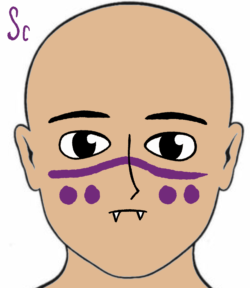
Clanleader: Cahal Spiritclaw
High Priestess: Morrigan Solfire
Warleader: Tristan Windwalker
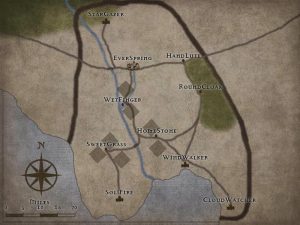
Ulven dedicated to knowledge and learning who are home to more Truth Seekers than any other Clan.
Recent/Current Events:
264:
Standing vehemently behind their decision to remain neutral in the ever-growing conflict threatening to envelop all of Mardrun, Clan Spiritclaw has nonetheless been very active this past year. As war ravaged the landscape, Spiritclaw began the year by hoping to establish a neutral alliance, originally composed of themselves and Clan Riverhead, with hopes to bring Ironmound into the fold as well. In the coming months, Spiritclaw villages were opened to refugees on both sides of the war, cementing the clan’s position as a mediator and haven for those unwilling or unable to continue fighting.
The revelation of the Lorespeaker Conspiracy likely hit Clan Spiritclaw harder than any other clan, at least as far as the effects were visible. Fiercely proud of their Truthseeker organization, the knowledge that such a culturally significant lie had been perpetuated for generations was a source of great shame, and led to many Truthseekers calling vocally for the capture and questioning of any Lorespeakers. Some on Mardrun, however, will forever see the reputation of the Truthseekers tarnished by this oversight, and others wonder if perhaps some of the Truthseekers were involved with the plot, as well.
Watchwolf Culture and Folklore
Clan Watchwolf
Clanleader: Sigrurd Watchwolf
High Priestess: Anjan Ravensmark
Warleader: Rolf Aeisborn
Watchwolves and the Colonists
The Watchwolves were one of the last clans to have contact with the colonists, having only encountered them after the Nightriver treaty had already been signed, and having infrequent contact with them since their initial meetings eight years ago. Following portents on the wind, and the concerns of their Priestesses, however, the Watchwolves and allied packs drafted the Watchwolf Resolution in order to head off a terrible apocalyptic premonition. The Priestesses believed that if the Humans could not be convinced to change their burial practices and pay their respects to the land of Gaia, that their doom would arise in this land as it did in their native land, and that the Ulven would be destroyed along with them. Though received with much resistance, the colonists did, for the most part, comply. Perhaps it was too little, too late, or perhaps the wheel of fate cannot so simply be stopped turning, because despite their efforts, the Undead have arisen on Mardrun. As blame for the undead presence was tossed back and forth, the political climate between not only the races of Mardrun, but between the different Ulven clans became more and more hostile. The Watchwolves and Nightriver tried desperately to resolve the situation peacefully, and forge an alliance of all three races against the Undead threat. Sadly, however, their efforts failed, and the peace summit ended in violence that sparked the first large scale Ulven civil war in history. The Watchwolf Clan now finds itself allied with the Humans and Syndar of the colonies in a two front war against not only the Undead, but the Ulven of Clan Grimward.
UPDATE:
Clan Watchwolf did survive the war, but not with its borders intact. The Western Watchwolves were absorbed into Clan Grimward and the Eastern Watchwolves eventually were absorbed into Clan Nightriver. Their respective cultures remain strong even if their political voices on the world stage have diminished.
Watchwolf Spirituality and Mythology
Ulven spirituality centers on both the harmony of living with nature, and the conflict of the age-old Mordok wars. The Ulven see themselves as the stewards of the land, and consider protecting it to be their greatest charge. They view the Mordok as an unnatural race, or even an invasive species. The two races have been at war ever since they first encountered each other.
Ulven mythology centers on the belief that the Ulven people are descended from the union of a humanoid nature spirit and a primordial dire-wolf. Their mythology consists of long heroic sagas and heroic poetry. The Watchwolves have a unique connection to the Sun and the Moon, dating back to ancient times, and the first written records. The oldest Ulven writing, in fact, is the story of how the Watchwolves gained the favor of the Sun and the Moon. The story tells of how Watchwolf ancestors Skol and Hati, the first sons of Gaia sired by the Great Wolf, were given the gifts of reading and writing in exchange for oaths of dedication to perform sacred duties which assist in the rising and setting of the sun and moon every day by chasing the Sun Horse and Moon Horse across the sky.
Totem animals which are important to the Watchwolves include the Wolf, the Raven, and, because of their connection to the Sun and Moon, the horse. Proper horses, however, are not believed to be native to Mardrun, or if they ever were, they are no longer kept by the Ulven, and have not been for many generations. There are instances in the sagas of Ulven heroes riding horses, but no other records exist. The only equines that appear to be native to Mardrun are elusive, shaggy, foul tempered wild ponies, which are far too small to carry even a small adult, let alone a heroic figure such as Agnon, who was reportedly so big that he once ripped a door from its hinges to use as a shield, and uprooted a tree for a club. There is not an elder alive today who remembers how to ride a horse, nor a blacksmith who knows the first thing about shoeing one. According to Ulven lore, the horse is a sacred creature associated with the Sun and Moon. It is speculated by some Ulven lorekeepers, that in addition to the gift of reading and writing, the Ulven were also given horses by the Sun and Moon, but that all of those horses, as well as their lineage, are gone and long forgotten. Horses, therefore, seem to be something more akin to a mythological creature than a natural one. Ulven artwork would seem to support this theory, as horses are often depicted as having wings, or sometimes a horn upon their heads.
The spiritual leaders of the Watchwolves are almost always female. Every village has a Priestess. In the case where multiple packs are living in the same village, it is not uncommon for each pack to have their own Priestess. These Ulven holy-women fulfill the roles of village healer, spiritual advisor, historian, and all around wise-woman. Some Priestesses are also military advisors or even officers. Every Watchwolf Priestess has a Warder. Warders can be either male or female. The Warder is a warrior who has pledged a life oath to the protection of the Priestess. The Warder follows the Priestess by day, and sleeps with her at night. It is a 24 hour job. The intimate relationship between Priestess and Warder makes them soul-mates in the eyes of the Watchwolves. It is not uncommon for a Priestess to have children by her male Warder.
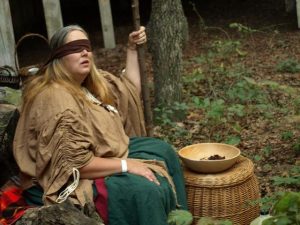
Watchwolf High Priestess Anjan Vakr-Ravensmark. Though blind, she is one of the most powerful spell-casters in the Ulven Nation
Watchwolf Family Life
Marital Fidelity is very important to the Ulven. The Ulven respect and admire the wolf above all other totem animals and try to emulate its nature with many of their cultural practices. For this reason, the Watchwolves believe in mating for life. Compared to other warlike cultures with short individual life-expectancies, including other Ulven, the Watchwolf courtship process is very long. Typically, proposals are made by the female. The male will do everything he can to get her attention in hopes that she will select him over any other suitors. Once the female has made her selection, and a pairing has received the blessings of both of the families, the pair must also receive the blessing of the Priestess. The pair will move in with the Priestess and her Warder for at least a month. The Priestess will observe the pair during this time, and the Warder will often challenge them with tasks requiring teamwork and cooperation. The Priestess will ultimately determine whether the couple will be sent home to their families, or allowed to build a home of their own. Once a union has received the blessing of the Priestess, the two are mates for life. These Ulven do not have anything resembling divorce. Only death can separate soul-mates.
Children take the last name of whichever parent is of higher social standing or rank, which could be the mother just as easily as the father, especially if the mother is a Priestess or professional Soldier. Some children choose to use both names, a practice which is frowned upon by many elders.
Watchwolf children have to grow up fast. Because both parents are often either career soldiers, or at the very least, members of a militia, the children of these people learn to fight at an early age. The children also are expected to learn trades. These Ulven rely heavily on their extended family and packmates to raise their children, especially in cases where both parents may have to leave on a campaign. It is not unusual, therefore, for an Ulven child to be entrusted to the care of a non-warrior family member or friend for extended periods of time. In many cases, this is where the Watchwolf child will learn a trade. A child left in the care of a blacksmith, for example, will likely learn something of metalwork while their parents are away. The care and rearing of that child, however, would not likely be limited to one family member or friend so much as the entire pack. Like the Wolf totem that they so highly revere, every member of the pack is likely to play a role in the upbringing of the child.
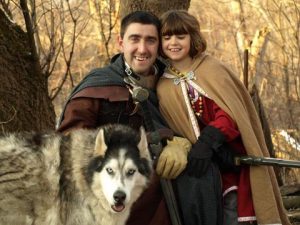
Watchwolf Society
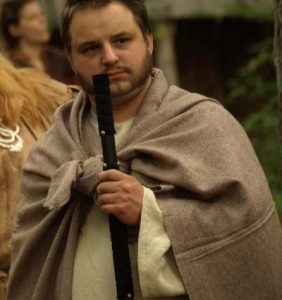
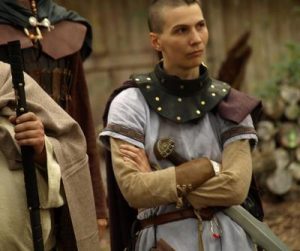
Every Watchwolf belongs to one of two camps, which are located on the Northeastern and Northwestern shores of Mardrun. The first of the camps is the Eastern camp of Sol, and the other is the Western camp of Luna. Watchwolves maintain the identity of the camp they were born to, regardless of whether they intermarry or move between the camps. Watchwolves of either camp refer to a member of another camp as “cousin”, regardless of any actual family relation.
The Watchwolves mercilessly hunt and destroy the Mordok, but never take anything from these encounters. To do so is believed to bring misfortune. Mordok property is considered taboo and is destroyed by fire. Ulven property found in the possession of the Mordok can be recovered but must undergo rites of purification at the hands of the Ulven Priestesses. Prisoners recovered from the custody of the Mordok must also undergo rites of purification with the Ulven Priestesses before they can return to society.
The warrior caste is highly revered in Watchwolf society, but contrary to popular belief, not all Watchwolves are professional Soldiers. Because these Ulven do not rely on raids, the society requires that much of their population work in agriculture, or as artisans and craftsmen. Ulven people as a whole, however, do pride themselves on their ability to fight when the need arises. Even a humble turnip farmer can pick up a sword, having been trained how to fight from a young age. Throughout history, the Watchwolves have developed a reputation as wise and cunning military leaders, and many inter-clan alliances have elected Watchwolf heroes as their Warpack Leaders or military advisers in times of war.
Honor is very important to the Ulven. The only thing that is valued more highly than personal honor is the honor of one’s family and Pack. Whilst prowess in combat is important to the Ulven, it is not necessarily the basis of their honor system. Honesty, wisdom, cunning, competency, loyalty, and generosity can all affect reputation. This is especially true of Ulven who are not of the warrior caste. A Blacksmith, for example, might be highly revered and honored due to the quality of his armor. Likewise, that same Blacksmith might be ostracized if he made swords and tools of inferior quality. Honor can also be gained by association, as in the case of a warrior who is accepted into an elite and prestigious military unit, or a poet who immortalizes the exploits of a fallen hero into verse.
Though the Watchwolves are a warlike people, they are not raiders like some other Ulven people. Until the recent bloodshed at the Greytide peace summit, there was very little infighting among the Ulven Clans. For the most part, they seemed to respect each other’s territory, and it had been many decades since the last clan skirmishes.
Watchwolf Folklore
Like many other cultures, the Ulven Mythology features heroic individuals performing unbelievable acts of strength and martial prowess. Ulven heroes will also use cunning and trickery to accomplish their tasks, especially if the story features the appropriate totem spirits. Unlike the near godlike folklore figures of some other cultures, however, the Ulven hero is undeniably mortal, and seems to rely heavily on their friends and elders in order to accomplish their tasks. A perfect example of this is the following excerpt from Howl’s Homecoming. The characters are trying to return home after a campaign against a tribe of giants (which was presumably eradicated by the Ulven and exists in no other records). All of the party members are wounded or sick. The significance of this verse is that these are all named and mighty heroes from other tales, but here we see them at their most vulnerable.
Howl’s Homecoming:
The sun burnt hot on the heroes five
From a faraway war, in a faraway land, the last of the pack alive
Freya, Grin, Agnon, Jenesis, and Howl
Held together by stitches and linen strip
The heroes trudge on, the bandages drip
Freya, Grin, Agnon, Jenesis, and Howl
Howl is the worst of them, wounds so deep
He sees the Great Wolf on the road in his sleep
Freya, Grin, Agnon, Jenesis, and Howl
The biggest and strongest of the five brave fighters
His friends all now wish he were a little bit lighter
Freya, Grin, Agnon, and Jenesis
For many a mile they carry him, until they can no more
Their strength is failing fast, these remaining four
Freya, Grin, Agnon, and Jenesis
On unsacred ground, the burial rites must Jenesis have Spake
For nowhere near, was stream or lake
Freya, Grin, Agnon, and Jenesis
Here is placed the stone
Of Howl, buried alone
Freya, Grin, Agnon, and Jenesis
He deserved a funeral barge, engulfed by holy fire,
But settled for less, than even a funeral pyre
Freya, Grin, Agnon, and Jenesis
The bite of the iron is sharp, as vigil they cannot stand
Runes of shame are self inflicted, with a red hot brand
Freya, Grin, Agnon, and Jenesis
They gnash their teeth and stumble ahead
Their duty failed, their friend is dead
Freya, Grin, Agnon, and Jenesis
To die on the field is much preferred
Than to die on the road where no one heard
Freya, Grin, Agnon, and Jenesis
Now out of water, they struggle on,
The next thing they know, Jenesis is almost gone.
Freya, Grin, Agnon, and Jenesis
The three take turns, dragging her
On a litter made, from staves and fur
Freya, Grin, Agnon, and Jenesis
The dust, it blew
The Carrion bird flew,
over
Freya, Grin, Agnon, and Jenesis
And Jenesis, in fever spake,
“None should lie alone,
upon that plain of bone.”
“Please leave me here or take me back,
to Howl, a brother of my pack.”
“But never homeward bound.
The Wolf our friend did meet, is surely still around.”
Freya, Grin, Agnon, and Jenesis
Agnon, her Warder, turned around,
And dragged her back towards burial ground
Freya, Grin, Agnon, and Jenesis
All four they turned around, to face their fate as five,
Rather than return, with runes of shame alive
Freya, Grin, Agnon, and Jenesis
Upon return to barrow mound,
The four in shock, without a sound
Freya, Grin, Agnon, and Jenesis
Rocks were scattered all about
And a body, was that grave without!
Freya, Grin, Agnon, and Jenesis
When suddenly, across the plain, there came a fearsome Growl,
Standing there as plain as day, the heroic figure of Howl!
Spake He:
“Those runes of shame befit thee, you stupid pieces of shit.
After all our years together, you forgot I have True Grit!”
Freya, Grin, Agnon, Jenesis, and Howl
Further examples of mortal heroes in Watchwolf folklore can be found in the following tale. The story carries an interesting message because it seems to glorify the cunning of a very vulnerable hero at first, but then shifts gears and becomes a lesson about honesty and self-acceptance. Such complex themes are not found in other similarly developed barbaric cultures, especially ones that place such high value upon animalistic aspects.
The Courting of Greta Kitakitzyadigzvadig
Long had her people wondered when Greta would settle down and take a Husband. Her adventures had earned much fortune and renown. But such a fearsome warrior was she, that none of the menfolk dared approach her for courting. Who could be man enough to satisfy the strongest, fastest, and toughest woman in the world? Everyone remembered the tale of how she arm-wrestled the Hill Giant and broke his arm, and they also remembered how she broke the white dragon’s neck with her thighs. It was rumored that she was the daughter of a nature spirit. Therein was the problem. Greta was beautiful, and she was a War Pack Leader, but who could survive the wedding night without being crippled or killed? This was a woman who once accidentally killed an ox by swatting a fly that had landed on his back, and she had a fearsome temper to boot. Clearly, she would be more than a handful for any man who dared to court her. The men were shamed, because none of them would try.
One day, three strangers traveled into the land. They were brothers, and all looked alike. The brothers were short, pudgy, and freckled. The first brother had a magic belt that made him as strong as the King of all Polar Bears. The second brother had a magic ring that made him as fast as the Lord of all Horses. The third brother had a magic necklace which gave him the constitution of the Chieftain of all the Wild Boars. One Thursday morning, while the three brothers were traveling towards the capitol, they were passed on the road by a skinny girl in ill-fitting clothes. It was very cold, and the third brother offered her his cloak. She kissed his cheek, and promised to leave the cloak at the next Inn, hanging on a hook near the fire.
The three brothers arrived in town very late that night, and the first brother went into the Inn to pay for a room. He did not have any money, so he asked the Inn keeper if there was anything he could do to earn his keep. The Inn keeper told him that he could earn his keep by rebuilding the stone chimney. The Inn keeper expected that this would take the stranger several days work, but the first brother was so strong that he rebuilt it, better than new, in a matter of minutes. The Innkeeper was amazed, and gave the brother a room for the week. He couldn’t wait to tell the townspeople what he had seen. The first brother’s deal had only paid for one person, so the second and third brothers had to sneak in through the back, and they all shared the room.
The next morning, the second brother went out to catch some game for their breakfast, while the first and third brothers remained hidden in their room at the Inn. Because the brothers all looked alike, the Inn keep did not know that this was a different person. While he was out, the second brother was spied by an old trapper, who recognized that the second brother was a stranger in these lands. The second brother chased down a swift and mighty stag, caught it by the antlers, cut its throat, and wrestled it to the ground. The old trapper was amazed, and he headed back to town to tell the people what he had seen.
The next day, the third brother went downstairs with his harp, to earn some money performing. Many townspeople were there, telling and retelling the rumors of this amazing stranger who was stronger than a giant, and swifter than a stag. When they saw the third brother, they cheered him. Everyone wanted to buy him a drink. Surely, they thought that he was a hero straight out of the Sagas. The third brother sang songs and played his harp, and the people were moved to tears. Soon, the people at the Inn were all very drunk, and they had given the third brother all of their money, so he took his harp, fetched his cloak from the fireplace, and left to go to the next Inn. He was not drunk at all due to his amazing constitution.
On his way to the next Inn, he spied a beautiful woman riding out with an entourage of footmen. She was obviously someone of great wealth and importance, as she was the only person he had ever seen to ride a horse. Not drunk, yet emboldened by the drink, he asked a turnip farmer who she was. The turnip farmer told the third brother that the woman was none other than the mighty Greta herself. The impetuous brother ran out after her and stopped her party on the road. He introduced himself, and announced that he wished to court Greta. The rest of the party laughed at him, for he was short and fat, but the War Pack Leader seemed impressed by his courage. The third brother played a beautiful song on his harp, and she accepted his invitation. The two rode off to see the Priestess. The Priestess decided that the couple would have to face three challenges together in order to earn her blessing, and she conferred with her Warder on this.
First, she challenged them to build a new stone bridge at the South fork of Two-Rivers. They were to start at first light the next morning. The Third brother ran back to the Inn. In the morning, the First brother went in his place. The Priestess and her Warder were amazed when the couple returned the same day. They had expected the construction of the bridge to take at least a week, but the job was done. That bridge still stands today.
The Priestess and her Warder decided that the next challenge would be to send the couple on a quest to the top of the tallest mountain to fetch the rarest of moss, which only grows on snow-covered peaks. The couple was to leave at first light. The first brother ran back to the Inn. In the morning, the second brother went in his place. The Priestess and her Warder were amazed when the couple returned the same day. They had expected the journey to take at least a week, but the moss was delivered the same day. The Priestess and her Warder were frustrated. Usually the courting process takes at least a month, but at this rate the pair would run out of challenges in the first few days.
The Warder was so frustrated that he said,
“Fine, if you can do two weeks work in two days, then let’s see you drink a weeks worth of mead in one day.”
The challenge was to start at first light. The second brother ran back to the Inn. In the morning, the third brother returned to Greta. The two started drinking at first light, and not only were they still standing, but they were still drinking at sundown. The third brother held his drink well, but the Pack Leader was beginning to get very rowdy. Suddenly, Greta fell off of her chair and began rolling on the ground, laughing heartily and clutching her sides. The Priestess and her Warder were amazed. The townspeople cheered.
“Finally,” they said, “someone has tamed Greta!”
Upon hearing these words, Greta became enraged.
“No one bests me!” she said, climbing back up to the bar.
She challenged the third brother to an arm wrestle on the spot. The third brother was trapped. There was no way for his brothers to help him now, and he was easily defeated. The third brother was shamed. He admitted to his deceit of the Pack Leader and told her the truth about his brothers and their magic. Greta was shocked. As the third brother turned to leave, she stopped him.
“Behold,” said she, “a leader who has been deceitful not thrice, but always and ever since I came to this place!”
With these words, Greta removed her girdle. Her hips shrank, her chest deflated, and her thick braided hair became dull and stringy. Before the townspeople’s very eyes, their mighty warrior transformed into a scrawny little scarecrow of a girl, covered in pimples.
“I am not the daughter of a nature spirit! Before I put on this girdle, I was no warrior, but a humble thief! Look on me now, and tell me if you still love me!”
The third brother replied,
“Of course I love you. That was why I gave you my cloak when first we met!”
And so the couple continued their courtship trials without the aid of any magic, and earned the blessing of the Priestess. They were married, and their offspring were numerous. They were true to each other as long as they both lived.
The following story explains the origins of the Watchwolf Clan, the significance of the position of Lorespeakers to the Ulven in general, and supposedly how their written language came to be. It is the oldest known written record in the Ulven nation.
This story takes place long ago, back when the eldest children of the gods still walked the earth.
The first sons sired by the Great Wolf, born of Gaia, were Skoll and Hati. These two brothers, along with their many younger siblings, were the first Ulven. Back in those times, our people were much closer by blood to the Great Wolf, and could walk in his likeness when they so wished. This was good, because the world was much more dangerous back then. Everything was larger, from the trees that nearly reached the heavens, to the beasts of the earth, which would swallow the likes of you or I whole. The children of Wolf were not the only ones closer by blood to their gods. It was a time of legends, and giants.
Skoll and Hati both had large families, with many children, grandchildren, great-grandchildren, and great-great-grandchildren, for the direct descendants of the gods do not age, though their children do. It is one of the tragedies of their immortality, that they do not pass it along, and so must bear witness to the passing of all that they create. Half-gods cannot create anything eternal. Only true gods can do that.
Long before even the mating of the Great Wolf and Mother Gaia, there was night and day, caused by the passing of the Sun Horse of Sol and the Night Horse of Luna crossing the sky. The two horses did this every night and day without fail, from the very beginning to the time of legends. One morning, however, the Night Horse turned around and ran the wrong way. No one knows why for sure. Some say that the Great Devourer tricked the Night Horse. Some say that the Night Horse just wanted to see what went on during the day. Regardless of the reason, the two horses collided at noon, and fell to earth, leaving the moon and sun hanging motionless in the sky together in an unnatural dusk, as the moon was between the sun and the earth.
The two horses crashed into the mountains called Wolf’s Hackles. They were very angry at each other, and began to fight. Their magic caused the plants to die, and the rivers to run backwards. Without the passing of nights and days, the seasons became confused, and the different types of weather all tried to happen at once. Skoll and Hati saw the withering of Gaia all around them, and knew that they had to do something to save their mother. They did not know that the two horses had fallen, but they could see both the sun and the moon just sitting in the sky.
They asked the river spirit who was Lord of all Catfish what had happened, but they could not understand him, for he was talking backwards.
They asked the Grandmother Birch Tree what had happened, but before she could answer, she withered, lost all her leaves, and went into her winter trance. Trees speak so slowly in the winter that they are not worth talking to.
They asked the little Grey Mare of Misfortune, who makes the storm clouds go across the horizon, and who is a younger sister to the Sun and Moon horses, what had happened. The little gray mare of misfortune was confused, however, by the crazy weather and her out of control clouds, and she just didn’t know what went wrong.
Finally, the two brothers asked the Raven what had happened. Raven flew up through the stormy skies, and returned with the Sun and Moon, one in each claw. The Sun and Moon were beautiful. They had skin of gold and silver, and wore robes made of dawn and starlight. The Sun and Moon told Skoll and Hati that their horses had fallen from the sky and were fighting in the mountains. The Sun and Moon said that it was possible to set things right, but that to do so would require great self-sacrifice. The Sun and Moon promised that if the brothers helped them they would pass on the secret of immortality to the descendants of Skoll and Hati, that though the bodies of their children may die, their memory and deeds would never be forgotten. This was important, because the half-gods were the only ones who could remember everything that ever happened, and they feared their culture would be lost without them. In the end, the two brothers swore to return the horses to the sky, no matter the cost, for without the movement of sun and moon, their people were doomed, and there would be no one to pass the stories on to, anyway.
Raven gave each of the brothers a feather, and told them to wear it behind their ear so that they could fly. Taking the form of their father, the two brothers ran to the Wolf’s Hackles. The horses were gone, though, as they had decided to race each other across the world to settle their dispute. Skoll and Hati sniffed the air, found their tracks, and ran off in pursuit. Finally catching up to the stray horses, the brothers each broke off and chased one horse, separating the two. Skoll chased the Sun Horse to the Eastern end of the Earth, and Hati chased the Moon Horse to the West. Leaping from the ends of the Earth, the wolves chased and herded the horses back into the sky and returned them to their rightful patterns. The rivers returned to normal. The weather and seasons returned to normal. The plants recovered, and Gaia was saved. To assure that such a catastrophe never happens again, Skoll and Hati must chase the horses tirelessly, and shall for all of time.
The children of Skoll and Hati were given the gift of reading and writing by the Sun and Moon, lest they forget anything important in their short lives. They were told to spread the new language to their cousins in other clans, and charged to watch the Eastern and Western horizons. That is how the Ulven came to have reading and writing, and how the Watchwolf clan came to be.
Recent/Current Events
264:
To the West, the new year brought with it preparations for a battle the Watchwolves feared they could not win. Meager aid from their allies and the Grimward army on their doorstep led to abysmal morale around the settlement, with many preparing to either abandon their homes and their sacred charges or to die defending them. Though the Coalition did eventually send reinforcements and supplies to the western settlement, it was too little, too late. Grimward overran the western territory of the clan, claiming it for their own. Many of the Watchwolves who stayed behind were amazed by the dignity with which they were treated by their conquerors. They were fed and protected better under Grimward rule than in the Coalition, and many even retained their home, allowing them to continue to watch the horizons as they have for generations. With the proposed treaty to be signed by Clans Grimward and Nightriver, the western settlement would remain under Grimward control, a point which has a number of proud Watchwolf warriors concerned and angered.
To the East, supplies were in high demand as they were sent to the west to reinforce their clan mates, though the smaller clan was unable to stand against the might of Grimward. Many smaller villages have been struggling to accommodate the large number of refugees who made the journey from the western settlement. Working to provide food and supplies for their brothers and sisters to the west, those in the east know that they lack the numbers to return their ancestral home to its rightful owners, though tales of the generosity shown by Clan Grimward has reassured them.
The Clanless
The Clanless
To the North there are a number of packs that are in fact, clanless. The small packs get along for the most part and have not formed a clan because each feel that they have their own calling that Gaia and the Great Wolf have set them on. They feel that no clan or clan leader is better than them and don’t take kindly to clans that look down on them or try to tell them what to do. They work with other clanless packs for a common good, and show respect to clans that respect their right to rule themselves. To generalize any more about the clanless is to do a disservice to them all. Independent and individual entities, Clanless packs have existed for generations and have made clear their desire to remain as such.
Some well-known clanless packs are the Longfangs and Bloodfangs, but they are not the only ones. A few examples include Pack Goldmine, Whitestag, and Silverspring.
Goldpine:
A clanless pack that lives in the northern most part of the great forest, they got their name from the unique Pineed trees that grow in a swampy area of the forest that have needles that turn golden yellow. The swamp is not like the dirge, and is in fact a spring of life and Gaia’s gifts. Near their village is a Great Gold Pine Tree that was said to have been planted by Gaia herself. This tree is protected by a group of warriors whose only purpose is to protect this tree from any and all threats. When a warrior grows too old that the others feel they can no longer protect the Pine, he takes a journey to Onsallas to meet with the Longfangs. It is here that a unique honor battle takes place. The Goldpine warrior challenges an Ulfednar to single combat, though over the ages, this practice has largely become ceremonial. In olden days, the battle was said to be to the death: a Goldpine warrior capable of besting an Ulfednar had earned a warrior’s departure and would venture into the swamp to meet an honorable end, whereas an Ulfednar bested by a Goldpine seen as past his prime would be deemed unfit for battle in Pack Longfang. A Goldpine slain in this combat was also given a warrior’s funeral, though was undeserving of a death against the Mordok. In recent generations, however, this practice has taken a more progressive turn: The battle has become to first blood, and the Ulfednar traditionally throws the fight in order to allow the Goldpine the honor of a death in the swamp without giving his own life or detracting from the numbers of Pack Longfang simply for tradition.
Whitestag:
“And she looked to see the Great Wolf who was singing a song full of rage and sorrow, for he had brought down a Great White Stag.”
Whitestag gets its name from the beast that was thought to be in the story of how Gaia and the Great Wolf joined. The pack has good hunting land, full of game and timber. When a new chieftain is chosen, he and the hunters will go on a stag hunt. The pack will feast on the stag and the chief will take the fur and antlers as the sign of his office. On his death, the antlers are placed on the walls of the great hall with the others of the chieftains of old. The chieftain rules from a seat known as, “The Chair of Sorrow and Rage.” This chair is made of fine carved oak with the image of the Great Wolf over a stag, singing to Luna. It is lined with snow-white fur and adorned with White antlers that is said to be the stag that was brought down by the first Chieftain, who took the name Whitestag because he saw it as a gift from Gaia.
If a hunter kills a white stag, he or she has the right to challenge the Chief for the right to lead. The Priestess of the Pack sets a task and the winner is Chieftain.
In pack Whitestag, there is no higher calling than to be a hunter. Even warriors strive to learn the ways of the hunt. The Great Wolf was a hunter, not a warrior, and Gaia admired his ability to provide, where a warrior only seeks to shed blood.
In an odd turn of events, Runeseer Solvig was viewed as High Priestess of Pack Whitestag. About 30 years ago, the pack’s priestess had visions of doom and went to ask for Solvig’s council. After a reading of the runes, she went back home and the hunters were made ready for an unknown attacker. That night, a blood moon had shown bright and the pack survived. In the morning several dozen mordok were burned. When Solvig passed, the chieftain and five hunters of pack Whitestag made their way to Onsallas to show respect.
Silverspring:
A fairly young pack, Silverspring came across their home only about 45 years ago. In an exodus from Clan Shattered Spear regarding what they feel was the unfair branding of their Champion, Pack Silverspring established a small settlement near a brook to the north of their homeland. It is said that they took their name because of the way the moonlight glistened on the water, which they saw as a sign from Luna that this land was blessed. While relations remain tense with Clan Shattered Spear to this day, many still call members of Pack Silverspring family, while others don’t even recognize them as a separate entity.
Due to their age, Pack Silverspring has yet to establish much of a reputation for themselves, although their Daughters specializing in healing magics have come to be well-respected in the surrounding territory.
Pack Redwind:
“And the wind bled as it carried away the remains of that great battle. A strong red wind.”
The pack known as Redwind originally began as two separate packs, so small that they were barely worthy of the classification. They were affiliated with two different Clans. One was from Clan Axehound, and the other was from Clan Whiteoak. The two packs were looked down on in their respective clans because of their small sizes, and the fact that neither of them had achieved any great victories or glory. They were patrolling the edge of the swamp separately, having been assigned there by their respective clans, when a large-scale Mordok attack suddenly occurred at the intersection of their route. The two packs, realizing that they had no chance alone, came together to combat the threat. The resulting battle was extremely close, but the packs managed to win, only because they had joined as a group, both Axehound and Whiteoak. They decided that they had achieved a victory by working together, and they would form an independent pack as a result. The pack was called Redwind, a name decided on through mutual agreement between the two original packs. They both recalled how, after the battle with the Mordok, the field that they had been fighting on was so full of blood from their fighters and the Mordok that when the wind blew, it was a red color. The name reminds them of their victory over the Mordok which made them one pack. The culture that they formed is a mix between the Whiteoak caste system and the more ritualistic traditions of the Axehound, reflecting the direct backgrounds of the pack’s membership. However, no divisions are made that depend upon the Clan of origin. It is skill that shows what status a person has in the society of the Redwind.
Clan Shattered Spear
Clan Shattered Spear
Clanleader: Laifnar Icefury
High Priestess: Gyda Shattered Spear
Warleader: Ulf Mossguard
Though unable to rival Clans Grimward or Nightriver in sheer size, Clan Shattered Spear nonetheless accounts for a substantial portion of the Ulven population of Mardrun. Housing nearly as many Ulven within their borders as Clan Stormjarl, their warpacks number far greater proportionately than most other clans, capable of fielding hundreds of warriors if need be. They act as one of the main bulwarks between Clans Watchwolf and Ironmound to the south and the Dirge Swamp to the north.
This proximity to such hostile terrain has led Clan Shattered Spear to harbor a great warrior culture. More so than any save Pack Longfang, Clan Shattered Spear emphasizes martial prowess and honor in battle. Before they can swing a sword, pups are taught how to care for armor and blades, teaching them respect for the steel in hand as if it were an extension of the self, rather than a tool for war.
Despite this culture, the people of Clan Shattered Spear are not barbarians or savages. Many who embraced the colonists sought to learn from their tactics, hoping to find new strategies to bring to bear against the Mordok. While their stories will romanticize legendary warriors, they do recognize the need for support, be it political, agricultural, or numerical. As a result, Clan Shattered Spear has developed strong bonds with Clans Watchwolf, Goldenfield, and Nightriver, respectively.
Insistent on the honor and legacy of individual warriors, the Ulven of Clan Shattered Spear do not pass down swords in the traditional sense, from one generation to the next. Instead, when a warrior is slain and their remains recovered, their weapon is melted down and recast, adding the bones of the warrior to the flames when smithing. It is said this allows the spirit of past warriors to guide and protect their ancestors, while still allowing the soul to join the Great Wolf. As such, it is beyond taboo to take the weapon of a fallen warrior, thereby denying them the honor of watching over their family beyond their own death.
Recent/Current Events:
Year 264
The large swath of land held by Clan Shattered Spear was critical in the containment of Clan Grimward during this war, and their honorable, numerous warriors served as a substantial deterrent to Grimward expansion into their territory. Spending a great deal of their time looking outward, Clan Shattered Spear was in contact with Clan Watchwolf until the battles that wrested control of that land away from the current residents who had, time and time again, been offered refuge in Shattered Spear territory. As the war escalated, so too did Shattered Spear’s involvement, though for the sake of the Coalition, many of their warriors remained at home to control their own borders. Finally, with the official alliance with Clan Ironmound, Clan Shattered Spear and their new ally were instrumental in coordinating the barrier that held Clan Grimward in check, surrounding them by Shattered Spear and Ironmound territory to the north, the Wolf’s Hackles Mountains to the east, and Stormjarl and Nightriver territory to the south.
Clan Shattered Spear has also been one of the most aggressive clans actively pursuing answers regarding the Lorespeakers and their alleged treachery against the Ulven people. Laifnar Icefury, Clanleader of Shattered Spear, has had his hands full simply trying to reign in bands of vigilantes seeking to exact their own revenge on these traitors, but is himself interested to find them and make sure justice is done.
Year 265
With the war ended between the Clans, Clan Shattered Spear got its fair share of reparations when they signed the peace treaty. While the Clan was suspicious of Clan Grimwards intent, they didn’t have time to ponder about possibilities when the Mordok began to unleash the Creeping Corruption upon its people. The pressure with raids coming from the Dirge forced the Clan to ask for allies, and unexpectedly Clan Grimward took up the call and sent multiple warpacks to assist, along with Clan Ironmound sending high quality arms and armor to better equip the warriors out in the field. While the aid from Clan Ironmound was well received, the aid from Clan Grimward was welcomed with a decent amount of suspicion.
Towards the end of the year, the lasting effects of the Mordok raids have shown their true colors in the form of the land becoming corrupted. Daughters of Gaia from the clan work around the clock and even ask for any aid in helping identify how these pockets of rot and decay are forming, and to find a possible way to combat it. Even more troubling was the reports of the Dirge Swamp itself expanding ever so slowly.
Year 266
With the combined forces of Clan Shattered Spear, Clan Grimward, and Clan Ironmound the Mordok are successfully pushed back to the Dirge Swamp borderlands. However, the ease of this task didn’t go unnoticed by Warpack Leaders and Warleader Ulf Mossguard. The attacks that do come throughout the year seem to be only half hearted attempts in some form or another. However, the Mordok’s true intention finally came to be revealed as a diversion from the packs that were sneaking down through the forests and mountains that border Clan Shattered Spear’s eastern border.
In the summer, Warleader Ulf Mossguard sent all and any able bodied warrior on the eastern half to aid Clan Riverhead’s seige by the Mordok. Thankfully they were able to get a large portion of the civilians out on their neighboring clan’s western border, but not without substantial loss of warriors in holding back the seemingly endless waves of Mordok warriors.
After the fall of Clan Riverhead, the clan holds a moot that seems to last for months, deciding on what to do with the refugee’s from the clan. Many want to aid them by helping reclaim the taken land however, many more feel it would be wiser to wait for aid from the other clans and just absorb the refugee’s into Clan Shattered Spear. While many from Pack Riverhead understood the decision to be absorbed, many of them still voiced their desire to reclaim their lost land in the future, which looked possible with the result of the Grand Moot held in December of that year, with the clans deciding to push the Mordok back into the swamp and begin their war.
Year 267
Clanleader Laifnar Icefury and Warleader Ulf Mossguard send out a direct order to all abled bodied warriors to hold the Mordok back from the Dirge Swamp with extreme force. However, Warleader Ulf Mossguard orders a select few of his best warpacks to enter into the Great Forest during the Great Wolf’s Hunt and begin a pincer move in coordination with Clan Whiteoak’s own forces while the rest of the clans came from the south. Their efforts paid off well and were successful in both driving out the Mordok from the former Riverhead lands and the Great Forest with aid from the other clans and allies.
With the Mordok now driven back, the time to build up and begin preparations for all out war to begin. Pack Dawnrock is chosen as the pack starts building the Clan Shattered Spear Outpost while other war packs hold off the Mordok. In only a few months, and only a few casualties, The Outpost is built and is fully staffed with warriors to defend the area. During this entire process, lumber workers and labor teams harvest tree after tree in great speed and skill and send supplies north to help build and reinforce the series of outposts being dubbed the Shield of Mardrun.
Finally the push into the Dirge begins, and even though many of the warriors of Clan Shattered Spear are eager to plunge blade and spear into the enemy, they are met with endless waves of Mordok. So much so that their momentum is brought to a deadening halt and are forced to start falling back. However, in the last month of the year the combined forces from the Clans worked together to coordinate a retreat from the Mordok Forces while a key centralized area took on all the enemy forces without a break. With that opportunity, Clan Shattered Spear was able to slaughter multiple Mordok raiding groups and get all able bodies back behind the Shield.
Year 268
With the Shield now being manned and constantly supplied, Clan Shattered Spear takes a moment to relax and recover from years of fighting both Ulven and Mordok forces. Warriors returned home, lumber mills returned to regular demands, and all seemed to feel the tension in the land release. With that, talks between the Clan Whiteoak and Clan Shattered Spear open up to begin forming their own alliance. However, due to once being enemies in the Ulven Civil War, these talks go on throughout the year, and eventually settle on a name for their new alliance: The Northern Protectorate.
Meanwhile, Pack Riverhead begins to reclaim some of its ancestral lands but are met with Clanless and Bandits who have settled on the once abandoned land. The pack is outraged and tries to bully the now settled individuals into leaving, but are unfortunately met with a strong resistance from the Bandit Lords that have settled the area.
Clan Goldenfield
Clan Goldenfield
Clanleader: Hoskuld Goldenfield
High Priestess: Svanhild Goldenfield
Warleader: Brenna Tallgrain
Clan Goldenfield is a small clan in the east of Mardrun. They are bordered to the east by Clan Spiritclaw, to the west by Clan Nightriver, Clan Riverhead in the northwest, and the Great Forest to the north.
The people of Clan Goldenfield, unique among all Ulven, are not warriors. Instead, they focus almost solely on agriculture, growing a great quantity of grains of all types, as well as vegetables and fruits. Their abundance of “golden fields” marked their people in the far past and eventually allowed for their unification under one leader and name. They are masters of their craft, easily the most skilled farmers on Mardrun. Consequently, they have an unbreakable tie to the land that stretches back many generations. It is said that a Goldenfield farmer can tell the fertility of any soil by crumbling it through his fingers, and can say, beyond the shadow of doubt, what will grow best there. It is also said that any Goldenfield child learns to till a field before they learn to walk, though this rumor is taken with a grain of salt by other clans.
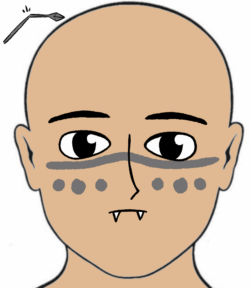
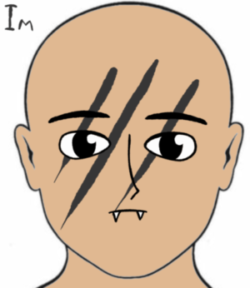
Being primarily working people, Clan Goldenfield’s Ulven generally do not wear facial markings, as their intense labor would soon destroy the paint. They also do not wear clothes of many colors, preferring brown and black over more eye-catching hues. This is because work stains do not show as easily on those colors. However, on special occasions such as feast days or mating ceremonies they may wear more delicate clothing and marks, which are overall light brown or green in color. They are commonly stylized to look like types of grain such as wheat or barley, but with an artistic flourish that belies the more simple nature of the Clan.
Any Ulven from Clan Goldenfield, despite their differences from most Ulven, will still exhibit extreme pride in their work, and will not stand for criticism of their way of life, which on occasion is forthcoming from other clans. This criticism is often meant in jest, despite the interpretations internalized by members of Clan Goldenfield: There is no clan on Mardrun who has not turned to the Goldenfield farmers to see them through a famine or to help them rebuild after Mordok raids. Clan Goldenfield’s decision to ally with the colonists and Clan Nightriver in the Civil War was a major blow to the Grimward war machine due to an increased need for production.
Recent/Current Events:
Year 264
Despite their avoidance of direct conflict in the war, Clan Goldenfield was instrumental in the victory won by the Coalition. One of the earlier clans to join with Nightriver, Clan Goldenfield made it known from the beginning that their contribution would be that of farmers and food, not of warriors, and they made good on that promise. Late in the harvest season, however, Clan Goldenfield drew the attention and ire of Clan Riverhead’s Daughters of Gaia, called upon to help investigate a mysterious blight that had ravaged the Goldenfield crop and left much of the Coalition reeling in its wake. The Riverhead representatives made known their belief that the blight was a punishment from Gaia herself, urging her children to return to the natural order of things. Despite this, however, Clanleader Hoskuld Goldenfield stood strong in his alliance with Nightriver, promising whatever aid he was able.
Year 265
The year was starting the same as usual: waiting for the thaw, planning what crops to plant where, and telling stories within their huts. This normalcy was interrupted by the notificatin that there were Undead on Mardrun, which spurred Warleader Brenna Tallgrain to send a couple warpacks to assist in destroying the abominations before they became more of a problem. For the only kind of good undead in the eyes of Clan Goldenfield, is a destroyed one.
Meanwhile, the Clan Watchwolves of Luna seeks aid in the form of food, clothing, and shelter after the fall of their western half. Feeling their pain and seeing the struggle of the now barely existing clan, Clanleader Hoskuld Goldenfield and High Priestess Svanhild Goldenfield personally intervene and send supplies and aid to the wounded, hungry and cold to their southern neighbors while their workforce continues to harvest as much food, wood, and other supplies before the next snowfall.
Year 266
Once again, the clan waits for the forces of winter to subside, however their longtime allies in Clan Riverhead ask for aid to help deal with the increased Mordok raids. Warleader Brenna Tallgrain sends what warpacks she is able to scrape together and help, in an usually odd choice of evacuating what Clan Riverhead civilians that can be saved. Many within the clan questioned his method, but the hardened Warleader felt as if this was only the beginning of a much worse fate for their neighbors. Sure enough, by the end of the summer Clan Riverhead is all but memory as the Mordok flood and destory anything in their path.
Due to such a threat now looming to the north, the clan moves to strengthen their defenses and horde up as much supplies as possible for the possibly bloody winter. During the beginning of fall though, word reaches Clanleader Hoskuld Goldenfield of Clan Ironmound calling for a Grand Moot, an event that hasn’t been done in living memory of the Ulven. Hoskuld, the current Clan Riverhead High Priestess,and a company of diplomats travel to Clan Ironmounds capital to add their voice and more clout to the call, since his very own clan could be the next to fall to the Mordok menace to the north of their clan borders.
Year 267
With the Grand Moot over and actions decided, Clan Goldenfield begins its duty to help supply the united front of Ulven forces. Thankfully they built up enough spare supplies to help take a significant load off the united front for the Great Forest counter offensive. Even more fortunate is the early spring thaw that comes with the turn of the year, allowing the clan to begin their usual planting well ahead of schedule. With this extra time, the Packs decide to further expand their fields further into the great forest as the Mordok are driven out by the end of Spring to help with the winter crops.
This pattern continues throughout the year, planting and harvesting as efficiently as they are able to. By the end of the year, the clan could have filled its storehouses twelve times over with the amount of supplies generated for the war effort. However, the attacks into the swamp are halted and it seems that such a huge increase in demand will begin to drop as forces stay and defend on the Shield of Mardrun.
Year 268
Many in the clan take the winter to relax and recover from the nearly year long rush of harvesting supplies from every possible source known and at their disposal. In February, that relaxation is shattered with the announcement of Clan Grimward and Clan Ironmound forming an alliance called the Ironward Alliance, joining forces to create a martial powerhouse. Many other clans begin their scramble to also solidify an alliance to protect themselves from those who formed such a bond. It was a bit of a surprise though that Clanleader Branthur Nightriver hismelf came to discuss a possible alliance with Clanleader Hoskuld Goldenfield. The initial meeting was well received and correspondence continued throughout the entire year. By the time late fall was rolling around and the late harvests began, the announcement of the Goldenriver Trade Alliance came to the ears of Clan Goldenfield’s citizens. Many are eager to see what this new economic powerhouse will achieve and feeling safer with Clan Nightriver as a dependable ally.
Former Clan Squallborn
Clan Squallborn
Clanleader: Bodil Squallborn
High Priestess: Jorunn Squallborn
Warleader: Calder Whitecap
Recent/Current Events:
Year 264
Limited by their small numbers, Clan Squallborn was still instrumental in the fighting against Clan Stormjarl by using their naval presence to establish a blockade around their foe, helping besiege their territory. When the blockade was eventually broken by the combined might of Clan Stormjarl and New Aldoria, the Squallborn ships found new ways to be effective, such as depositing Whiteoak raiders on the colonies’ shores to raid some of the smaller settlements. After being left out of the negotiations for the end of the war, Clan Squallborn has been very vocal about their anger with both Clans Nightriver and Clan Grimward and has made threats to refuse to sign the document.
Year 265
The Ulven Civil War has ended, however not in Clan Squallborn’s favor. The terms and conditions set forth by Clan Nightriver and its allies are scoffed at and Clan Leader Bodil Squallborn refuses to pay back the reparations agreed upon by Clan Grimward and Clan Whiteoak. Feeling safe and secure in their seclusion on the other side of the continent, the Clan votes to not sign the treaty and keep all the wartime profits gained from raiding Clan Stormjarl to themselves.
This however leaves Clan Squallborn open to an invasion led by Clan Stormjarl, New Aldoria, and supporting allies in claiming one third of their land. Even worse for the clan, these lands that were taken were most of their fertile farmland that the clan held possession of. While their warriors fought back with great ferocity, they were only able to halt the invasion after it was too late. The cries for aid from Clan Leader Bodil Squallborn for reinforcements from their former allies fell upon deaf ears and were ignored, due to their own hubris.
Year 266
Winter is harsh for Clan Squallborn, even with the invaders in their ancestral home the Clan continues to hold the line against any further advancement into their lands. However, many packs feel it would be suicide to attempt a full on assualt against the combined forces of New Aldoria and Clan Stormjarl, leaving only a few packs with enough courage to dare raids to gain supplies so that they can survive the rest of the winter. Thankfully, those who did raid were able to gain some supplies and survive better than their fellow Clanmates.
With the spring came a new enemy, the Mordok, and they came in overwhelming force from the Great Forest. Thankfully every other able bodied warrior went on the defensive once the nearly endless forces descended from the Dirge Swamp, leaving Clan Squallborn to defend against the raids. However, once again these enemies pressed Clan Squallborn to use up almost all of its supplies in order to drive back the Mordok. Thankfully some outside forces were able to donate supplies in return for a promise to assist in the assault on the Mordok in the coming year. A promise they vowed to uphold.
Year 267
The time to deliver on their promise to help drive back the Mordok back into the Dirge Swamp has come, and the few warriors that Clan Squallborn had are sent. The fights are brutal, bloody, and long, often leaving many of the warpacks in shambles after a confrontation. However, they succeed along with many other warpacks to drive the Mordok out of the Great Forest and back north. Once the Mordok are back beyond Clan Whiteoak’s Borders, the Clan then begins to focus on trying to rebuild, realizing that the land that was taken will never be reclaimed. They attempt to turn some promising land in the Great Forest into farmland, however are only able to just barely sustain the clan.
In September, the time for war has come and the Clan once again sends its forces north to help bring the fight to the Mordok. Unfortunately fortune was not in the Ulven’s favor, for the Mordok fought back harder than ever, devastating the combined Ulven armies. By the time December came around, the remaining forces of Clan Squallborn were a mere memory of what they once were.
Year 268
After pushing back the Mordok and keeping them at bay at the Shield of Mardrun, the Clan’s resources reached its limit. With both the winter and the war, food stores and other supplies became nearly non-existent for the common villager. Many packs began to decentralize from the Clan structure during the first half of the year in order to just survive. By the time that September rolled around the Clan was barely surviving and needed to find a way to survive.
Clan Leader Bodil Squallborn decided to take a desperate gamble, and sent Warleader Calder Whitecap to the Clan Stormjarl and Clan Grimward meeting. He gave the Warleader a critical mission to decide what clan to join under in order to save their people. Many within the clan structure didn’t like the idea but understood it, with a large portion expecting Clan Grimward to be the ones they formed under. To the surprise of many, Clan Stormjarl ended up being the chosen Clan to form under.
This led to a large uprising of dismay and anger, resulting in the packs under Pack Squallborn issuing an Aettinjav, an ancient Ulven challenge of clan leadership. Many different challenges were issued, even the dreaded Wolf’s Maw, and only a couple were not won. The rest of the packs that were defeated bared their throat to Clan Stormjarl, some less willing than others. With that, the once proud sea raiders of Clan Squallborn became part of their once long time rivals of Clan Stormjarl.
Clan Ironmound
Clan Ironmound
Clanleader: Gustav Ironmound
High Priestess: Inger Ironmound
Warleader: Einar Stonefist
Clan Ironmound is next to the Western Watchwolf settlement near the Great Wolf’s Hackles. Most of the continent’s ore deposits reside in this territory, and the finest blacksmiths practice in this region.
They’re also an interesting clan due to a somewhat shifted power structure – they have fewer Daughters than any other Clan, and as opposed to the frequently matriarchal Ulven clans, they are governed by a circle of mine leaders. Thanks to their position near the mountains and earth, they are one of the few Ulven familiar with fortifications, preferring to hole up against the Mordok and defend, rather than hunting them down. Daughters and women are still respected, but they are somewhat more egalitarian in political structure – as a consequence of this, their emissaries tend to be women, as they understand that the other Ulven are less-than-comfortable with their approach to the earth.
Their reverence is tilted more towards the Great Wolf – they believe that iron and stone, like their names, are a permanent thing, and they understand that the tools they make are often used for violent means. Still, they take pride in their methods of harvesting iron – it is, after all, somewhat superior than the bog iron typically used by the other Ulven, and they are one of the few clans that has a ready supply of precious metals. They mostly use these to manufacture artistic objects for barter and tribute – not ones for ostentatious displays, they do tend to lavish a certain practical, beautiful art on weapons.
As one of the Ironmound traditions, upon coming of age, they are required to forge a single tool or weapon for their personal use, keeping it with them always. This is normally seen as a symbol of the Clan member’s decision to remain a part of the Clan, serving as a reminder should they wander to foreign lands. Upon their death, the tool is melted down and used to forge a small memento of their life. While their funerary traditions remain the same as other Ulven, this object is seen to represent the physical imprint that the departed Ulven have made upon the earth.
Recent/Current Events:
Year 264
Hoping to continue their trade agreements with both sides of the war, Clan Ironmound was adamant in their neutrality. Understanding the strategic value of the clan and their location, however, Grimward and Nightriver both urged Ironmound to join their side. Things came to a head in April, during a political feast held to determine if Ironmound would abandon their neutrality. The Coalition’s reaction to Grimward’s presence sent ripples through many communities, and their action at the feast, while criticized by Ironmound as a whole for being rash and violent, secured the alliance for the time being. Troops were sent to Ironmound to help them reinforce against the inevitable Grimward attack. Throughout the rest of the war, the alliance with Clan Ironmound proved to be critical in containing the Grimward threat.
Shortly after, Clan Ironmound would lead an expedition deep into the Dirge Swamp. Unlikely allies in the form of colonists and a Clan Grimward hunting party would join forces and fend off Mordok attacks while searching for more clues related to cryptic findings. Deep in the swamp, the expedition would find the first evidence the Lorespeaker Conspiracy, returning south and sharing their findings. Clan Ironmound is recognized at bringing this ancient Ulven history back into the light.
Year 265
After a long fought war with the neighboring Clan Grimward, Clan Ironmound starts to rebuild the villages that were raised, slow down production of weapons and armor, and catch their breath from the whirlwind that was the Civil War. Just as they began to rebuild though, a new type of foe emerged in the form of the Mordok. Though only a couple war bands, what they bring with them is by far more frightening than any army, the Creeping Corruption. The disease spread like wildfire, starting in Hazemane Village, and quickly started to spread outside of it into Grimward, Shattered Spear, and Nightriver territories.
In the time of the pandemic, High Priestess Inger Ironmound calls for talented healers and clerics of all religions to come and help discover a cure for the Creeping Corruption. However, the Mordok began to attack in earnest against Clan’s Shattered Spear and Whiteoak. With the memories of the Civil War still fresh in their minds, the clan decides to send aid only to Clan Shattered Spear in the form of troops and supplies.
During this time Warleader Einar Stonefist follows suit with Clan Steinjottun’s Warleader and begins building up for what could very well be the inevitable war against the Mordok. The forges work day and night while warriors train relentlessly.
Year 266
Clanleader Gustav Ironmound begins the call for unification of the Ulven people to fight back against the Mordok. Meanwhile, his own forces were well underway to be ready for war and to slaughter Mordok in the upcoming conflict. The clan was met with overwhelming demands for armor and weapons from many of the northern clans, mostly Clan’s Shattered Spear, Whiteoak, and Goldenfield.
With the fall of Clan Riverhead, Clanleader Gustav changed his usual speech to that of a demand for a Grand Moot between the Clanleaders of the Ulven, something done for the first time in living memory. While some were slower to act than others, eventually all of the Ulven Clans, and even some of the colonists met up to send delegates and diplomats to have their voice heard. By the end of the Grand Moot, the decision was made: The Ulven were going to war.
Year 267
The year begins with complete domination on the battlefield from Clan Ironmound warriors. The clan’s heavily armored warriors carve through the Mordok in the Great Forest like a hot knife through butter. Riding their momentum, the warriors press further and push the Mordok like a wave back into the Dirge Swamp. It is in the spring that Clan Ironmound’s ability to produce supplies shines bright. Shipments of armor, building equipment, weapons, repair kits, and more flood the roads and trails to the soon to be Shield of Mardrun.
When the time comes to press into the swamp, Clan Ironmound is hit the hardest due to being the slowest and the most armored. That being said, the clan itself had prepared for such an onslaught and waves of enemies splashed against their shield wall, even when the advance was brought to a halt. During the tactical retreat, the Ironmound warriors acted as the rear vanguard, holding the line against Mordok as their fellow Ulven pulled back to the Shield to regroup. While they took their share of loss in the war, they were one of the few clans to lose so little in terms of lives.
Year 268
With the momentum no longer possible to press forward, many of the clans leave their outposts garrisoned with troops to help keep the Mordok at bay, and Clan Ironmound was no exception to this. They even left a small token of laborers and blacksmiths to help keep the troops of the Shield in good repair and to help with any Outpost repairs. With the majority of their attention now turned back on home, many in the clan wanted to lessen the arms and armor production. When the forges thought they would be able to relax just a small amount, Clanleader Haygreth Greytide himself arrives in the Capital to talk with Clanleader Gustav Ironmound and the rest of the Clan’s leadership. By the end of the month both Clanleaders agreed to join into an alliance they dubbed the Ironward Alliance.
Throughout the year forces from Clan Ironmound trained with the packs of Clan Grimward, bringing the skill and tenacity to the ranks of the Ironmound Warpacks. In exchange for these services, the forges of Clan Ironmound churned out arms and armor to outfit the Clan Grimward warriors. While this decision was met with some enthusiasm from the packs of Ironmound, there were many with the memories fresh of what Clan Grimward’s brutal attack on their families…
Stormjarl finally signing the treaty that ended the Civil War brings a sigh of relief across Clan Ironmound. Though they were willing to stand and fight with their allies in Grimward, they’d much rather not get directly involved in fights between Clans.