1. Home
  2. /
  3. Wiki Pages
  4. /
  5. Nations & Kingdoms
  6. /
  7. Page 2

The Mardrun Trade Consortium

The Mardrun Trade Consortium

Most commonly known as simply The Consortium, this faction is small and barely out of its infancy. So far they have had some dealings with New Aldoria and the Pheonix Syndar, but they are always looking for opportunities to expand their trade to further reaches of Mardrun.

The faction was established by a group of friends and traveling companions who, having survived the destruction on Faedrun, now seek to establish themselves in the new world. The Consortium is not merely interested in the acquiring of wealth, but in the improvement of Mardrun as a whole. They seek to make it safer and easier to get affordable, quality goods and services to as many people on the continent as possible. Their motto “exaes erigit omnes naves” or “a rising tide raises all ships” speaks to this intent. They do not have any specific allegiance to any nation or race and welcome anyone to their ranks who is willing to pull their weight.

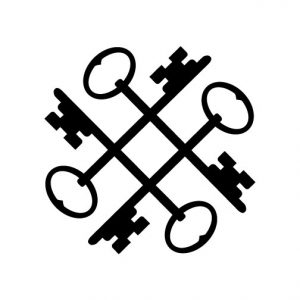
Their emblem is four crossed keys, which marks their goods, caravans, and any personnel employed by them. The more complex version has the emblem in red on a background parted “per cross” in black and white.

  1. Home
  2. /
  3. Wiki Pages
  4. /
  5. Nations & Kingdoms
  6. /
  7. Page 2

The Pirates of Oarsmeet

The Lost Aldorians

Established roughly a century ago, Oarsmeet was once a small fishing village barely within the borders of the Kingdom of Aldoria. As the years passed, the village grew, and with it, it’s reputation. thieves, thugs, and pirates were slowly drawn to the port town: some for the promise of an easy fortune taken from the unwary or unwitting; others for the call of danger. Still more came for a fresh start, as the law enforcement in Aldoria seldom bothered with such a remote little village, leaving criminals with a chance to lay low for months on end.

Around the time of the undead attacks, Aldoria saw the threat posed by a town of pirates as they prepared to sail across the sea to the new continent, and eventually dispatched a crew of sailors and soldiers to dispose of the vagabonds as quickly as possible to avoid any future confrontations. The crew, led by Commander Jackston Ridgebon and his second, Lieutenant Anne Cash, set sail immediately for Oarsmeet. By the time they arrived however, the attacks were growing more and more persistent, with the people of Oarsmeet struggling just to weather the waves of attacks. Commander Ridgebon, with his orders strengthening his resolve, was content to leave the scene and simply wait for the pirates to be overrun by the undead. He ordered his crew back onto the ship to return to Aldoria.

A handful of sailors, Lieutenant Cash included, refused to leave. They felt that it was their duty to the people of Aldoria, even if they were criminals, to ensure their safety however possible. Commander Ridgebon gave them a lifeboat and sent them ashore, deeming them deserters and criminals, just like the lot they were going to try to help. Between the ingenuity of the criminals and the discipline of the sailors, Oarsmeet soon had a simple guard set up, resilient enough to hold off the undead and Penitent long enough to evacuate the town.

By commissioning the aid of a local pirate by the name of “Mad Morty” Blackwaters and his ship, the Blue Ruby, as well as a few other vessels, Cash and her fellow deserters were able to secure passage to the new continent. After weeks of increasing aggressions by the undead, the citizens of Oarsmeet were finally ready and able to leave their homes, once and, some feared, for all. As the women, children, and elderly began to board the vessel, one of the town’s scouts burst into the barracks (once a minor gambling hall that had been repurposed out of necessity), a bite wound in his right arm. The blood drained from his face as he collapsed, uttering two final words with his last breath, “They’re close.”

As the guard scrambled to form some sort of defense against the imminent attack, a small horde of Penitent erupted from the woods near the village, charging the town, eager to spill blood that night. They set fire to houses and swarmed around anyone they could find, like a hive of bees insistent on stinging a target to death before moving to the next. Sensing that defeat would soon be upon them, Cash ordered the retreat back to the ships, and to shove off once they were full. Sailors covered the retreat, as pirates helped with wounded onto the ships, each ship setting sail when they could no longer afford to take on another passenger. Finally, all that remained were the sailors who had so far survived the attack, who began to board the final ship in the dock, the Blue Ruby herself.
With no force rallied against them, the Penitent rushed to the shoreline and unleashed volley after volley of flaming arrows towards the ships. Sails were ignited, leaving the ships and their passengers sitting like ducks in the water. Some had holes burned in their hulls, dragging the passengers down to a watery grave. In all, of the seven ships gathered to transport the citizens of Oarsmeet, only two, The Blue Ruby and the Interceptor, a small vessel carrying many of the wounded soldiers, survived the onslaught. Still they sailed, always looking back to shed a tear and share a song for those who died that day.

To the New World
During their voyage, the two ships were blown slightly off course, landing not on the shores of New Aldoria, but rather on a seemingly uninhabited beach. They would soon learn, however, that this was not the case at all. Shortly after reaching the shore, a forward scout reported seeing movement in the forest. “They looked like men,” he began, short of breath from both fear and exertion, “but they moved like wolves. Animalistic. As a pack. Right this way.”

As the scout had warned, soon enough, the pack of eight was upon the settlers, encircling them as a pack of wolves would do. A large male clad in bear fur approached Mad Morty. “You are in Grimward Territory, outsiders. Give me one good reason not to cut you down where you stand.” The answer the settlers gave made no difference. These Ulven were hostile, and saw the Aldorians as invaders. Weapons were drawn, threats were made, and taunts exchanged. Two Aldorians fell to Ulven blades, while an Ulven took an arrow to the heart, collapsing with a mighty thud. The Ulven retreated, their skill, great though it may be, was insufficient to overcome the dozens of settlers they faced. A promise was made, though, for the Ulven to return, that the Aldorians may never know peace from their wrath.

An Ulven promise made is a promise kept, and the next day, another small pack came to the encampment to harass the settlers, throwing rocks and insults, seemingly reluctant to strike the first blow. The Aldorians had banded together and soon set about constructing proper, if slightly crude, buildings. Stone walls and wooden fences, roofs to shelter them from the elements, and a roaring bonfire to drown out the howls of their Ulven tormentors.

No Ulven came that night, nor the next. For a week, the Aldorians slept in a wary peace, ever watchful of their new, distrustful neighbors. On the second night, a scout failed to return. Lost, as most had suspected, but none knew how right they were. On the third night, the scout was found. Scattered throughout the forest, torn apart, large chunks of flesh missing from his limbs and torso. A look of pure fear, unlike any seen since the first undead attacks, frozen on his lifeless face. On the fourth night, two more scouts disappeared, only to be found in similar grisly states the next day.

A war party was formed, two dozen able-bodied fighters and clerics strode into the first Ulven camp they saw. Accused of committing these acts, the Ulven seethed with rage. Despite the hatred they felt for the intruders, the Ulven live, fight, and die with honor. They would not stoop so low as to defile a corpse in such a manner. “This is the work of the Mordok.” Ulven fists clenched and jaws tightened at the mere mention of their mortal enemies, while a look of fear came over the Aldorians.

“What the hell is a Mordok?” Lieutenant Cash, now known as “Bloody Anne”, First Miss of the Blue Ruby, asked, more furious than scared.

The bear-clad Ulven from several days before let out a loud chortle, rippling out to the surrounding few, until the entire camp had joined in to mock the foolishness of the invaders. “Good luck, outsiders. Now,” he added, reaching for his massive axe, leading his companions to do the same, “Run back to your little cottages before we show you the meaning of Grimward hospitality.”

So the hatred between the Aldorians and the Ulven festered like an open wound. Raiding parties would be sent to steal supplies, burn buildings, and slaughter livestock the other would deem a necessity. Skirmishes would break out on regular occasions, although all-out warfare had yet to erupt.

The Aldorians would not actually see a Mordok until a week later, when the curious monster was attempting to free itself from a bear trap laid by an Aldorian hunter. It shrieked at the sight of the stranger, more startled than frightened, and in it’s panic, tore the flesh from it’s leg as it bolted into the woods. Soon enough, though, the hunter felt eyes upon him. He was also being hunted, and took off for the camp. As he made it into the clearing, a Mordok leapt towards him and grabbed his ankle, knocking him to the ground. The guards on patrol heard his cries for help and rushed to his location, but all they found by the time they arrived was a bloody trail and several sets of footprints that seemed almost human. A search party was assembled, and they set off after the beasts, following the trail of blood. Almost two hours later, they found the hunter, nearly unconscious, with his back against a large boulder and a dagger in his hand. Three of the black skinned monsters were circling him, while another lay dead and bleeding at his feet. These were hunters themselves, and knew that he would not live much longer one way or another, so they waited. The search party managed to slay one of the creatures, and drove the other two off, carrying the wounded hunter back to camp to patch him back up. This marked the first time a Lost Aldorian had encountered a Mordok and lived to see the light of day again.

New Oarsmeet and the Pirates of Aldoria

A number of years have passed, and the small band of survivors has truly established themselves in the area, as a town they designated New Oarsmeet. Sturdy log walls encase the town, and squat stone buildings crowd the land, homes and businesses for the Aldorians. Clan Grimward’s raids have only intensified: Cattle are no longer the object, as they have found a greater use for captives.

The citizens of New Oarsmeet, while they do grow some of their own food, and have taken to looting whatever they can from Ulven outposts in the area, have found their stores running dry faster than expected. As a result, the Blue Ruby will occasionally take to the sea once again, in hopes of finding a merchant vessel or the like, something heavy with coin or supplies. The piracy is a blast from the past for some, while others have a a slightly harder time justifying the theft of food from those who may also need it, but starvation can be a powerful motivational tool, and these individuals eventually agree that it is for the best.

New Aldoria has reached out to New Oarsmeet on more than one occasion, sending a delegate to the town in hopes of convincing them to rejoin their former brethren. Feeling abandoned by the crown and the ideals it supposedly represents, however, these Lost Aldorians, also known as the Pirates of Oarsmeet, have rebuffed these offers time and time again. Until they feel Aldoria has been returned to her former glory, until she is once again a force to be reckoned with and a benevolent hand to be loved, they will refuse to acknowledge the ruling class of New Aldoria. Still wearing the Green and Blue of their homeland, the Lost Aldorians have added the color purple to their uniforms, often in the form of a scarf or flag worn on the belt, to represent the royal family to whom many of them still feel they owe allegiance, as well as the blood spilled in the water as they fled their home.

While they do not care for the nobles of New Aldoria, the Pirates of Oarsmeet try to maintain pleasant relations with the common folk of their homeland, and will readily accept aid and commerce with other nations. Their opinion of the Ulven has been tainted by Clan Grimward, since you never get a second chance at first impression. Clan Grimward continues to plague New Oarsmeet with near constant raids, although the Aldorians have learned to better handle the situation, and supplies they have received from trading with other nations have restored morale and saved many lives. To this day, they are distrustful of Ulven culture, even among friendly clans, although they have resolved themselves to an uneasy peace with them.

Known Members:
​”Bloody” Anne Cash

  1. Home
  2. /
  3. Wiki Pages
  4. /
  5. Nations & Kingdoms
  6. /
  7. Page 2

Watchwolf Culture and Folklore

Clan Watchwolf

Clanleader: Sigrurd Watchwolf
High Priestess: Anjan Ravensmark
Warleader: Rolf Aeisborn

Watchwolves and the Colonists

The Watchwolves were one of the last clans to have contact with the colonists, having only encountered them after the Nightriver treaty had already been signed, and having infrequent contact with them since their initial meetings eight years ago. Following portents on the wind, and the concerns of their Priestesses, however, the Watchwolves and allied packs drafted the Watchwolf Resolution in order to head off a terrible apocalyptic premonition. The Priestesses believed that if the Humans could not be convinced to change their burial practices and pay their respects to the land of Gaia, that their doom would arise in this land as it did in their native land, and that the Ulven would be destroyed along with them. Though received with much resistance, the colonists did, for the most part, comply. Perhaps it was too little, too late, or perhaps the wheel of fate cannot so simply be stopped turning, because despite their efforts, the Undead have arisen on Mardrun. As blame for the undead presence was tossed back and forth, the political climate between not only the races of Mardrun, but between the different Ulven clans became more and more hostile. The Watchwolves and Nightriver tried desperately to resolve the situation peacefully, and forge an alliance of all three races against the Undead threat. Sadly, however, their efforts failed, and the peace summit ended in violence that sparked the first large scale Ulven civil war in history. The Watchwolf Clan now finds itself allied with the Humans and Syndar of the colonies in a two front war against not only the Undead, but the Ulven of Clan Grimward.

UPDATE:

Clan Watchwolf did survive the war, but not with its borders intact. The Western Watchwolves were absorbed into Clan Grimward and the Eastern Watchwolves eventually were absorbed into Clan Nightriver. Their respective cultures remain strong even if their political voices on the world stage have diminished.

Watchwolf Spirituality and Mythology

Ulven spirituality centers on both the harmony of living with nature, and the conflict of the age-old Mordok wars. The Ulven see themselves as the stewards of the land, and consider protecting it to be their greatest charge. They view the Mordok as an unnatural race, or even an invasive species. The two races have been at war ever since they first encountered each other.

Ulven mythology centers on the belief that the Ulven people are descended from the union of a humanoid nature spirit and a primordial dire-wolf. Their mythology consists of long heroic sagas and heroic poetry. The Watchwolves have a unique connection to the Sun and the Moon, dating back to ancient times, and the first written records. The oldest Ulven writing, in fact, is the story of how the Watchwolves gained the favor of the Sun and the Moon. The story tells of how Watchwolf ancestors Skol and Hati, the first sons of Gaia sired by the Great Wolf, were given the gifts of reading and writing in exchange for oaths of dedication to perform sacred duties which assist in the rising and setting of the sun and moon every day by chasing the Sun Horse and Moon Horse across the sky.

Totem animals which are important to the Watchwolves include the Wolf, the Raven, and, because of their connection to the Sun and Moon, the horse. Proper horses, however, are not believed to be native to Mardrun, or if they ever were, they are no longer kept by the Ulven, and have not been for many generations. There are instances in the sagas of Ulven heroes riding horses, but no other records exist. The only equines that appear to be native to Mardrun are elusive, shaggy, foul tempered wild ponies, which are far too small to carry even a small adult, let alone a heroic figure such as Agnon, who was reportedly so big that he once ripped a door from its hinges to use as a shield, and uprooted a tree for a club. There is not an elder alive today who remembers how to ride a horse, nor a blacksmith who knows the first thing about shoeing one. According to Ulven lore, the horse is a sacred creature associated with the Sun and Moon. It is speculated by some Ulven lorekeepers, that in addition to the gift of reading and writing, the Ulven were also given horses by the Sun and Moon, but that all of those horses, as well as their lineage, are gone and long forgotten. Horses, therefore, seem to be something more akin to a mythological creature than a natural one. Ulven artwork would seem to support this theory, as horses are often depicted as having wings, or sometimes a horn upon their heads.

The spiritual leaders of the Watchwolves are almost always female. Every village has a Priestess. In the case where multiple packs are living in the same village, it is not uncommon for each pack to have their own Priestess. These Ulven holy-women fulfill the roles of village healer, spiritual advisor, historian, and all around wise-woman. Some Priestesses are also military advisors or even officers. Every Watchwolf Priestess has a Warder. Warders can be either male or female. The Warder is a warrior who has pledged a life oath to the protection of the Priestess. The Warder follows the Priestess by day, and sleeps with her at night. It is a 24 hour job. The intimate relationship between Priestess and Warder makes them soul-mates in the eyes of the Watchwolves. It is not uncommon for a Priestess to have children by her male Warder.
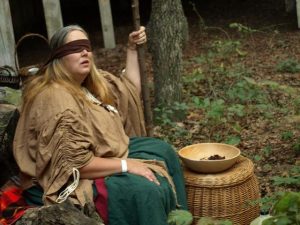
Watchwolf High Priestess Anjan Vakr-Ravensmark. Though blind, she is one of the most powerful spell-casters in the Ulven Nation

Watchwolf Family Life

Marital Fidelity is very important to the Ulven. The Ulven respect and admire the wolf above all other totem animals and try to emulate its nature with many of their cultural practices. For this reason, the Watchwolves believe in mating for life. Compared to other warlike cultures with short individual life-expectancies, including other Ulven, the Watchwolf courtship process is very long. Typically, proposals are made by the female. The male will do everything he can to get her attention in hopes that she will select him over any other suitors. Once the female has made her selection, and a pairing has received the blessings of both of the families, the pair must also receive the blessing of the Priestess. The pair will move in with the Priestess and her Warder for at least a month. The Priestess will observe the pair during this time, and the Warder will often challenge them with tasks requiring teamwork and cooperation. The Priestess will ultimately determine whether the couple will be sent home to their families, or allowed to build a home of their own. Once a union has received the blessing of the Priestess, the two are mates for life. These Ulven do not have anything resembling divorce. Only death can separate soul-mates.

Children take the last name of whichever parent is of higher social standing or rank, which could be the mother just as easily as the father, especially if the mother is a Priestess or professional Soldier. Some children choose to use both names, a practice which is frowned upon by many elders.

Watchwolf children have to grow up fast. Because both parents are often either career soldiers, or at the very least, members of a militia, the children of these people learn to fight at an early age. The children also are expected to learn trades. These Ulven rely heavily on their extended family and packmates to raise their children, especially in cases where both parents may have to leave on a campaign. It is not unusual, therefore, for an Ulven child to be entrusted to the care of a non-warrior family member or friend for extended periods of time. In many cases, this is where the Watchwolf child will learn a trade. A child left in the care of a blacksmith, for example, will likely learn something of metalwork while their parents are away. The care and rearing of that child, however, would not likely be limited to one family member or friend so much as the entire pack. Like the Wolf totem that they so highly revere, every member of the pack is likely to play a role in the upbringing of the child.
Watchwolf Society

Every Watchwolf belongs to one of two camps, which are located on the Northeastern and Northwestern shores of Mardrun. The first of the camps is the Eastern camp of Sol, and the other is the Western camp of Luna. Watchwolves maintain the identity of the camp they were born to, regardless of whether they intermarry or move between the camps. Watchwolves of either camp refer to a member of another camp as “cousin”, regardless of any actual family relation.

The Watchwolves mercilessly hunt and destroy the Mordok, but never take anything from these encounters. To do so is believed to bring misfortune. Mordok property is considered taboo and is destroyed by fire. Ulven property found in the possession of the Mordok can be recovered but must undergo rites of purification at the hands of the Ulven Priestesses. Prisoners recovered from the custody of the Mordok must also undergo rites of purification with the Ulven Priestesses before they can return to society.

The warrior caste is highly revered in Watchwolf society, but contrary to popular belief, not all Watchwolves are professional Soldiers. Because these Ulven do not rely on raids, the society requires that much of their population work in agriculture, or as artisans and craftsmen. Ulven people as a whole, however, do pride themselves on their ability to fight when the need arises. Even a humble turnip farmer can pick up a sword, having been trained how to fight from a young age. Throughout history, the Watchwolves have developed a reputation as wise and cunning military leaders, and many inter-clan alliances have elected Watchwolf heroes as their Warpack Leaders or military advisers in times of war.

Honor is very important to the Ulven. The only thing that is valued more highly than personal honor is the honor of one’s family and Pack. Whilst prowess in combat is important to the Ulven, it is not necessarily the basis of their honor system. Honesty, wisdom, cunning, competency, loyalty, and generosity can all affect reputation. This is especially true of Ulven who are not of the warrior caste. A Blacksmith, for example, might be highly revered and honored due to the quality of his armor. Likewise, that same Blacksmith might be ostracized if he made swords and tools of inferior quality. Honor can also be gained by association, as in the case of a warrior who is accepted into an elite and prestigious military unit, or a poet who immortalizes the exploits of a fallen hero into verse.

Though the Watchwolves are a warlike people, they are not raiders like some other Ulven people. Until the recent bloodshed at the Greytide peace summit, there was very little infighting among the Ulven Clans. For the most part, they seemed to respect each other’s territory, and it had been many decades since the last clan skirmishes.
Watchwolf Folklore

Like many other cultures, the Ulven Mythology features heroic individuals performing unbelievable acts of strength and martial prowess. Ulven heroes will also use cunning and trickery to accomplish their tasks, especially if the story features the appropriate totem spirits. Unlike the near godlike folklore figures of some other cultures, however, the Ulven hero is undeniably mortal, and seems to rely heavily on their friends and elders in order to accomplish their tasks. A perfect example of this is the following excerpt from Howl’s Homecoming. The characters are trying to return home after a campaign against a tribe of giants (which was presumably eradicated by the Ulven and exists in no other records). All of the party members are wounded or sick. The significance of this verse is that these are all named and mighty heroes from other tales, but here we see them at their most vulnerable.

Howl’s Homecoming:

The sun burnt hot on the heroes five
From a faraway war, in a faraway land, the last of the pack alive

Freya, Grin, Agnon, Jenesis, and Howl

Held together by stitches and linen strip
The heroes trudge on, the bandages drip

Freya, Grin, Agnon, Jenesis, and Howl

Howl is the worst of them, wounds so deep
He sees the Great Wolf on the road in his sleep

Freya, Grin, Agnon, Jenesis, and Howl

The biggest and strongest of the five brave fighters
His friends all now wish he were a little bit lighter

Freya, Grin, Agnon, and Jenesis

For many a mile they carry him, until they can no more
Their strength is failing fast, these remaining four

Freya, Grin, Agnon, and Jenesis

On unsacred ground, the burial rites must Jenesis have Spake
For nowhere near, was stream or lake

Freya, Grin, Agnon, and Jenesis

Here is placed the stone
Of Howl, buried alone

Freya, Grin, Agnon, and Jenesis

He deserved a funeral barge, engulfed by holy fire,
But settled for less, than even a funeral pyre

Freya, Grin, Agnon, and Jenesis

The bite of the iron is sharp, as vigil they cannot stand
Runes of shame are self inflicted, with a red hot brand

Freya, Grin, Agnon, and Jenesis

They gnash their teeth and stumble ahead
Their duty failed, their friend is dead

Freya, Grin, Agnon, and Jenesis

To die on the field is much preferred
Than to die on the road where no one heard

Freya, Grin, Agnon, and Jenesis

Now out of water, they struggle on,
The next thing they know, Jenesis is almost gone.

Freya, Grin, Agnon, and Jenesis

The three take turns, dragging her
On a litter made, from staves and fur

Freya, Grin, Agnon, and Jenesis

The dust, it blew
The Carrion bird flew,

over

Freya, Grin, Agnon, and Jenesis

And Jenesis, in fever spake,

“None should lie alone,
upon that plain of bone.”

“Please leave me here or take me back,
to Howl, a brother of my pack.”

“But never homeward bound.
The Wolf our friend did meet, is surely still around.”

Freya, Grin, Agnon, and Jenesis

Agnon, her Warder, turned around,
And dragged her back towards burial ground

Freya, Grin, Agnon, and Jenesis

All four they turned around, to face their fate as five,
Rather than return, with runes of shame alive

Freya, Grin, Agnon, and Jenesis

Upon return to barrow mound,
The four in shock, without a sound

Freya, Grin, Agnon, and Jenesis

Rocks were scattered all about
And a body, was that grave without!

Freya, Grin, Agnon, and Jenesis

When suddenly, across the plain, there came a fearsome Growl,
Standing there as plain as day, the heroic figure of Howl!

Spake He:

“Those runes of shame befit thee, you stupid pieces of shit.
After all our years together, you forgot I have True Grit!”

Freya, Grin, Agnon, Jenesis, and Howl

Further examples of mortal heroes in Watchwolf folklore can be found in the following tale. The story carries an interesting message because it seems to glorify the cunning of a very vulnerable hero at first, but then shifts gears and becomes a lesson about honesty and self-acceptance. Such complex themes are not found in other similarly developed barbaric cultures, especially ones that place such high value upon animalistic aspects.

The Courting of Greta Kitakitzyadigzvadig

Long had her people wondered when Greta would settle down and take a Husband. Her adventures had earned much fortune and renown. But such a fearsome warrior was she, that none of the menfolk dared approach her for courting. Who could be man enough to satisfy the strongest, fastest, and toughest woman in the world? Everyone remembered the tale of how she arm-wrestled the Hill Giant and broke his arm, and they also remembered how she broke the white dragon’s neck with her thighs. It was rumored that she was the daughter of a nature spirit. Therein was the problem. Greta was beautiful, and she was a War Pack Leader, but who could survive the wedding night without being crippled or killed? This was a woman who once accidentally killed an ox by swatting a fly that had landed on his back, and she had a fearsome temper to boot. Clearly, she would be more than a handful for any man who dared to court her. The men were shamed, because none of them would try.

One day, three strangers traveled into the land. They were brothers, and all looked alike. The brothers were short, pudgy, and freckled. The first brother had a magic belt that made him as strong as the King of all Polar Bears. The second brother had a magic ring that made him as fast as the Lord of all Horses. The third brother had a magic necklace which gave him the constitution of the Chieftain of all the Wild Boars. One Thursday morning, while the three brothers were traveling towards the capitol, they were passed on the road by a skinny girl in ill-fitting clothes. It was very cold, and the third brother offered her his cloak. She kissed his cheek, and promised to leave the cloak at the next Inn, hanging on a hook near the fire.

The three brothers arrived in town very late that night, and the first brother went into the Inn to pay for a room. He did not have any money, so he asked the Inn keeper if there was anything he could do to earn his keep. The Inn keeper told him that he could earn his keep by rebuilding the stone chimney. The Inn keeper expected that this would take the stranger several days work, but the first brother was so strong that he rebuilt it, better than new, in a matter of minutes. The Innkeeper was amazed, and gave the brother a room for the week. He couldn’t wait to tell the townspeople what he had seen. The first brother’s deal had only paid for one person, so the second and third brothers had to sneak in through the back, and they all shared the room.

The next morning, the second brother went out to catch some game for their breakfast, while the first and third brothers remained hidden in their room at the Inn. Because the brothers all looked alike, the Inn keep did not know that this was a different person. While he was out, the second brother was spied by an old trapper, who recognized that the second brother was a stranger in these lands. The second brother chased down a swift and mighty stag, caught it by the antlers, cut its throat, and wrestled it to the ground. The old trapper was amazed, and he headed back to town to tell the people what he had seen.

The next day, the third brother went downstairs with his harp, to earn some money performing. Many townspeople were there, telling and retelling the rumors of this amazing stranger who was stronger than a giant, and swifter than a stag. When they saw the third brother, they cheered him. Everyone wanted to buy him a drink. Surely, they thought that he was a hero straight out of the Sagas. The third brother sang songs and played his harp, and the people were moved to tears. Soon, the people at the Inn were all very drunk, and they had given the third brother all of their money, so he took his harp, fetched his cloak from the fireplace, and left to go to the next Inn. He was not drunk at all due to his amazing constitution.

On his way to the next Inn, he spied a beautiful woman riding out with an entourage of footmen. She was obviously someone of great wealth and importance, as she was the only person he had ever seen to ride a horse. Not drunk, yet emboldened by the drink, he asked a turnip farmer who she was. The turnip farmer told the third brother that the woman was none other than the mighty Greta herself. The impetuous brother ran out after her and stopped her party on the road. He introduced himself, and announced that he wished to court Greta. The rest of the party laughed at him, for he was short and fat, but the War Pack Leader seemed impressed by his courage. The third brother played a beautiful song on his harp, and she accepted his invitation. The two rode off to see the Priestess. The Priestess decided that the couple would have to face three challenges together in order to earn her blessing, and she conferred with her Warder on this.

First, she challenged them to build a new stone bridge at the South fork of Two-Rivers. They were to start at first light the next morning. The Third brother ran back to the Inn. In the morning, the First brother went in his place. The Priestess and her Warder were amazed when the couple returned the same day. They had expected the construction of the bridge to take at least a week, but the job was done. That bridge still stands today.

The Priestess and her Warder decided that the next challenge would be to send the couple on a quest to the top of the tallest mountain to fetch the rarest of moss, which only grows on snow-covered peaks. The couple was to leave at first light. The first brother ran back to the Inn. In the morning, the second brother went in his place. The Priestess and her Warder were amazed when the couple returned the same day. They had expected the journey to take at least a week, but the moss was delivered the same day. The Priestess and her Warder were frustrated. Usually the courting process takes at least a month, but at this rate the pair would run out of challenges in the first few days.

The Warder was so frustrated that he said,

“Fine, if you can do two weeks work in two days, then let’s see you drink a weeks worth of mead in one day.”

The challenge was to start at first light. The second brother ran back to the Inn. In the morning, the third brother returned to Greta. The two started drinking at first light, and not only were they still standing, but they were still drinking at sundown. The third brother held his drink well, but the Pack Leader was beginning to get very rowdy. Suddenly, Greta fell off of her chair and began rolling on the ground, laughing heartily and clutching her sides. The Priestess and her Warder were amazed. The townspeople cheered.

“Finally,” they said, “someone has tamed Greta!”

Upon hearing these words, Greta became enraged.

“No one bests me!” she said, climbing back up to the bar.

She challenged the third brother to an arm wrestle on the spot. The third brother was trapped. There was no way for his brothers to help him now, and he was easily defeated. The third brother was shamed. He admitted to his deceit of the Pack Leader and told her the truth about his brothers and their magic. Greta was shocked. As the third brother turned to leave, she stopped him.

“Behold,” said she, “a leader who has been deceitful not thrice, but always and ever since I came to this place!”

With these words, Greta removed her girdle. Her hips shrank, her chest deflated, and her thick braided hair became dull and stringy. Before the townspeople’s very eyes, their mighty warrior transformed into a scrawny little scarecrow of a girl, covered in pimples.

“I am not the daughter of a nature spirit! Before I put on this girdle, I was no warrior, but a humble thief! Look on me now, and tell me if you still love me!”

The third brother replied,

“Of course I love you. That was why I gave you my cloak when first we met!”

And so the couple continued their courtship trials without the aid of any magic, and earned the blessing of the Priestess. They were married, and their offspring were numerous. They were true to each other as long as they both lived.

The following story explains the origins of the Watchwolf Clan, the significance of the position of Lorespeakers to the Ulven in general, and supposedly how their written language came to be. It is the oldest known written record in the Ulven nation.

This story takes place long ago, back when the eldest children of the gods still walked the earth.

The first sons sired by the Great Wolf, born of Gaia, were Skoll and Hati. These two brothers, along with their many younger siblings, were the first Ulven. Back in those times, our people were much closer by blood to the Great Wolf, and could walk in his likeness when they so wished. This was good, because the world was much more dangerous back then. Everything was larger, from the trees that nearly reached the heavens, to the beasts of the earth, which would swallow the likes of you or I whole. The children of Wolf were not the only ones closer by blood to their gods. It was a time of legends, and giants.

Skoll and Hati both had large families, with many children, grandchildren, great-grandchildren, and great-great-grandchildren, for the direct descendants of the gods do not age, though their children do. It is one of the tragedies of their immortality, that they do not pass it along, and so must bear witness to the passing of all that they create. Half-gods cannot create anything eternal. Only true gods can do that.

Long before even the mating of the Great Wolf and Mother Gaia, there was night and day, caused by the passing of the Sun Horse of Sol and the Night Horse of Luna crossing the sky. The two horses did this every night and day without fail, from the very beginning to the time of legends. One morning, however, the Night Horse turned around and ran the wrong way. No one knows why for sure. Some say that the Great Devourer tricked the Night Horse. Some say that the Night Horse just wanted to see what went on during the day. Regardless of the reason, the two horses collided at noon, and fell to earth, leaving the moon and sun hanging motionless in the sky together in an unnatural dusk, as the moon was between the sun and the earth.

The two horses crashed into the mountains called Wolf’s Hackles. They were very angry at each other, and began to fight. Their magic caused the plants to die, and the rivers to run backwards. Without the passing of nights and days, the seasons became confused, and the different types of weather all tried to happen at once. Skoll and Hati saw the withering of Gaia all around them, and knew that they had to do something to save their mother. They did not know that the two horses had fallen, but they could see both the sun and the moon just sitting in the sky.

They asked the river spirit who was Lord of all Catfish what had happened, but they could not understand him, for he was talking backwards.
They asked the Grandmother Birch Tree what had happened, but before she could answer, she withered, lost all her leaves, and went into her winter trance. Trees speak so slowly in the winter that they are not worth talking to.

They asked the little Grey Mare of Misfortune, who makes the storm clouds go across the horizon, and who is a younger sister to the Sun and Moon horses, what had happened. The little gray mare of misfortune was confused, however, by the crazy weather and her out of control clouds, and she just didn’t know what went wrong.
Finally, the two brothers asked the Raven what had happened. Raven flew up through the stormy skies, and returned with the Sun and Moon, one in each claw. The Sun and Moon were beautiful. They had skin of gold and silver, and wore robes made of dawn and starlight. The Sun and Moon told Skoll and Hati that their horses had fallen from the sky and were fighting in the mountains. The Sun and Moon said that it was possible to set things right, but that to do so would require great self-sacrifice. The Sun and Moon promised that if the brothers helped them they would pass on the secret of immortality to the descendants of Skoll and Hati, that though the bodies of their children may die, their memory and deeds would never be forgotten. This was important, because the half-gods were the only ones who could remember everything that ever happened, and they feared their culture would be lost without them. In the end, the two brothers swore to return the horses to the sky, no matter the cost, for without the movement of sun and moon, their people were doomed, and there would be no one to pass the stories on to, anyway.

Raven gave each of the brothers a feather, and told them to wear it behind their ear so that they could fly. Taking the form of their father, the two brothers ran to the Wolf’s Hackles. The horses were gone, though, as they had decided to race each other across the world to settle their dispute. Skoll and Hati sniffed the air, found their tracks, and ran off in pursuit. Finally catching up to the stray horses, the brothers each broke off and chased one horse, separating the two. Skoll chased the Sun Horse to the Eastern end of the Earth, and Hati chased the Moon Horse to the West. Leaping from the ends of the Earth, the wolves chased and herded the horses back into the sky and returned them to their rightful patterns. The rivers returned to normal. The weather and seasons returned to normal. The plants recovered, and Gaia was saved. To assure that such a catastrophe never happens again, Skoll and Hati must chase the horses tirelessly, and shall for all of time.

The children of Skoll and Hati were given the gift of reading and writing by the Sun and Moon, lest they forget anything important in their short lives. They were told to spread the new language to their cousins in other clans, and charged to watch the Eastern and Western horizons. That is how the Ulven came to have reading and writing, and how the Watchwolf clan came to be.

Recent/Current Events
264:
To the West, the new year brought with it preparations for a battle the Watchwolves feared they could not win. Meager aid from their allies and the Grimward army on their doorstep led to abysmal morale around the settlement, with many preparing to either abandon their homes and their sacred charges or to die defending them. Though the Coalition did eventually send reinforcements and supplies to the western settlement, it was too little, too late. Grimward overran the western territory of the clan, claiming it for their own. Many of the Watchwolves who stayed behind were amazed by the dignity with which they were treated by their conquerors. They were fed and protected better under Grimward rule than in the Coalition, and many even retained their home, allowing them to continue to watch the horizons as they have for generations. With the proposed treaty to be signed by Clans Grimward and Nightriver, the western settlement would remain under Grimward control, a point which has a number of proud Watchwolf warriors concerned and angered.

To the East, supplies were in high demand as they were sent to the west to reinforce their clan mates, though the smaller clan was unable to stand against the might of Grimward. Many smaller villages have been struggling to accommodate the large number of refugees who made the journey from the western settlement. Working to provide food and supplies for their brothers and sisters to the west, those in the east know that they lack the numbers to return their ancestral home to its rightful owners, though tales of the generosity shown by Clan Grimward has reassured them.

  1. Home
  2. /
  3. Wiki Pages
  4. /
  5. Nations & Kingdoms
  6. /
  7. Page 2

Boz Mezar

Heraldry
– May’Kar Dominion tabard or belt flag with white palm tree over white crossed sabers on a blue background
– Serai Battle Standard

JN1022-zoom.jpg

Official Background Story
Boş Mezar \’bowsh ‘meh’zar\ is the action arm of the May’Kar settlement Serai \’sir’aye\. It is a mercenary organization specialising in area defense and force education. Odd for a mercenary band in that it abhors all loss of life, Boş Mezar nonetheless offers a multitude of martial services including but not limited to: area defence, area denial, executive protection, armed transport, battlefield preparation, battlefield healing, housing of detainees, intelligence collection, and peacemaking. Boş Mezar also offers consultation and training including but not limited to, small unit tactics, battlefield management, campaign planning, skill training (primarily combat skills, although additional skill training may be available upon request), convoy training, opposing force simulation, and simulated area assault.

The settlement of Serai was founded with the stated goal of May’Kar cultural revival. Due to the low numbers of living May’Kar and continuing persecution from other immigrants from Faedrun, Serai made the choice to actively hide its existence and abstained from world politics. It remained undetected until scouts from The Brotherhood of the Long Winter looking for a suitable location to establish a settlement of their own made contact in 263. Finding in The Brotherhood a group that didn’t reflexively blame all May’Kar for the betrayal, Serai welcomed the new settlement on it’s doorstep. Although The Brotherhood’s proximity provided a welcomed deterrent against foreign aggression, the Citizens of Serai were unwilling to trust them with the entirety of their defence or to represent them to the outside world.

Boş Mezar was formed in early 264 to provide a means for the May’Kar settlement to once again interact with the world writ large. It is charged with protection of Serai, locating surviving May’Kar and inviting them home, spreading May’Kar culture, and making manifest any edicts of Serai. All May’Kar are welcome within Serai, and all people with appropriate skills and a willingness to further May’Kar culture are encouraged to apply for membership in Boş Mezar regardless of race or background.

  1. Home
  2. /
  3. Wiki Pages
  4. /
  5. Nations & Kingdoms
  6. /
  7. Page 2

New Aldorian Marines

Founded in the year 228 under orders by the King of Aldoria, the Marines were created as a response to the Vandregonian Rangers: Elite soldiers trained not as front-line fighters, but as a task force designed to operate with surgical precision. Chosen from the ranks of the Aldorian Navy for their skill, resourcefulness, and experience. After the Fall, many Marines lost their lives covering the retreat of the Aldorian settlers or protecting their ships from pirates at sea. The group had fallen into ruin in the New World, but at the behest of Prince Aylin, was reformed in the year 264 under the leadership of the former Aldorian sailor and former Pirate, Anne Cash. While an official uniform exists for formal occasions (Black pants and boots, Blue naval coat with a green sash), most Marines show their allegiance by prominently displaying both a blue and a green sash on their person.

Being of Aldorian descent is not a requirement to join the Marines: you simply need to be loyal to New Aldoria and skilled enough to live up to the reputation as a Marine. Most members are invited in, although an interested candidate can petition to join, at which point they will be tested and evaluated to see if they are a good fit for the group.

Not all associated with the Marines are warriors or fighters, though. Healers, smiths, tradesmen, and politicians all have their place in the Marines. Although they are seen as support roles, they are just as valued to the organization, with ranks determined by merit in each perspective role.

The defense of New Aldoria is paramount in the eyes of the Marines. Second, the Marines are committed to each other: no one gets left behind. Behind this is a devotion to personal and unit excellence. Whether through training and drilling, studying, or practice, the Marines strive to be the best in all they do. Marines are expected to better themselves, and when training, they are encouraged to expose flaws in a squadmate’s form to close those gaps. A missed parry can be dangerous, as can a wound improperly treated. Even a false bit of information can lead to unnecessary danger for yourself and your squad. Criticism is not just expected, but encouraged, as long as it remains constructive.

Marines are expected to respect the chain of command inherent in their organization. Orders from a superior are to be followed, unless doing so would put you or your squad in unnecessary risk. Subordinates may not give orders to superiors, although their input should be given appropriate weight and consideration.

The ranks of the Marines, from Lowest to Highest, are as follows:

  • Private: The lowest ranking member of the Marines, this level is usually reserved for new recruits, although demotions for insubordination or poor decisions may result in this rank, as well.
  • Corporal: The first step up from Private, this rank is granted to those who have proved themselves capable in some manner or another. Most Corporals are trained soldiers, although many who fill this rank are also skilled tradesmen, devoting their trade to the organization.
  • Sergeant: For those of exceptional skill and determination, the rank of Sergeant is a badge of honor. They are the leaders of the lower-ranked troops, the lowest-ranking Officer rank, and often the ones put in charge of battlefield tactics and day-to-day operations during peacetime.
  • Lieutenant: The most trusted officers of the Captain, the Lieutenants are hand-picked to be the best of the best of the best. It is common for the Captain to appoint areas of responsibility to each Lieutenant, to avoid infighting should the Captain fall.
  • First Lieutenant: The Captain’s second-in-command, this Lieutenant has been elected fit to take over in the unfortunate case of the Captain’s demise. The Captain is not required to nominate a First Lieutenant, and in such a case, a new Captain will be chosen from the ranks of the Lieutenants by the Master General.
  • Captain: The highest rank achievable by a member of the Marines, the Captain oversees the entire organization, answering only to the Master General. Currently there is only one Captain, although the rank may be expanded in the future if deemed necessary by the Master General.
  • Master General: The reigning monarch of New Aldoria. The Master General has complete autonomy over the Marines and has the final say in all of their decisions, although these decisions are often left to the best judgement of the Captain.

The Marines rely heavily on their squad mates for their success, and their very survival. As such, insubordination is dealt with swiftly. Reports of insubordination should be brought to the Captain directly, or the next highest-ranked officer if the Captain is not present. Both parties are expected to respect the Captain’s verdict, although the decision can be overturned in the presence of new evidence. It should be noted, however, that false claims of insubordination will be punished just as harshly as the crime itself.

  1. Home
  2. /
  3. Wiki Pages
  4. /
  5. Nations & Kingdoms
  6. /
  7. Page 2

The March of Starkhaven

The Beginning: A New Chapter of the Order – Arnath’s Light

After years of decay and financial distress, the once great settlement of Starkhaven had descended into near ruin. Many settlers fled to other colonies. Although the military might of the Order of Arnath has never recovered from the initial conflict with the Ulven and the recent Ulven civil war, a handful of the Fist chapter members maintain control of Starkhaven and can be seen periodically. They have become more reclusive now, choosing to stay inside their crumbling keep and keep to their ideals and themselves instead of getting involved in the world at large. This had concerned members of the Order and also some of the people of Starkhaven, and a Griffin stepped forward to push for a reform. A new direction was presented and the Hand of Arnath listened; although the Order of Arnath’s Fist would remain the primary chapter of the Order on Mardrun, a new settlement and some of the existing military units were re-purposed with aiding the efforts of this new chapter. The Hand Of Arnath is leaving the future of the Order of Arnath up to faith and chance; whichever chapter proves to be more influential will be allocated more resources and grown and expanded.

The Order of Arnath’s Light is a brand new chapter of the Order of Arnath. Led by the new Chapter Master, this group within Starkhaven is pushing for more form, progressive ideals on the world, and diplomacy. This was originally met with resistance as the surviving chapter of the Order of Arnath was the Fist, the most militant chapter of all of the Order of Arnath. The new Light chapter resides in Starkhaven and still answers to the Hand of Arnath, the ruler of the remaining religious order.

Merging: A New Direction – The March of Starkhaven

After the Chapter War of June 267, the sole remaining chapter was Arnath’s Light. As they worked to rebuild and heal, the City-State of Newhope came with an offer and a warning: pay loyalty, or pay taxes. Starkhaven and the Order, the second largest colony in the City-State after New Aldoria was emptied of its people, managed to strike a deal with the City-State. It would pledge fealty if all the lands within 25 miles were made into a March with the Hand of Arnath as the Marchioness. Hammering out the final details, the March of Starkahven was born. The Hand now serves as both a secular and spiritual authority, ruling the March with a firm but fair hand.

History
Organization
Members and Requirements
Order of Arnath Homepage

  1. Home
  2. /
  3. Wiki Pages
  4. /
  5. Nations & Kingdoms
  6. /
  7. Page 2

Pack Graytide

Pack Graytide
Clan: Belongs to Clan Grimward.
Estimated Size: Medium
Insignia: A single braid of gray rope worn on the belt.

Pack Graytide has always been an extremist group of Ulven. Their warriors are skilled and cunning, but prone to disputes and altercations with other Packs. Where other groups of Ulven would simply kill the Mordok and move on, the Graytides would create gruesome standards out of their corpses or hang them from trees. These acts were not favored by other Ulven, but many could understand the reasons behind it… the Mordok frequently mutilated dead Ulven and even feasted on their flesh, so the Graytides were turning back on them similar gruesome acts.

Graytides pride themselves in excelling at combat and their witches excel in curing diseases and poisons. An interesting quality to the Graytides is their acceptance of cast out or exiled Ulven. Although the exiles normally see Pack Graytide as a second chance and fall into place quickly, some more ruffian or criminal Ulven also find home here and tend to stir up more trouble than if there were still exiled and alone.

Pack Graytide was honored to join the war party created by Hanseth Longfang after the Mordok killed his daughter Veera Longfang at the Onsallas outpost village. To them, it was a chance to fight back against the Mordok in the dirge swamp. During the week long campaign and brutal fighting, the Graytides mutilated all the Mordok they had slain and left standards of bone and flesh in Mordok territory. Even if the Mordok never noticed, the personal victory of leaving some gruesome things for the Mordok in their own territory was worth every Graytide warrior that died in those battles. The Graytides suffered the worse casualties of all the packs in the war party but returned home with treasures and stories of battle.

When the colonists arrived on Mardrun, Pack Graytide was there alongside Pack Longfang and Pack Bloodriver. They met the colonists with fury and killed more of them than any other Pack involved in the fighting. They did carry over their gruesome tactics against the colonists and several Graytide warriors were seen adorning themselves with trophies of human and Syndar body parts and skulls.

Pack Graytide stands firm that the colonists have no right to stay on Mardrun and should be exterminated or cast back to the shores and sent to Faedrun. Things nearly came to a boiling point when Lycon Graytide led a warpack of Graytide warriors in an attack on a colonist caravan on its way to Newhope. As the Graytides killed them, a hunting party of Longfang warriors stepped in to intervene. They fought each other for a short time and then retreated after Harlok Longfang cleaved Lycon’s arm clean off. It was at that moment that the Graytides vowed to get revenge against not only Harlok Longfang, but all Longfangs. This event also furthered the political divide between the Ulven clans regarding relations with the colony.

A meeting of prominent Clan and Pack leaders from across Mardrun led to the drafting, under the hands of the Watchwolves Clan, of a resolution to prevent further violence between the colonies and the Ulven. This document, known as the Watchwolf Resolution, declared that the colonists, if they were to live on sacred Ulven grounds, had to observe certain rites in order to respect the Ulven Gods. The treaty was delivered to the colonists at Newhope by the pack leader of the Graytides, Khulgar Graytide, who volunteered to deliver the resolution because he had the rare skill of reading and writing. Despite his action as a pack leader being an outreach towards peaceful cohabitation, Khulgar was mistreated, mocked, and dishonored by the human nobles present at the political dinner, and chased back into his own territory. Perhaps this show of disrespect on the part of the humans pushed the Grimward clan over the edge, or perhaps the Graytides were just looking for a fight. Either way, the political climate in Mardun was about to boil over.

While most of the colonists agreed with and respected the Watchwolf resolution, a group of pioneering colonists ventured into Ulven territory and began building a settlement. According to the Graytides, these people had either not heard of the Nightriver Treaty and Watchwolf Resolution, or chose to ignore them. When confronted by warriors of Graytide, the human colonists, who were mostly farmers, refused to leave their homes and were massacred to the last man, woman, and child. The entire settlement was burned to the ground. Following these events, a peace summit was called by the Watchwolves and Nightrivers, who had drafted the treaties in question. The summit was held in Grimward territory, in the hall of Haygreth Grimward. Representatives from the Ulven Clans gathered together with delegates from the Human factions of Newhope, Vandregon, Crow’s Landing, and New Aldoria. The Graytides were accused of overstepping their bounds and committing cowardly acts of murder against defenseless civilians, and the Grimwards criticized for failing to manage the crisis. The meeting became heated and ended in violence, sparking the beginning of the first large scale Ulven civil war in history. Ulven of the Longfangs, Watchwolves, Nightrivers, and other smaller packs and clans now find themselves allied with the colonists, while Clan Grimward and their allies have called for either genocide or the deportation of the colonists, and death to any Ulven who have sided with the Humans and Syndar.

  1. Home
  2. /
  3. Wiki Pages
  4. /
  5. Nations & Kingdoms
  6. /
  7. Page 2

Darkport

Darkport

 Location: Far-eastern coast of Clan Nightriver territory, just south of Clan Goldenfield.
Leaders: Sailor’s Tribunal, council of three founding members who determine the direction of the settlement.
  • Nathaniel Artemos: Io’Larian Syndar from Fawyth, he is responsible for ensuring the financial prosperity of Darkport.
  • Eva Nightriver: An Ulven woman who handles the general political aspects of the settlement.
  • Haggar Rednettle: Ulven male from Clan Nightriver, he was granted a place on the Tribunal in exchange for Branthur’s permission to settle on the land. He is in charge of the political dealings of the settlement.
A recent addition to Mardrun’s coastline, the settlement of Darkport is a strange amalgamation of a wide variety of cultures from Ulven, Syndar, and Human clans and nations. Said to have been the original landing spot for the Wolfgang tribe of Io’Larian Syndar, the site was chosen due to the coastal location and the fertile fields to the north. Through the work of Haggar Rednettle, they have worked to establish a relationship with Clan Goldenfield, hoping to make use of their neighbor’s talent for farming, while offering their own access to the sea in return.
Though new, the melting pot that is Darkport could someday become a hub of commerce, though only time will tell if the diversity will be a blessing or a curse to the small settlement.
  1. Home
  2. /
  3. Wiki Pages
  4. /
  5. Nations & Kingdoms
  6. /
  7. Page 2

Onsallas Outpost

Onsallas Outpost (Mardrun)
Onsallas Outpost is the last Ulven controlled fortification before the Mordok infested Dirge Swamp. It is composed of a large palisade outpost that is within sight of the nearby Ulven village and is near the line of watch towers that overlook the edge of the Dirge Swamp. Although there are a number of towers, they are used randomly by the Ulven to spot any incoming Mordok hunting parties; it would be almost impossible to man all the towers due to the sheer size of the area they overlook. So far this has deterred some Mordok or helped to alert the nearby town or outpost defenders.

This Ulven outpost is home to some of the most veteran Ulven warriors, primarily ones that were involved in the battles with the humans and Syndar when the colonists first arrived. This is also the home territory of Pack Longfang. Non-Ulven are regarded coldly at the outpost, and the guards there frequently recount stories of battle with the colonists, the warriors taking pride in besting the foreigners in combat on numerous accounts.

If a discussion ever arises about who won the Ulven-Human Honor Duel, any comments about the human winning almost always starts a fight… and usually with live steel. Several mouthy adventurers have gone “missing” after visiting Onsallas Outpost.

The nearby farming village is committed to training to fight (in case the Mordok ever break through the outpost defenses) and with farming the nearby trees. Their close proximity to the Dirge Swamp lends the trees an unnaturally fast growth cycle and can be harvested much quicker than any other trees. They also produce Pineed Sap, a powerful healing agent, even more potent than Fae leaves. This puts a great resource right on the edge of dangerous lands and life is hard and brutal at the outpost. The Ulven have been growing the trees in the area and dedicate a lot of time and resources to the harvest of the sap.

Anyone leaving the protection of Onsallas Outpost towards the Dirge Swamp is said to be going “into the black”. The statement means that the person is leaving the protection of the Ulven lands and venturing into dangerous Mordok territory and also pays homage to Pack Blackwing who went missing after venturing into the swamp to try to establish a permanent Ulven Settlement.

Some of next generation’s greatest Ulven warriors are just coming to age in the village, learning lessons both from the land they live on and from the veteran warriors they frequently interact with.

The outpost itself is a sturdy fortification within eyesight and signal horn distance of the nearby village. Supplies are always an issue at the outpost because it is so far on the border of Ulven controlled lands. The comfort of inns, merchant shops, and plentiful food is replaced by tents, stretched out supplies, and dry rations. The nearby village is small and utilitarian, mainly a training ground for warriors instead of a place of comfort. Ulven on guard rotation can go to the village and spend some time with the villagers, but even the village itself is more basic. Some adventuring groups have begun to scope out Onsallas Outpost and the nearby village as a possible goldmine of opportunity. With a lack of supplies, it is suspected that a profit could be made trading to the outpost or the village, even with the cold demeanor that the Ulven there have towards non-Ulven.

Recently, in the face of an undead threat, a contingent of human Soldiers of Vandregon, led by an Ulven Captain, were allowed to reinforce Longfangs and help garrison the outpost. This alliance was integral in the discovery and destruction of the Lich’s power stone. The integration of Ulven and Human adventurers, and the success of their mission has been praised by both Ulven and Human diplomats as a major accomplishment.

  1. Home
  2. /
  3. Wiki Pages
  4. /
  5. Nations & Kingdoms
  6. /
  7. Page 2

The Clanless

The Clanless

To the North there are a number of packs that are in fact, clanless. The small packs get along for the most part and have not formed a clan because each feel that they have their own calling that Gaia and the Great Wolf have set them on. They feel that no clan or clan leader is better than them and don’t take kindly to clans that look down on them or try to tell them what to do. They work with other clanless packs for a common good, and show respect to clans that respect their right to rule themselves. To generalize any more about the clanless is to do a disservice to them all. Independent and individual entities, Clanless packs have existed for generations and have made clear their desire to remain as such.
Some well-known clanless packs are the Longfangs and Bloodfangs, but they are not the only ones. A few examples include Pack Goldmine, Whitestag, and Silverspring.

Goldpine: 
A clanless pack that lives in the northern most part of the great forest, they got their name from the unique Pineed trees that grow in a swampy area of the forest that have needles that turn golden yellow. The swamp is not like the dirge, and is in fact a spring of life and Gaia’s gifts. Near their village is a Great Gold Pine Tree that was said to have been planted by Gaia herself. This tree is protected by a group of warriors whose only purpose is to protect this tree from any and all threats. When a warrior grows too old that the others feel they can no longer protect the Pine, he takes a journey to Onsallas to meet with the Longfangs. It is here that a unique honor battle takes place. The Goldpine warrior challenges an Ulfednar to single combat, though over the ages, this practice has largely become ceremonial. In olden days, the battle was said to be to the death: a Goldpine warrior capable of besting an Ulfednar had earned a warrior’s departure and would venture into the swamp to meet an honorable end, whereas an Ulfednar bested by a Goldpine seen as past his prime would be deemed unfit for battle in Pack Longfang. A Goldpine slain in this combat was also given a warrior’s funeral, though was undeserving of a death against the Mordok. In recent generations, however, this practice has taken a more progressive turn: The battle has become to first blood, and the Ulfednar traditionally throws the fight in order to allow the Goldpine the honor of a death in the swamp without giving his own life or detracting from the numbers of Pack Longfang simply for tradition.

Whitestag: 
“And she looked to see the Great Wolf who was singing a song full of rage and sorrow, for he had brought down a Great White Stag.”

Whitestag gets its name from the beast that was thought to be in the story of how Gaia and the Great Wolf joined. The pack has good hunting land, full of game and timber. When a new chieftain is chosen, he and the hunters will go on a stag hunt. The pack will feast on the stag and the chief will take the fur and antlers as the sign of his office. On his death, the antlers are placed on the walls of the great hall with the others of the chieftains of old. The chieftain rules from a seat known as, “The Chair of Sorrow and Rage.” This chair is made of fine carved oak with the image of the Great Wolf over a stag, singing to Luna. It is lined with snow-white fur and adorned with White antlers that is said to be the stag that was brought down by the first Chieftain, who took the name Whitestag because he saw it as a gift from Gaia.
If a hunter kills a white stag, he or she has the right to challenge the Chief for the right to lead. The Priestess of the Pack sets a task and the winner is Chieftain.
In pack Whitestag, there is no higher calling than to be a hunter. Even warriors strive to learn the ways of the hunt. The Great Wolf was a hunter, not a warrior, and Gaia admired his ability to provide, where a warrior only seeks to shed blood.
In an odd turn of events, Runeseer Solvig was viewed as High Priestess of Pack Whitestag. About 30 years ago, the pack’s priestess had visions of doom and went to ask for Solvig’s council. After a reading of the runes, she went back home and the hunters were made ready for an unknown attacker. That night, a blood moon had shown bright and the pack survived. In the morning several dozen mordok were burned. When Solvig passed, the chieftain and five hunters of pack Whitestag made their way to Onsallas to show respect.

Silverspring:
A fairly young pack, Silverspring came across their home only about 45 years ago. In an exodus from Clan Shattered Spear regarding what they feel was the unfair branding of their Champion, Pack Silverspring established a small settlement near a brook to the north of their homeland. It is said that they took their name because of the way the moonlight glistened on the water, which they saw as a sign from Luna that this land was blessed. While relations remain tense with Clan Shattered Spear to this day, many still call members of Pack Silverspring family, while others don’t even recognize them as a separate entity.
Due to their age, Pack Silverspring has yet to establish much of a reputation for themselves, although their Daughters specializing in healing magics have come to be well-respected in the surrounding territory.

Pack Redwind: 
“And the wind bled as it carried away the remains of that great battle. A strong red wind.”

The pack known as Redwind originally began as two separate packs, so small that they were barely worthy of the classification. They were affiliated with two different Clans. One was from Clan Axehound, and the other was from Clan Whiteoak. The two packs were looked down on in their respective clans because of their small sizes, and the fact that neither of them had achieved any great victories or glory. They were patrolling the edge of the swamp separately, having been assigned there by their respective clans, when a large-scale Mordok attack suddenly occurred at the intersection of their route. The two packs, realizing that they had no chance alone, came together to combat the threat. The resulting battle was extremely close, but the packs managed to win, only because they had joined as a group, both Axehound and Whiteoak. They decided that they had achieved a victory by working together, and they would form an independent pack as a result. The pack was called Redwind, a name decided on through mutual agreement between the two original packs. They both recalled how, after the battle with the Mordok, the field that they had been fighting on was so full of blood from their fighters and the Mordok that when the wind blew, it was a red color. The name reminds them of their victory over the Mordok which made them one pack. The culture that they formed is a mix between the Whiteoak caste system and the more ritualistic traditions of the Axehound, reflecting the direct backgrounds of the pack’s membership. However, no divisions are made that depend upon the Clan of origin. It is skill that shows what status a person has in the society of the Redwind.

Last Hope Larp